


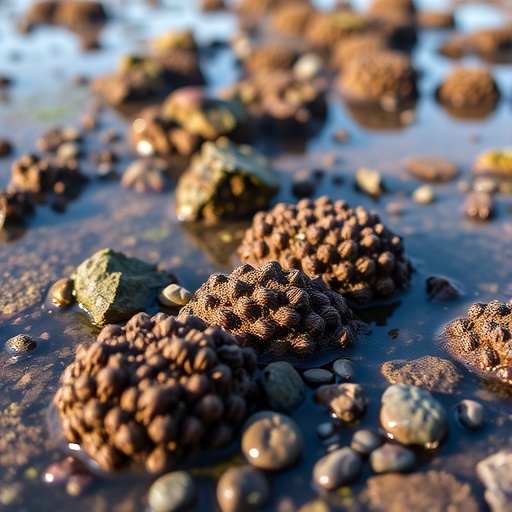
Coastal restoration has become one of the most closely watched strategies in the global fight against climate change, but a new study is putting a crucial question at the center of the conversation: when carbon is captured by a restored intertidal habitat, where does it ultimately go? The research, led by E.J. Burrell, H.L. Mossman and M.J. Taylor, examines the long-term fate of carbon in a restored coastal ecosystem, addressing a problem that has challenged scientists, policymakers and conservation groups alike. Restoring tidal environments can rapidly transform degraded shorelines, yet the climate value of that transformation depends on whether carbon remains locked away for decades or is quickly returned to the atmosphere or ocean.
Intertidal habitats occupy the shifting boundary between land and sea, where sediments are alternately submerged and exposed by the tides. Salt marshes, mudflats and other tidal ecosystems are highly productive because plants receive abundant sunlight, nutrients and water. Through photosynthesis, vegetation removes carbon dioxide from the atmosphere and converts it into organic carbon stored in roots, stems and surrounding sediments. Unlike carbon held in leaves or above-ground biomass, sedimentary carbon can remain buried for long periods. This capacity has made coastal ecosystems a major focus of “blue carbon” research, a field investigating how marine and coastal environments absorb and store atmospheric carbon.
However, carbon storage in these environments is not a simple matter of measuring how much plant material has accumulated. Carbon can follow several different pathways after it enters a restored habitat. Some becomes buried in anoxic sediment, where oxygen-limited conditions slow microbial decomposition. Some is consumed by organisms and transferred through the food web. Some is dissolved and carried away by tidal waters, while another fraction can be broken down by microbes and released as carbon dioxide. In certain wetland conditions, methane may also be produced. Because methane is a far more powerful greenhouse gas than carbon dioxide over shorter time periods, a restoration project’s overall climate impact depends on the balance between carbon burial and greenhouse-gas emissions.
The study’s focus on long-term fate is therefore especially important. Early measurements can make a restored habitat appear to be a powerful carbon sink simply because vegetation grows quickly and organic matter begins accumulating in newly formed sediments. Yet the initial carbon gain may not represent permanent sequestration. Sediment can erode during storms, plant debris can be exported by tides, and buried organic matter can later be exposed as channels migrate or sea levels rise. A reliable assessment must follow carbon beyond the first years of restoration and account for the physical, chemical and biological processes that determine whether it stays in place.
Restored intertidal habitats are also dynamic systems rather than engineered containers. Their carbon budgets are shaped by sediment grain size, tidal inundation, salinity, plant composition, microbial activity and the movement of water through creeks and channels. Fine sediments can trap organic particles efficiently, while stronger tidal flows may transport material elsewhere. Plant roots can stabilize the soil and increase below-ground carbon storage, but changing water levels can also alter oxygen availability and decomposition rates. These interactions mean that the same restoration approach may produce different outcomes depending on local geology, hydrology and climate.
By examining carbon over longer timescales, the research contributes to a more realistic way of evaluating nature-based climate solutions. The key issue is not simply how much carbon enters an ecosystem, but how much remains stored after losses through decomposition, export and disturbance are considered. Scientists commonly describe this balance as a carbon budget, comparing inputs such as plant production and imported organic matter with outputs including respiration, erosion, dissolved-carbon transport and gaseous emissions. Building that budget requires measurements across sediments, vegetation and water, alongside an understanding of how the habitat changes as it matures.
The findings are likely to matter well beyond a single restoration site because coastal wetlands are increasingly included in national climate strategies and carbon-offset programs. If carbon storage is overstated, projects may receive credit for climate benefits that do not persist. If long-term storage is demonstrated carefully, restoration could offer multiple benefits at once: protection against flooding, improved habitat for fish and birds, water-quality enhancement and increased resilience to sea-level rise. The study’s emphasis on carbon fate highlights why climate claims should be based on durable, independently verifiable storage rather than short-term gains in vegetation or sediment carbon alone.
The broader message is both encouraging and cautionary. Restoring intertidal habitats can create living carbon reservoirs, but their climate value depends on time, place and process. A tidal landscape may capture atmospheric carbon today while transferring part of it elsewhere tomorrow, making long-term monitoring essential. As coastal communities face accelerating sea-level rise and intensifying storms, research such as this offers a framework for separating genuine climate solutions from attractive but incomplete carbon narratives. The future of blue carbon will not be decided only by how much coastal habitat humanity restores, but by how accurately it can track the carbon that restoration is meant to protect.
Cite Scienmag News
Violet Maxwell. (August 8, 2026). Tracking Carbon’s Long-Term Fate in a Restored Intertidal Habitat. Scienmag. https://scienmag.com/tracking-carbons-long-term-fate-in-a-restored-intertidal-habitat/
Violet Maxwell. "Tracking Carbon’s Long-Term Fate in a Restored Intertidal Habitat." Scienmag, 8 August 2026, https://scienmag.com/tracking-carbons-long-term-fate-in-a-restored-intertidal-habitat/. Accessed 4 September 2026.
Violet Maxwell. "Tracking Carbon’s Long-Term Fate in a Restored Intertidal Habitat." Scienmag. August 8, 2026. https://scienmag.com/tracking-carbons-long-term-fate-in-a-restored-intertidal-habitat/


