


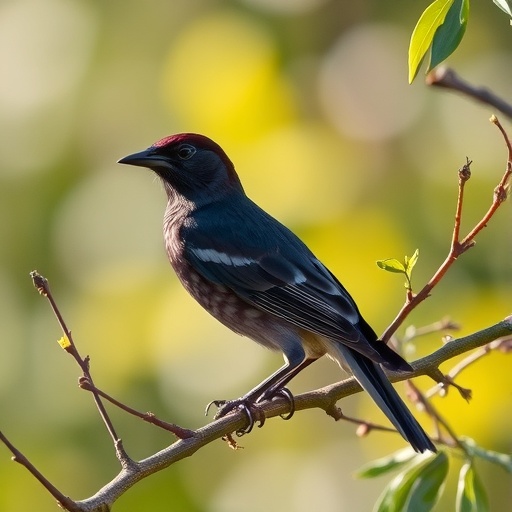
Extreme weather events are escalating in frequency and intensity worldwide, profoundly challenging the resilience of avian species. As heatwaves and drought conditions intensify, the physiological and behavioral responses of birds to these climatic extremes are becoming critical areas of scientific inquiry. However, significant gaps remain in our understanding of how birds experience, adapt to, and survive these environmental crises. New research spearheaded by scientists at Lund University in Sweden critically addresses these unknowns, offering innovative frameworks and analytical tools to assess the vulnerability of birds to heat stress and other extreme weather phenomena.
Birds face an acute threat from elevated temperatures largely because of their unique ecological and physiological traits. Unlike many mammals, which may seek refuge from heat in burrows or shaded tunnels, birds are diurnal creatures with limited means of escaping direct solar radiation or heat accumulation. Their survival hinges on complex physiological mechanisms such as evaporative cooling and behavioral strategies including seeking shade or reducing activity during peak heat. Yet, the specifics of these adaptations remain poorly quantified across different species and habitats, leaving a void in predictive modeling under changing climate scenarios.
The recent study highlights a startling reality that massive avian mortality events and widespread declines in physical condition are already linked with heatwave events across various regions globally. Despite this, there still exists a pronounced geographical bias in research efforts, with most empirical data derived from southern hemispheric desert species. This leaves vast northern populations, including many European birds, underrepresented in climate impact assessments. The lack of localized data severely hampers the formulation of effective conservation strategies tailored to region-specific climatic challenges and bird ecologies.
Crucially, Lund’s research underscores the role of humidity as a fundamental determinant of heat tolerance in birds. This aspect has historically been neglected in heat stress studies, where temperature alone was primarily considered. Humidity affects evaporative cooling efficiency—a vital thermoregulatory process where birds dissipate body heat via water loss through respiration or skin surfaces. As humidity rises, the effectiveness of this cooling mechanism decreases, exacerbating heat stress and physiological damage. This nuanced understanding calls for revised models that integrate both temperature and humidity to more accurately predict bird vulnerability to heat extremes.
Beyond environmental parameters, the study articulates intrinsic factors such as age, lifespan, and overall health status as critical modulators of heat tolerance. Younger birds and aging individuals may possess compromised physiological resilience, rendering them more susceptible to heat-induced mortality. Similarly, birds with pre-existing health impairments could face heightened risks during prolonged heatwaves. Recognition of these biological subtleties introduces a multifaceted approach in evaluating species-specific adaptive capacity, emphasizing that heat resilience is not uniform even within populations.
To bridge these knowledge gaps, the researchers have developed robust theoretical models aimed at quantifying and predicting the impacts of extreme weather on bird populations across diverse ecosystems. These models incorporate variables such as climatic conditions, species’ physiological traits, and ecological contexts to simulate risk scenarios under various climate change projections. By doing so, they provide a scientific basis for forecasting demographic consequences and pinpointing when and where birds are most at risk. This predictive capability is instrumental for prioritizing conservation interventions and resource allocation.
Complementing these models, the research proposes sensitivity indicators—systematic measures to assess the degree to which different avian species are likely to suffer from overheating during extreme weather episodes. These indicators consider heat tolerance thresholds, recovery capacity, and the availability of behavioral or physiological buffering mechanisms. Employing such sensitivity indices facilitates comparative analyses across species, ecological zones, and temporal scales, enhancing our capacity to detect early signs of distress and preemptively mitigate population declines.
The implications of this study extend into conservation policy and management strategies aimed at preserving avian biodiversity under climate change. By providing a structured framework and actionable tools, it enables wildlife managers and policymakers to identify vulnerable species, design targeted monitoring programs, and implement adaptive measures such as habitat restoration to improve thermal refugia. This proactive approach could significantly reduce the incidence of heat-related avian mortality and sustain ecological functions supported by bird communities.
Moreover, the research sheds light on an urgent and underexplored dimension of climate change impacts that could have cascading effects on broader ecosystem health. Birds play essential roles as pollinators, seed dispersers, and predators of insects; their decline due to physiological constraints on heat adaptation risks destabilizing these ecological processes. Addressing the thermal challenges faced by birds is thus integral not only to species conservation but also to maintaining ecosystem resilience in a rapidly warming world.
Another critical contribution of this work is its call for expanded geographic research coverage. The authors advocate for intensified empirical studies in temperate and northern regions where baseline data on heat tolerance are sparse. Expanding the taxonomic and ecological breadth of research will allow for a more comprehensive understanding of interspecies variability and regional vulnerabilities. Only through such inclusive scientific efforts can global frameworks for avian conservation adapt to the realities of heterogeneous climate impacts.
In conclusion, the study by Lund University researchers significantly advances our scientific comprehension of how extreme heat affects birds by elucidating the physiological limits and environmental interactions that determine their vulnerability. It offers a compelling synthesis of current knowledge, identifies crucial data deficits, and proposes innovative methodological pathways for future research. As climate change relentlessly drives the frequency and severity of heatwaves, this research provides an essential foundation for safeguarding avian species against unprecedented thermal challenges.
By offering an integrative approach that merges eco-physiology with predictive modeling, this work empowers conservationists with the knowledge needed to anticipate and mitigate the impacts of extreme weather on birds. Andreas Nord and his colleagues emphasize the urgency of translating these insights into actionable strategies to minimize heat-induced avian mortality and ensure the persistence of diverse bird populations amidst escalating climatic stressors.
Web References: 10.1016/j.tree.2026.03.006
Cite Scienmag News
Russell Cooper. (May 12, 2026). Heatwaves Pose Significant Risks to Bird Health. Scienmag. https://scienmag.com/heatwaves-pose-significant-risks-to-bird-health/
Russell Cooper. "Heatwaves Pose Significant Risks to Bird Health." Scienmag, 12 May 2026, https://scienmag.com/heatwaves-pose-significant-risks-to-bird-health/. Accessed 5 September 2026.
Russell Cooper. "Heatwaves Pose Significant Risks to Bird Health." Scienmag. May 12, 2026. https://scienmag.com/heatwaves-pose-significant-risks-to-bird-health/


