


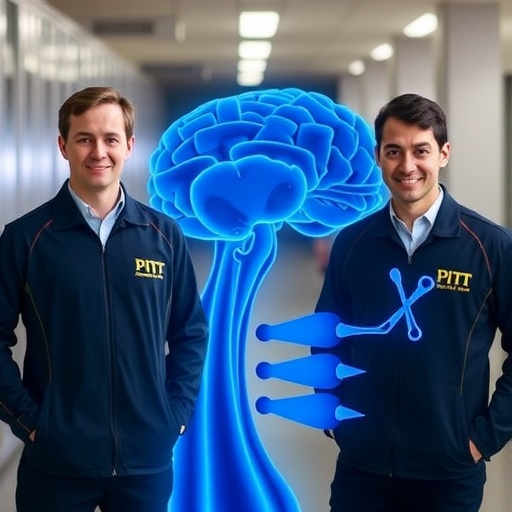
J. Timothy Greenamyre, a preeminent neurologist and Distinguished Professor at the University of Pittsburgh School of Medicine, has secured a transformative $9 million grant designed to revolutionize our understanding of Parkinson’s disease (PD). This funding, awarded by Aligning Science Across Parkinson’s (ASAP) in collaboration with The Michael J. Fox Foundation for Parkinson’s Research, fuels a groundbreaking investigation entitled “Environmental Exposures and PD Heterogeneity: Mechanisms and Therapeutic Mitigation.” Positioned at the vanguard of neurodegenerative research, Greenamyre’s work endeavors to dissect the environmental factors contributing to neuronal degeneration and to pioneer strategies for mitigation and prevention.
The crux of this ambitious project lies in elucidating the complex interaction between environmental exposures and the multifaceted progression of Parkinson’s disease. Parkinson’s, a chronic and progressive neurodegenerative disorder, is notoriously heterogeneous, manifesting distinctly across patients, both clinically and pathologically. Environmental variables—ranging from chemical toxins to lifestyle factors—are suspected to play crucial roles in modifying disease onset, severity, and progression. The initiative seeks to decode these relationships at a molecular and cellular level, offering unprecedented insight into the underlying mechanisms that drive PD heterogeneity.
Established at the Pittsburgh Institute for Neurodegenerative Diseases, this multidisciplinary initiative harnesses expertise within neurology and pharmacology, integrating perspectives from departments at the University of Pittsburgh as well as collaborators from Rutgers University, the University of Alabama Birmingham, Acurex Biosciences, and King’s College London. Such a consortium reflects the necessary breadth and depth required to tackle Parkinson’s complexity, spanning biomolecular research, toxicology, and therapeutics development. This collaborative framework facilitates a holistic approach to the multifactorial nature of PD, fostering innovation across domains.
Integral to this effort is the group’s integration into the Collaborative Research Network (CRN), an international alliance dedicated to addressing the highest-priority questions in Parkinson’s science. The CRN represents a paradigm shift toward global coordination, where data and resources converge to amplify discovery and translation. ASAP’s expansion of this network aims to generate a unified biological blueprint delineating the heterogeneity of Parkinson’s, thereby accelerating the development of precision diagnostics and tailored therapeutic interventions.
Parkinson’s disease is characterized primarily by the degeneration of dopaminergic neurons in the substantia nigra, resulting in hallmark motor symptoms. However, the disease’s clinical spectrum extends far beyond, incorporating non-motor manifestations such as cognitive decline and autonomic dysfunction. The heterogeneity of these symptoms has long puzzled neuroscientists. By scrutinizing environmental exposures—such as pesticides, heavy metals, and industrial chemicals—this project hypothesizes that differential environmental burdens contribute significantly to this variability by triggering distinct pathophysiological pathways.
Methodologically, the project will employ cutting-edge omics technologies, including transcriptomics, proteomics, and metabolomics, to generate detailed molecular profiles of PD patients exposed to various environmental agents. These high-dimensional data sets will be interrogated using advanced bioinformatics and machine learning algorithms to identify signatures predictive of disease subtypes and progression trajectories. Additionally, cellular and animal models simulating chronic exposure to these agents will elucidate mechanistic pathways that underpin neuronal vulnerability and resilience.
A pivotal goal is to translate mechanistic insights into concrete therapeutic strategies capable of mitigating or preventing neurodegeneration triggered by environmental insults. By pinpointing critical molecular targets modulated by environmental risk factors, the team aims to develop novel pharmacological agents or lifestyle interventions that can be administered before irreversible neuronal damage occurs. Such a proactive paradigm holds the promise of delaying or even halting the trajectory of Parkinson’s, fundamentally altering patient outcomes.
Beyond the scientific intricacies, this program is tightly aligned with public health initiatives aimed at reducing Parkinson’s incidence by identifying modifiable environmental risks. The potential to influence regulatory policies concerning chemical exposures in workplaces and communities underscores the broader societal impact of this research. If successful, these findings will empower policymakers with evidence to implement preventative measures, thereby reducing the societal and economic burdens of PD.
The integration of diverse disciplines—from neuroscience and toxicology to clinical neurology and data science—reflects a hallmark of contemporary biomedical research. By leveraging this interdisciplinary synergy, the project transcends traditional silos, resulting in a comprehensive approach that addresses both molecular underpinnings and translational applications. This holistic model is essential for dissecting the complexity inherent in diseases like Parkinson’s, which arise from an interplay of genetic susceptibilities and environmental triggers.
Moreover, the open science ethos underpinning this initiative aligns with ASAP’s commitment to accelerating Parkinson’s research through transparency and collaboration. Data and newly generated tools will be shared broadly with the global scientific community via curated repositories, facilitating replication and further innovation. This democratization of knowledge fosters a more inclusive research ecosystem where discoveries are rapidly tested and refined.
Looking forward, the success of this project could pave the way for the establishment of a global standardized toolkit to examine environmental contributions to neurodegenerative diseases beyond Parkinson’s. By establishing reproducible standards and resources, this platform could catalyze analogous studies in Alzheimer’s disease, amyotrophic lateral sclerosis (ALS), and other disorders with environmental etiologies, multiplying the impact of Greenamyre and colleagues’ work.
In sum, J. Timothy Greenamyre’s leadership in securing this substantial investment represents a pivotal step toward unraveling the environmental complexities of Parkinson’s disease. The research has the potential to redefine our understanding of PD heterogeneity, offering novel avenues for early intervention and prevention. As the initiative unfolds, it promises to drive transformative advances in neuroscience and usher in a new era of personalized neurology for Parkinson’s and possibly other neurodegenerative conditions.
News Publication Date: Not specified
Web References:
- Aligning Science Across Parkinson’s (ASAP): https://parkinsonsroadmap.org/
- The Michael J. Fox Foundation for Parkinson’s Research: https://www.michaeljfox.org/
- Collaborative Research Network (CRN): https://www.asapcrn.org/
Cite Scienmag News
Diana Fleming. (May 12, 2026). Pitt Team Awarded $9M Grant to Advance Parkinson’s Disease Research. Scienmag. https://scienmag.com/pitt-team-awarded-9m-grant-to-advance-parkinsons-disease-research/
Diana Fleming. "Pitt Team Awarded $9M Grant to Advance Parkinson’s Disease Research." Scienmag, 12 May 2026, https://scienmag.com/pitt-team-awarded-9m-grant-to-advance-parkinsons-disease-research/. Accessed 4 September 2026.
Diana Fleming. "Pitt Team Awarded $9M Grant to Advance Parkinson’s Disease Research." Scienmag. May 12, 2026. https://scienmag.com/pitt-team-awarded-9m-grant-to-advance-parkinsons-disease-research/


