An implantable, wirelessly powered electronic device can remove excess glucose from the bloodstream on demand, offering a drug-free approach to managing obesity and type 2 diabetes in a proof-of-concept study in mice. The device, called electrocatalytic closed-loop health optimization (ECHO), was developed by Debasis Maity and colleagues and is described in a study published in Science. Rather than delivering insulin or other medication, ECHO relies on electrocatalysis, a strategy in which electrode surfaces drive chemical reactions that convert glucose into other compounds.
The implant uses a platinum-decorated gold catalyst to convert circulating glucose into gluconate, a compound that can be excreted through the kidneys. The device is connected to a continuous glucose monitor via a smartphone and activates automatically whenever blood sugar exceeds a preset threshold. This closed-loop design allows targeted glucose removal without external insulin or medication, addressing limitations that the authors note in current glucose-monitoring and insulin-delivery systems, including accuracy, reliability, personalization, and cost.
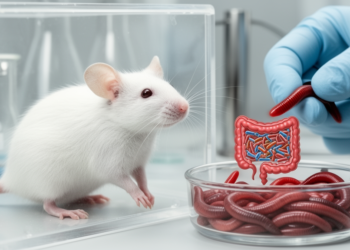
In obese mice with type 2 diabetes, wireless activation of the device at low power, 0.75 volts and 10 milliamperes, restored normal blood glucose levels within an hour and shifted the body’s energy use from glucose toward fat. Over six weeks of treatment, the mice experienced reductions in body weight and triglyceride levels, alongside increases in circulating free fatty acids and ketone bodies. These changes occurred without detectable episodes of low blood sugar and without adverse effects on physiological function, inflammation, or behavior, according to the study.
Obesity and diabetes are closely interconnected metabolic disorders that reinforce one another through complex hormonal, inflammatory, and energy-regulation processes, a combination increasingly described as “diabesity.” Existing treatments rely heavily on long-term medication and lifestyle changes. Emerging alternatives, including engineered therapeutic cells and drugs that target both weight and blood glucose, show promise but remain constrained by concerns over side effects, safety, and affordability. The electrocatalytic approach represents a distinct strategy that intervenes directly on circulating glucose rather than on hormonal signaling pathways.
Writing in a related Perspective, William Bentley and Gregory Payne suggest the technology’s implications may extend beyond metabolic disease. “Current bioelectronics devices provide notable access to the nervous and neuromuscular systems,” they write. “Therefore, future electronic intervention devices might help to manage diseases other than diabetes, modulate human-microbiome interactions, or maintain redox homeostasis in stress conditions, among many other applications.”
The findings remain at the proof-of-concept stage in mice, and the study did not report tests in humans. Further work will be needed to establish whether the device’s glucose-clearing mechanism, its long-term safety profile, and its effects on body weight and energy metabolism translate from animal models to clinical use. Nonetheless, the results demonstrate that a wirelessly powered implant can couple continuous glucose sensing to on-demand electrocatalytic glucose conversion, achieving both glycemic control and measurable metabolic shifts in a diabetic animal model without pharmacological intervention.
Subject of Research: An implantable electrocatalytic device for drug-free management of obesity and type 2 diabetes
Article Title: Implant enables drug-free management of “diabesity”
Article References: Implant enables drug-free management of “diabesity”. Original publication (Bibliographic details unavailable.)
Image Credits: AI Generated
DOI: Not provided
Keywords: diabetes, obesity, diabesity, electrocatalysis, implantable device, glucose monitoring, closed-loop system, type 2 diabetes, bioelectronics, preclinical study, Implant, enables
Cite Scienmag News
Drew Townsend. (October 24, 2026). Wireless implant clears blood glucose on demand in diabetic mice. Scienmag. https://scienmag.com/wireless-implant-clears-blood-glucose-on-demand-in-diabetic-mice/
Drew Townsend. "Wireless implant clears blood glucose on demand in diabetic mice." Scienmag, 24 October 2026, https://scienmag.com/wireless-implant-clears-blood-glucose-on-demand-in-diabetic-mice/. Accessed 24 October 2026.
Drew Townsend. "Wireless implant clears blood glucose on demand in diabetic mice." Scienmag. October 24, 2026. https://scienmag.com/wireless-implant-clears-blood-glucose-on-demand-in-diabetic-mice/