


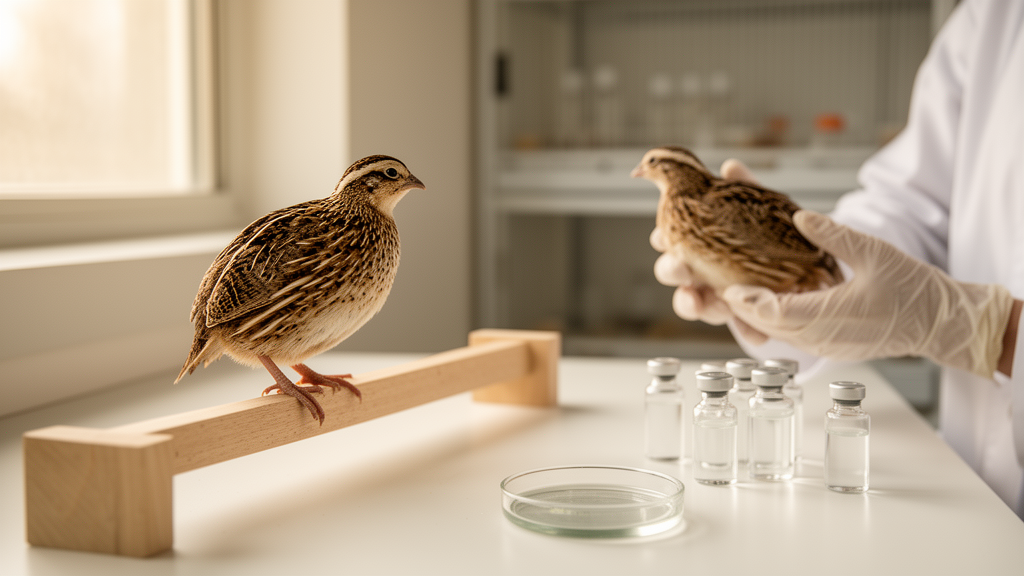
A controlled laboratory study of Japanese quails has found that simultaneous exposure to two widely used agricultural pesticides, deltamethrin and endosulfan, produced measurable liver injury, disturbed lipid metabolism and a range of abnormal behaviors in the exposed birds. The experiment, conducted under the animal care guidelines of the University of Agriculture, Faisalabad, Pakistan, exposed twelve adult quails to either a low or a high combined dose of the two chemicals and tracked their body and organ weights, liver enzyme levels, blood lipid markers and daily behavior over the treatment period. The researchers report that the changes appeared in a dose-dependent pattern, with the high-dose group showing the most pronounced effects, while no deaths occurred in any treatment group throughout the study.
The experimental subjects were twelve Japanese quails (Coturnix japonica), twelve weeks of age and weighing between 80 and 90 grams. After one week of acclimatisation under controlled conditions of 20 to 22 degrees Celsius, a 12-hour light and 12-hour dark cycle and 15 percent humidity, the birds were divided into three groups of four animals each. The first group served as the untreated control, the second received a low combined dose of deltamethrin and endosulfan, and the third received a high combined dose. The birds were housed in divided cages measuring 60 by 50 by 40 centimeters in total, fed fresh feed and water three times daily, and the cages were sanitised three times a week with a freshly prepared 10 percent sodium hypochlorite solution. The researchers also took deliberate steps to minimise environmental stress, including reducing loud noises, strong odors and other disturbances that could influence the birds’ behavior and confound the results.
Behavioral observations were carried out daily after pesticide administration, with each clinical sign assigned a qualitative score ranging from 0 to +4, where 0 indicated absence and +4 indicated severity. The monitored indicators included vocalisation patterns, reduced attraction to feed, physical activity levels and faecal characteristics. The team specifically examined agonistic behavior, locomotor activity, mucoid faeces and foraging behavior as markers of possible neurological dysfunction. This scoring approach allowed the researchers to track the onset and progression of symptoms across the treatment period and to compare the two dose groups against the control animals in a systematic, if necessarily qualitative, manner.
The behavioral findings showed a consistent and escalating pattern of disturbance. In the high-dose group, extreme crowing and agitation, classified as agonistic behavior, appeared beginning on the fourth day of the third week of exposure, often accompanied by frantic flight attempts and collisions within the cage. The low-dose group exhibited moderate versions of the same signs, while control birds showed no deviation from baseline behavior. Earlier in the exposure period, the high-dose birds displayed alertness deficits characterised by lethargy and reduced responsiveness. Reduced feed attraction and the presence of foamy or mucoid material in the faeces were also recorded in treated birds, observations consistent with previously documented responses of quails to endosulfan exposure, which have included moderate sadness, excitement, diminished feed attraction and mucoid faeces.
Alongside the behavioral changes, the exposed quails showed reductions in body weight and in the weights of their organs relative to control animals. The authors suggest that these decreases may reflect reduced feed intake or the general toxic burden of the pesticide combination. Importantly, the study recorded no mortality in any group, meaning that the observed effects represent sublethal toxicity rather than lethal outcomes. The dose-dependent nature of both the behavioral and the weight changes strengthens the internal consistency of the findings, although the small number of animals per group, four in each condition, limits the statistical power of the comparisons and means the results should be interpreted as preliminary evidence rather than definitive population-level conclusions.
The biochemical measurements focused on markers of liver damage and lipid metabolism. The treated birds showed elevated levels of the liver enzymes aspartate aminotransferase (AST) and alkaline phosphatase (ALP), both of which are commonly used indicators of hepatocellular injury. Elevated AST in particular can signal leakage of the enzyme from damaged liver cells into the circulation. The researchers also measured significant increases in low-density lipoprotein (LDL), very-low-density lipoprotein (VLDL) and total cholesterol in the pesticide-exposed quails. Taken together, these findings point to hepatic metabolic distress, impaired lipid clearance and enhanced lipid accumulation within the liver tissue of the exposed animals.
The authors interpret these biochemical changes through a mechanistic framework centred on oxidative stress and mitochondrial dysfunction. They propose that the pesticide combination increased levels of reactive oxygen species (ROS), which in turn damaged cell membranes and mitochondria, leading to the leakage of liver enzymes and the disruption of normal lipid processing. Mitochondrial damage is known to compromise beta-oxidation, the cellular process that breaks down fatty acids for energy, and to promote lipid peroxidation, both of which would be consistent with the elevated lipid markers observed in this study. The researchers also note that oxidative stress can exacerbate mitochondrial injury and drive hepatocyte apoptosis, or programmed cell death, providing a plausible pathway linking the observed enzyme elevations and lipid disturbances to actual liver damage.
The neurological dimension of the findings is grounded in the known pharmacology of the two pesticides. Deltamethrin is a pyrethroid insecticide that acts on voltage-gated sodium channels in nerve cells, prolonging their opening and producing hyperexcitability. Endosulfan, an organochlorine compound, acts primarily as an antagonist of gamma-aminobutyric acid (GABA) receptors, removing an important inhibitory brake on neural activity. The combination of sodium channel hyperactivation and GABA receptor inhibition offers a mechanistic explanation for the agitation, extreme vocalisation, frantic movement and collision behavior observed in the high-dose group. The authors suggest that these two mechanisms together account for the neurological signs recorded during the experiment, although the study did not include direct electrophysiological measurements to confirm receptor-level effects.
The study’s motivation rests on a gap in the toxicological literature. In intensive agriculture, deltamethrin and endosulfan are frequently applied in the same environments, yet most laboratory studies have examined each compound in isolation. The researchers argue that this single-chemical approach leaves regulators and ecologists without a clear picture of how combined exposure affects non-target wildlife. By simultaneously measuring behavior, organ weights, liver enzymes and lipid profiles in the same animals, the study attempts to trace a cause-and-effect pathway from biochemical injury to visible physiological and behavioral harm, providing a foundation for ecological risk assessment and for decisions about whether binary pesticide formulations should be permitted or restricted.
The findings come with important caveats. The sample size was small, with only four birds per group, and the behavioral assessments were qualitative rather than instrument-based. The specific dose levels used in the low- and high-dose groups are detailed in the study’s supporting information rather than in the main text, and the results derive from a single laboratory population of Japanese quails under controlled housing conditions, which may not fully reflect the variable exposures experienced by wild birds. Nevertheless, the convergence of behavioral, morphological and biochemical evidence in a dose-dependent pattern offers a coherent, if preliminary, indication that combined exposure to these two pesticides can harm non-target avian species through multiple interacting pathways, and the authors suggest that their approach could inform future risk assessments and regulatory decisions concerning pesticide mixtures in agricultural settings.
Subject of Research: Combined toxicity of deltamethrin and endosulfan on liver enzymes, lipid metabolism and behavior in Japanese quails
Article Title: Effects of Deltamethrin and Endosulfan on the Hepatic Markers and Neurobehavioural Alterations in Japanese Quail (Coturnix japonica)
Article References: Malik, S., Ahmad, S., Naeem, M., Bibi, I., Majid, M. S., Sadia, H., Riaz, S., & Siddik, M. A. B. (2026). Effects of Deltamethrin and Endosulfan on the Hepatic Markers and Neurobehavioural Alterations in Japanese Quail ( Coturnix japonica ). Veterinary Medicine and Science, 12(6), Article e71299. https://doi.org/10.1002/vms3.71299
Image Credits: AI Generated
DOI: 10.1002/vms3.71299
Keywords: deltamethrin, endosulfan, Japanese quail, hepatotoxicity, pesticide mixture, liver enzymes, lipid metabolism, oxidative stress, neurotoxicity, avian toxicology, ecotoxicology, Coturnix japonica
Cite Scienmag News
Drew Townsend. (October 24, 2026). Common Pesticides Combined Damage Livers and Behavior in Quails. Scienmag. https://scienmag.com/common-pesticides-combined-damage-livers-and-behavior-in-quails/
Drew Townsend. "Common Pesticides Combined Damage Livers and Behavior in Quails." Scienmag, 24 October 2026, https://scienmag.com/common-pesticides-combined-damage-livers-and-behavior-in-quails/. Accessed 24 October 2026.
Drew Townsend. "Common Pesticides Combined Damage Livers and Behavior in Quails." Scienmag. October 24, 2026. https://scienmag.com/common-pesticides-combined-damage-livers-and-behavior-in-quails/


