

Saturday, October 24, 2026
Science
No Result
View All Result
  • Login
  • HOME
  • SCIENCE NEWS
  • CONTACT US
  • HOME
  • SCIENCE NEWS
  • CONTACT US
No Result
View All Result
Scienmag
No Result
View All Result
Home Science News Biology

Placental extract limits calcium-driven degranulation in rat cell model

October 24, 2026
in Biology
Drew Townsend
By Drew Townsend Scienmag Editorial Profile - Cell Biology
Reading Time: 2 mins read
0
Placental extract limits calcium-driven degranulation in rat cell model

Placental extract limits calcium-driven degranulation in rat cell model

65
SHARES
587
VIEWS
Share on FacebookShare on Twitter
ADVERTISEMENT

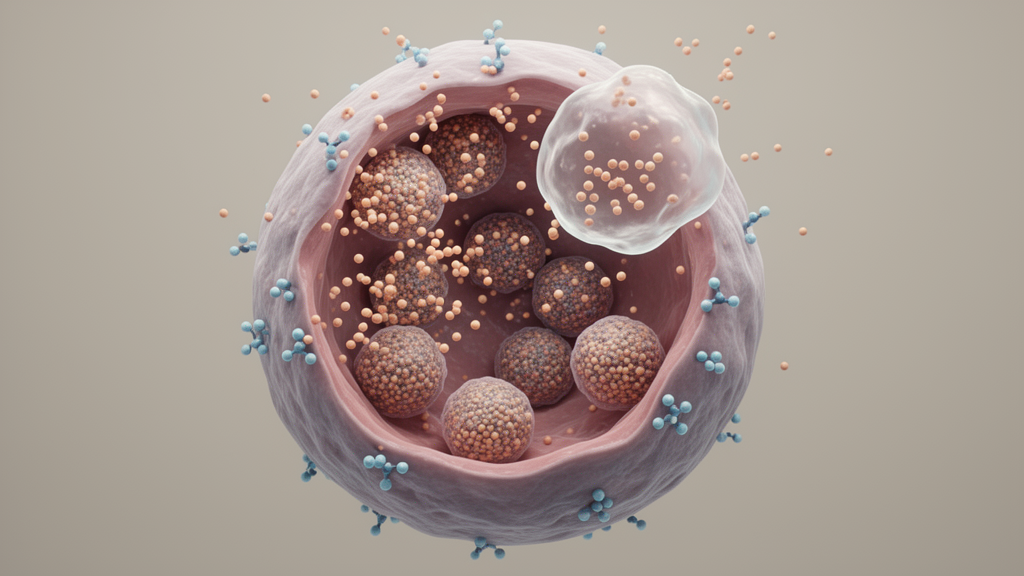
Low-molecular-weight components of porcine placental extract inhibited degranulation in rat basophilic leukemia RBL-2H3 cells by blocking calcium influx from outside the cells, according to a laboratory study. The researchers used the cell line as a mast-cell model and found that short-term exposure to the extract reduced degranulation in a dose-dependent manner. The mechanism was associated with preventing extracellular Ca²⁺ entry rather than suppressing the release of Ca²⁺ from intracellular stores.

Because the experiments involved a rat-derived cell line, the findings do not establish that the extract has antiallergic effects in people. The study examined how placental extract affects the cellular events associated with mast-cell activation. Mast cells secrete inflammatory mediators, including histamine, leukotrienes and prostaglandins, and therefore have an important role in allergic diseases.

Placental extract contains peptides, amino acids, nucleic acids, vitamins and minerals and is used in skin care and as a health food. It has also been considered in the treatment of various diseases, but the molecular mechanisms underlying its reported inhibitory effects on mast-cell activation were unclear. The investigators focused on degranulation, calcium handling and signaling in antigen-stimulated RBL-2H3 cells.

The treatment prevented the increase in intracellular calcium that depended on calcium entering from the extracellular environment. It did not inhibit Ca²⁺ release from intracellular Ca²⁺ stores. These measurements support a mechanism in which the extract suppresses calcium entry and, in parallel with that effect, reduces the degranulation response.

The evidence comes from cultured cells and does not show whether the same mechanism operates in human mast cells or in an intact organism. Analysis of intracellular signaling produced a second measured difference. In antigen-stimulated RBL-2H3 cells, porcine placental extract did not affect phosphorylation of Syk, which the study describes as an upstream signaling component.

It did inhibit phosphorylation of ERK1/2, which modulates cytokine production. The experiment therefore associated treatment with reduced ERK1/2 phosphorylation while Syk phosphorylation remained unchanged. The reported results do not specify whether ERK1/2 inhibition caused, resulted from or occurred independently of the blocked calcium influx, and the cell experiment alone does not establish any effect on cytokine production.

Fractionation further indicated that the inhibitory material had an approximate molecular weight of 200–400 daltons. This placed the active components in a low-molecular-weight fraction of the porcine placental extract, although the supplied research abstract does not identify their chemical composition. The authors state that the results may contribute to the development of novel antiallergic drugs, but that prospect remains preclinical: the reported work was conducted in RBL-2H3 cells, and no human, animal or clinical efficacy outcomes were presented.

Subject of Research: Mechanisms of placental-extract inhibition of mast-cell degranulation in a rat cell model.

Article Title: Low-molecular-weight components of placental extract inhibit degranulation by blocking Ca2+ influx in rat basophilic leukemia cells

Article References: Fujii, Y., Hashimoto, S., Komatsu, Y., Suzuki, R., & Hirashima, N. (2026). Low-molecular-weight components of placental extract inhibit degranulation by blocking Ca2+ influx in rat basophilic leukemia cells. Molecular Biology Reports, 53(1), Article 1493. https://doi.org/10.1007/s11033-026-12647-4

Image Credits: AI Generated

DOI: 10.1007/s11033-026-12647-4

Keywords: placental extract, mast-cell model, RBL-2H3 cells, degranulation, calcium influx, ERK1/2, Syk, cellular signaling, porcine extract, allergic inflammation, Low-molecular-weight, components

Cite Scienmag News

Drew Townsend. (October 24, 2026). Placental extract limits calcium-driven degranulation in rat cell model. Scienmag. https://scienmag.com/placental-extract-limits-calcium-driven-degranulation-in-rat-cell-model/

Drew Townsend. "Placental extract limits calcium-driven degranulation in rat cell model." Scienmag, 24 October 2026, https://scienmag.com/placental-extract-limits-calcium-driven-degranulation-in-rat-cell-model/. Accessed 24 October 2026.

Drew Townsend. "Placental extract limits calcium-driven degranulation in rat cell model." Scienmag. October 24, 2026. https://scienmag.com/placental-extract-limits-calcium-driven-degranulation-in-rat-cell-model/


Tags: allergic inflammationcalcium influxcalcium influx blockade in rat cell modelscalcium-dependent inflammatory mediator release in mast cellscellular signalingcomponentsdegranulationeffects of natural extracts on intracellular calcium signalingERK1/2Low-molecular-weightmast-cell modelmolecular mechanisms of placental extract in allergic responsesmolecular pathways of degranulation suppressionplacental extractPlacental extract and inhibition of mast cell degranulationporcine extractpotential anti-allergic properties of placental-derived compoundsrat basophilic leukemia cell line as model for allergic studiesRBL-2H3 cellsrole of extracellular calcium in mast cell activationskin care and health food applications of placental extractSyk
Share26Tweet16
Previous Post

CT-Guided Iodine-125 Seed Implantation Shows Short-Term Efficacy in Inoperable Pancreatic Cancer

Next Post

Portable Brain Perfusion Ultrasound Could Sharpen Prehospital Stroke Triage, Small Trial Analysis Suggests

Related Posts

Mango Compound Mangiferin Shows Multi-Stage Activity Against Toxoplasma gondii
Biology

Mango Compound Mangiferin Shows Multi-Stage Activity Against Toxoplasma gondii

October 24, 2026
Common Pesticides Combined Damage Livers and Behavior in Quails
Biology

Common Pesticides Combined Damage Livers and Behavior in Quails

October 24, 2026
Ethanol-washed Eisenia boosts antioxidants and Akkermansia in mice
Biology

Ethanol-washed Eisenia boosts antioxidants and Akkermansia in mice

October 24, 2026
Weaning stress shifts codon use and gut microbes in piglet immune cells
Biology

Weaning stress shifts codon use and gut microbes in piglet immune cells

October 24, 2026
Aging Valve Cells Release Pro-Calcific Vesicles Through a Gas6-Driven Mitochondrial Scission Pathway
Biology

Aging Valve Cells Release Pro-Calcific Vesicles Through a Gas6-Driven Mitochondrial Scission Pathway

October 24, 2026
Gut Microbes May Turn Plant Compounds Into Signals Behind Cancer Fatigue
Biology

Gut Microbes May Turn Plant Compounds Into Signals Behind Cancer Fatigue

October 24, 2026
Next Post
Portable Brain Perfusion Ultrasound Could Sharpen Prehospital Stroke Triage, Small Trial Analysis Suggests

Portable Brain Perfusion Ultrasound Could Sharpen Prehospital Stroke Triage, Small Trial Analysis Suggests

  • Mothers who receive childcare support from maternal grandparents show more optimized

    Mothers who receive childcare support from maternal grandparents show more parental warmth, finds NTU Singapore study

    27656 shares
    Share 11059 Tweet 6912
  • University of Seville Breaks 120-Year-Old Mystery, Revises a Key Einstein Concept

    1061 shares
    Share 424 Tweet 265
  • Bee body mass, pathogens and local climate influence heat tolerance

    682 shares
    Share 273 Tweet 171
  • Researchers record first-ever images and data of a shark experiencing a boat strike

    546 shares
    Share 218 Tweet 137
  • Groundbreaking Clinical Trial Reveals Lubiprostone Enhances Kidney Function

    531 shares
    Share 212 Tweet 133
Science

Embark on a thrilling journey of discovery with Scienmag.com—your ultimate source for cutting-edge breakthroughs. Immerse yourself in a world where curiosity knows no limits and tomorrow’s possibilities become today’s reality!

RECENT NEWS

  • Portable Brain Perfusion Ultrasound Could Sharpen Prehospital Stroke Triage, Small Trial Analysis Suggests
  • Placental extract limits calcium-driven degranulation in rat cell model
  • CT-Guided Iodine-125 Seed Implantation Shows Short-Term Efficacy in Inoperable Pancreatic Cancer
  • Virtual reality video predicts travel intention to sustainable Thai tourism community

Categories

  • Agriculture
  • Anthropology
  • Archaeology
  • Athmospheric
  • Biology
  • Biotechnology
  • Blog
  • Bussines
  • Cancer
  • Chemistry
  • Climate
  • Earth Science
  • Editorial Policy
  • Marine
  • Mathematics
  • Medicine
  • Pediatry
  • Policy
  • Psychology & Psychiatry
  • Science Education
  • Science News
  • Social Science
  • Space
  • Technology and Engineering

Subscribe to Blog via Email

Enter your email address to subscribe to this blog and receive notifications of new posts by email.

Join 5,152 other subscribers

© 2025 Scienmag - Science Magazine

Welcome Back!

Login to your account below

Forgotten Password?

Retrieve your password

Please enter your username or email address to reset your password.

Log In
No Result
View All Result
  • HOME
  • SCIENCE NEWS
  • CONTACT US

© 2025 Scienmag - Science Magazine

Discover more from Science

Subscribe now to keep reading and get access to the full archive.

Continue reading