


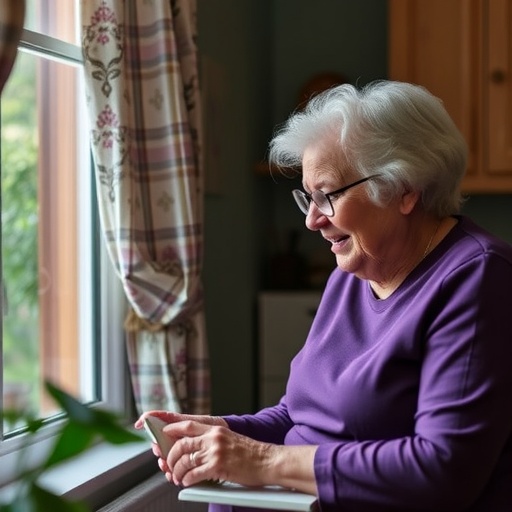
Climate change is exposing a hidden fault line in Australia’s housing crisis: older women who lack secure homes are increasingly being placed in the path of extreme heat, floods, bushfires and storms. For many, housing insecurity is not simply a question of whether they can afford rent. It determines whether they can escape a disaster, recover after one, protect their health or participate fully in civic life. A new analysis by Dr Lisa Ewenson, a Chancellor’s Research Fellow at the University of Technology Sydney, argues that the country’s worsening climate hazards are transforming housing precarity into a major safety, health and democratic crisis.
The women most at risk are often largely absent from the images and statistics that shape public understanding of homelessness. Instead of sleeping visibly on city streets, they may be staying temporarily with friends or relatives, living in cars, occupying caravan parks, sharing overcrowded homes or moving between short-term and unsafe accommodation. This form of homelessness is commonly described as “hidden homelessness” because it is concealed from public view and frequently missed by official data systems. Dr Ewenson says Census figures and other conventional measures are unlikely to capture the full scale of housing insecurity, particularly among older women who may avoid shelters or remain embedded in informal arrangements.
That invisibility has serious consequences during climate disasters. A person in a stable, adequately insulated home may be able to remain indoors during a heatwave, store medication safely, access electricity and receive warnings. Someone living in a vehicle, overcrowded dwelling or poorly maintained temporary property may have none of those protections. Extreme heat can rapidly raise indoor temperatures, while smoke from bushfires can worsen respiratory and cardiovascular conditions. Flooding can destroy documents, medicines and personal possessions, while storms may cut off transport and communications. For people with limited income, even a short disruption can trigger a chain of missed payments, displacement and deeper homelessness.
The risk is intensified by the geography and quality of affordable housing. Low-cost properties are often located in areas exposed to flooding, bushfires or other environmental hazards, where land is cheaper and infrastructure may be less resilient. Older buildings can lack effective insulation, ventilation and cooling, allowing indoor temperatures to become dangerous during heatwaves. In technical terms, the building envelope—the walls, roof, windows and floors separating indoor spaces from the outside environment—may provide little thermal protection. Poor energy efficiency also increases the cost of maintaining safe temperatures, forcing people on low incomes to choose between cooling their homes and paying for food, medicine or transport.
Older women can arrive at this vulnerable point after decades of economic disadvantage that are not always visible in household income statistics. Unpaid care work, interrupted employment and part-time or low-paid jobs can reduce lifetime earnings and limit superannuation accumulation. Caring responsibilities may also restrict opportunities for promotion, home ownership and long-term financial planning. When a relationship ends, a partner dies or a woman can no longer provide or receive family support, these accumulated disadvantages can suddenly become a housing emergency. Rising rents, mortgage costs, energy bills and insurance premiums then amplify the effect of every climate-related shock.
“Many of these women have done everything society asked of them,” Dr Ewenson said. “They have cared for families, contributed to communities and held things together. Yet many are still ending up in poverty and insecure housing later in life.” She argues that public discussion has focused too heavily on rough sleeping, a visible but incomplete expression of homelessness. That focus can lead policymakers to design responses around emergency accommodation alone, while overlooking people whose housing appears temporary, informal or technically occupied but is not safe, secure or legally protected.
The problem also raises a question about how democracy functions when citizens lack a reliable place to live. Voting, receiving government correspondence, accessing legal services, attending community meetings and communicating with elected representatives all become more difficult when a person moves frequently or has no secure address. Housing is therefore not only a material necessity but also part of the infrastructure of political participation. Dr Ewenson says democratic systems often assume that people are sufficiently housed to engage in public life. When that assumption fails, homelessness can become a form of political exclusion, limiting the ability of affected people to make their experiences known or influence decisions about climate adaptation and housing policy.
Her proposed response is structural rather than narrowly emergency-based. It includes expanding public and social housing, increasing the supply of genuinely affordable homes, strengthening income security and ensuring that older people can remain safely housed as they age. Climate risk, she says, must be incorporated across the housing system, from land-use planning and building standards to tenancy law, insurance, emergency management and social services. A climate-resilient housing strategy would need to consider not only whether a property exists, but whether it remains habitable during heatwaves, smoke events, floods and power outages. It would also need to account for accessibility, transport, healthcare and the social networks that support people before and after disasters.
Dr Ewenson is calling for legislative change at both federal and state levels, including recognition of a right to adequate housing. She has argued that a Human Rights Act in New South Wales and at the federal level could shift housing policy away from viewing shelter as a commodity or welfare benefit and toward treating it as a condition necessary for health, dignity and participation in society. Her work also emphasises a “right to care” and a “right to give care”, challenging economic systems that treat unpaid caring labour as a private responsibility rather than socially essential work. Because women perform much of this labour, failing to value it can create long-term financial consequences that only become fully visible in later life.
The research is now moving beyond analysis toward a community-embedded project in which Dr Ewenson will gather older women’s life stories. The aim is to understand how housing insecurity develops over time, how climate hazards alter that trajectory and which legal, policy and social interventions could prevent people from reaching crisis. The project reflects a broader shift in climate research: vulnerability is increasingly understood not as a fixed characteristic of an individual, but as the product of interacting systems, including income, housing design, infrastructure, health, age, gender and access to decision-making. Dr Ewenson says older women themselves must help guide the solutions. Without that expertise, Australia risks building climate policies that protect property while leaving the people with the fewest alternatives exposed to the next disaster.
News Publication Date: 18-Aug-2026
Web References: https://journals.sagepub.com/doi/10.1177/1037969X261476793
References: Alternative Law Journal; DOI: 10.1177/1037969X261476793
Cite Scienmag News
Sloane Callahan. (August 19, 2026). Why Home Becomes Less Safe for Older Women. Scienmag. https://scienmag.com/why-home-becomes-less-safe-for-older-women/
Sloane Callahan. "Why Home Becomes Less Safe for Older Women." Scienmag, 19 August 2026, https://scienmag.com/why-home-becomes-less-safe-for-older-women/. Accessed 3 September 2026.
Sloane Callahan. "Why Home Becomes Less Safe for Older Women." Scienmag. August 19, 2026. https://scienmag.com/why-home-becomes-less-safe-for-older-women/


