


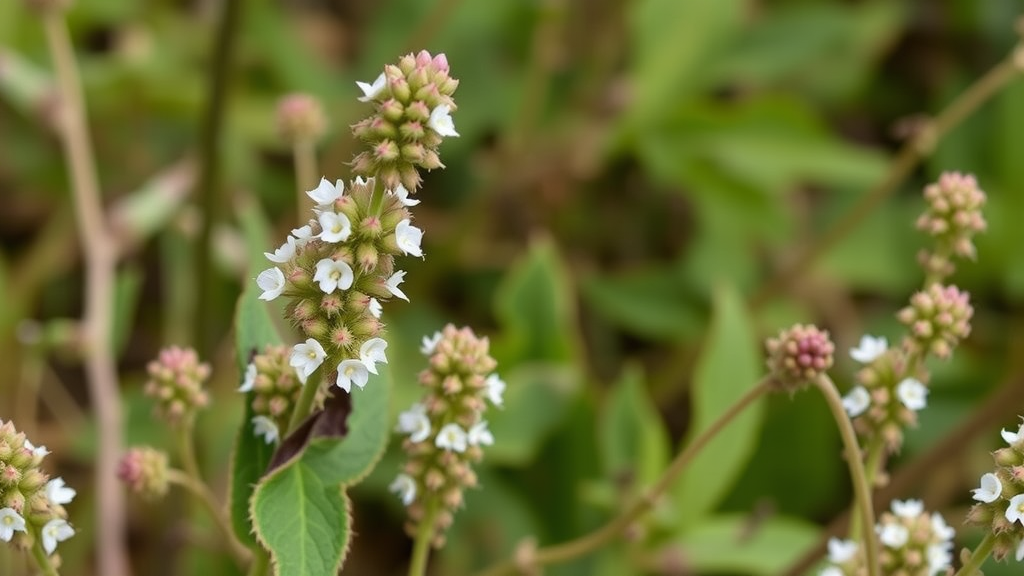
A bitter, woolly-leaved herb that has simmered in traditional medicine chests from the Atlas Mountains to the pharmacies of ancient Rome is now commanding serious attention in the laboratory. White horehound, Marrubium vulgare, has long been brewed into teas and syrups for coughs, digestive complaints and heart trouble, but a comprehensive new review published in The Science of Nature pulls together decades of scattered research to ask a pointed question: does the plant’s pharmacological reputation survive modern scientific scrutiny? The answer, according to researchers at Hassan II University in Casablanca, is a qualified but striking yes, with important caveats about how far the evidence can actually be pushed.
The review, led by Zaynab Ouadghiri and Othman El Faqer, together with colleagues in the Laboratory of Integrative Biology at the Faculty of Sciences Ain Chock, surveys the phytochemistry and biological activities of M. vulgare with particular emphasis on marrubiin, the furan labdane diterpene that gives the plant its characteristic bitterness and has become its most intensively studied molecule. The team’s synthesis covers antioxidant, anti-inflammatory, antimicrobial, antidiabetic, hepatoprotective, gastroprotective, cardioprotective, neuroprotective and antiproliferative effects reported across a large body of preclinical work. What emerges is a portrait of a chemically rich plant whose traditional uses are, in many cases, supported at least in principle by laboratory evidence, even as the leap to proven clinical therapy remains firmly out of reach.
The chemical arsenal of white horehound is central to the story. The plant produces a diverse suite of secondary metabolites, including diterpenoids, flavonoids, phenolic acids, tannins and volatile constituents, each class contributing differently to the observed pharmacology. Diterpenoids such as marrubiin and related labdane compounds dominate the pharmacological literature, while the phenolic fraction, rich in flavonoids and phenolic acids, underpins much of the antioxidant activity measured in extracts. Essential oils isolated from the aerial parts add antimicrobial and antifungal dimensions. This chemical diversity is a double-edged sword: it offers multiple pharmacological entry points, but it also means that extracts from different regions, harvested at different times and prepared by different methods can vary enormously in composition, complicating any attempt to compare studies or reproduce results.
Marrubiin itself has become something of a molecular celebrity in natural product research. First isolated from horehound in the nineteenth century, this bitter diterpene has been the subject of studies spanning cardiovascular protection, diabetes, inflammation and even cancer biology. Recent work highlighted in the review points to interactions with PPAR gamma, a nuclear receptor central to glucose and lipid metabolism, offering a mechanistic explanation for reported antidiabetic and anti-inflammatory effects. Researchers have also engineered delivery systems to exploit the molecule, including marrubiin-loaded solid lipid nanoparticles that showed cardioprotective effects in endothelial cell models exposed to inflammatory challenge. On the biosynthetic side, plant biologists have identified cytochrome P450 enzymes involved in marrubiin production, opening the door to metabolic engineering approaches that could yield standardized supplies of the compound without depending on variable wild harvests.
The cardiovascular findings are among the most intriguing. In isolated rat heart models, aqueous fractions of M. vulgare demonstrated protective effects against ischaemia-reperfusion injury, the cascade of damage that occurs when blood supply returns to oxygen-starved tissue. Separate studies using methanolic extracts reported inhibition of inflammatory responses and prevention of cardiomyocyte fibrosis in chemically induced myocardial infarction in rats. Extracts have also shown inhibitory activity against angiotensin I converting enzyme, the same target exploited by widely prescribed blood pressure medications. These results align neatly with the plant’s long history of use for heart complaints in Moroccan, Iranian and European traditional medicine, and they suggest that horehound-derived compounds could eventually yield leads for cardiovascular drug development, though the authors are careful to stress that isolated organ and cell models are a long way from intact human physiology.
Metabolic effects form another major pillar of the evidence. In streptozotocin-induced diabetic rats, methanolic extracts of the plant ameliorated both hyperglycemia and dyslipidemia, the twin metabolic disturbances that define type 2 diabetes and its complications. In vitro assays have shown inhibition of alpha-glucosidase, an intestinal enzyme targeted by antidiabetic drugs, while metabolomics-based studies of Algerian medicinal plants identified horehound extracts as particularly active in this regard. The anti-inflammatory data are similarly extensive, spanning carrageenan-induced paw edema in rats, antiarthritic models, antinociceptive testing and even studies of neuropathic pain following sciatic nerve injury. Immunomodulatory effects have been documented in animal models of bacterial infection, where leaf extracts altered immune responses, adding another layer to the plant’s pharmacological profile.
Perhaps the most medically ambitious claims concern protection of the brain, the liver and the gut, and the plant’s possible anticancer potential. Rat studies using scopolamine-induced cognitive impairment, a common model for memory deficits, found that horehound extracts improved spatial working memory and reduced oxidative stress damage, with behavioral improvements matched by biochemical changes. Phenylethanoid glycoside-rich extracts have shown anti-Alzheimer’s activity in vitro and in computational docking studies. In cancer research, ethanolic extracts of the plant induced proliferation arrest, apoptosis and cytoprotective autophagy in cancer cell lines, while methanolic fractions from several Marrubium species showed cytotoxic activity against melanoma cells that was independent of their antioxidant capacity, hinting at distinct mechanisms. Cytotoxicity evaluations and zebrafish embryo toxicity screening have begun to map the safety boundaries of these effects, and studies of burn wound healing have explored topical applications in combination with other medicinal plants.
Yet the review is emphatic that enthusiasm must be tempered by the quality of the underlying evidence. Nearly everything known about the pharmacology of M. vulgare comes from in vitro experiments and animal studies; clinical data in humans remain scarce to nonexistent. The authors highlight considerable variability in extract composition and experimental protocols across the literature, which makes it difficult to compare doses, identify the true active principles or establish dose-response relationships. Information on pharmacokinetics, meaning how the plant’s compounds are absorbed, distributed, metabolized and excreted in the body, is limited, as is long-term safety data. Without chemically standardized preparations, it is impossible to know whether a tea, a tincture and a subcritical extract are delivering anything remotely comparable, and mechanism-specific validation, in which a defined compound is shown to act through a defined molecular pathway, remains the exception rather than the rule.
The path forward sketched by the Moroccan team is rigorous and conventional in the best sense: chemically standardized preparations, rigorous mechanistic studies, comprehensive toxicological assessment and, only where the preclinical case justifies it, well-designed clinical trials. Advances in extraction technology, from microwave-assisted and ultrasound-assisted methods optimized by experimental design to spray drying of subcritical extracts, are making it increasingly feasible to produce consistent, high-quality horehound preparations with defined marrubiin content. Combined with metabolomic fingerprinting and in silico approaches that can predict molecular targets before bench work begins, these tools could transform horehound from a folk remedy of variable potency into a reproducible source of drug leads.
For now, white horehound sits in a familiar position for medicinal plants: rich in promise, validated by tradition and preclinical data, but unproven at the bedside. The review’s value lies precisely in its honesty about that gap. It consolidates a sprawling literature, connects the plant’s chemistry to plausible mechanisms for its traditional uses in respiratory, gastrointestinal, cardiovascular and inflammatory disorders, and lays out what must happen before marrubiin or any of its chemical cousins can be taken seriously as therapeutic agents. In an era of rising diabetes, cardiovascular disease and drug-resistant infections, the humble horehound’s chemical repertoire deserves the systematic attention it is finally receiving, and the next decade of standardized, mechanistically grounded research will determine whether this ancient bitter herb becomes a modern medicine or remains a fascinating footnote in ethnopharmacology.
Subject of Research: Phytochemistry and pharmacological activities of the medicinal plant Marrubium vulgare (white horehound) and its major diterpene marrubiin
Article Title: Comprehensive analysis of the pharmacological potentials of Marrubium vulgare (white horehound): a recent overview of phytochemistry and biological activities
Article References: Ouadghiri, Z., El Faqer, O., Wahnou, H., Rais, S., & Mtairag, E. M. (2026). Comprehensive analysis of the pharmacological potentials of Marrubium vulgare (white horehound): a recent overview of phytochemistry and biological activities. The Science of Nature, 113(5), Article 107. https://doi.org/10.1007/s00114-026-02156-6
Image Credits: AI Generated
DOI: 10.1007/s00114-026-02156-6
Keywords: Marrubium vulgare, white horehound, marrubiin, phytochemistry, medicinal plants, ethnopharmacology, antioxidant activity, anti-inflammatory, antidiabetic, cardioprotection, diterpenoids, preclinical research
Cite Scienmag News
Drew Townsend. (September 26, 2026). White Horehound Emerges as a Pharmacological Powerhouse in sweeping Review. Scienmag. https://scienmag.com/white-horehound-emerges-as-a-pharmacological-powerhouse-in-sweeping-review/
Drew Townsend. "White Horehound Emerges as a Pharmacological Powerhouse in sweeping Review." Scienmag, 26 September 2026, https://scienmag.com/white-horehound-emerges-as-a-pharmacological-powerhouse-in-sweeping-review/. Accessed 4 October 2026.
Drew Townsend. "White Horehound Emerges as a Pharmacological Powerhouse in sweeping Review." Scienmag. September 26, 2026. https://scienmag.com/white-horehound-emerges-as-a-pharmacological-powerhouse-in-sweeping-review/


