

Tuesday, October 20, 2026
Science
No Result
View All Result
  • Login
  • HOME
  • SCIENCE NEWS
  • CONTACT US
  • HOME
  • SCIENCE NEWS
  • CONTACT US
No Result
View All Result
Scienmag
No Result
View All Result
Home Science News Biology

UVB photoprotection by thiourea and (thio)semicarbazone derivatives: cellular and molecular evidence

October 20, 2026
in Biology
Drew Townsend
By Drew Townsend Scienmag Editorial Profile - Cell Biology
Reading Time: 2 mins read
0
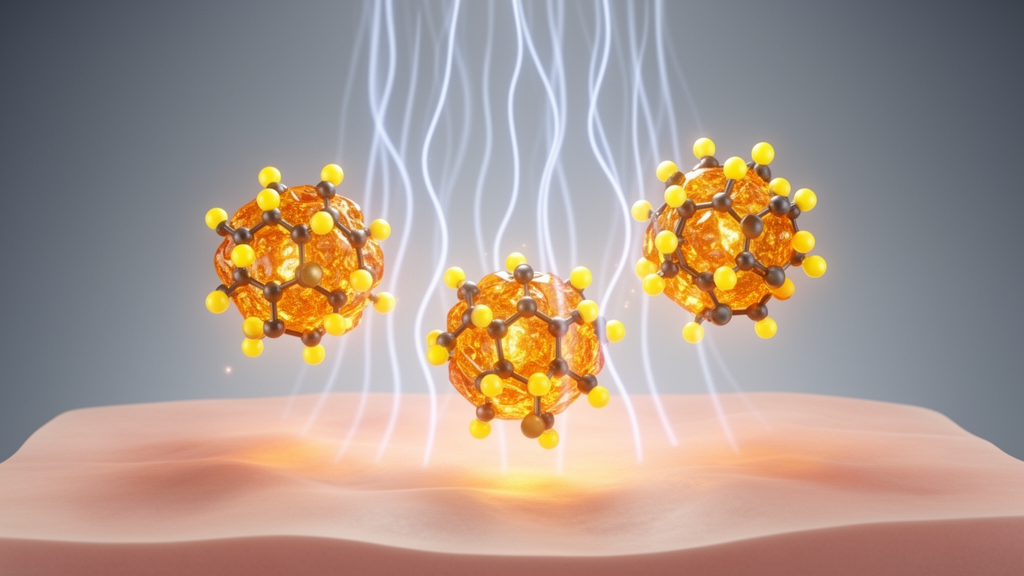
Sulfur-Rich Small Molecules Show Powerful Defense Against Sun-Damaging UVB Light

Sulfur-Rich Small Molecules Show Powerful Defense Against Sun-Damaging UVB Light

65
SHARES
587
VIEWS
Share on FacebookShare on Twitter
ADVERTISEMENT

A cell-based study reported that several thiourea and (thio)semicarbazone derivatives absorbed UVB radiation, showed low cytotoxicity in normal human dermal fibroblasts and reduced selected cellular markers associated with oxidative, nitrosative and inflammatory damage. The findings are available in the published abstract; the subscription article body was not supplied for independent review.

According to the abstract, researchers assessed alkyl chain-conjugated thiourea compounds I–XIX and aryl-linked (thio)semicarbazone compounds XX–XXV. Spectroscopic analyses were used to evaluate ultraviolet absorption, molar absorptivity and photostability. Cytotoxicity, effective concentrations and bioprotective effects were examined with in vitro cellular methods, with benzophenone included as the reference compound. The abstract does not provide detailed protocols, statistical estimates or uncertainty intervals.

Several compounds showed strong UVB absorption and high molar absorptivity, with semicarbazone derivatives particularly prominent in that assessment. Ten compounds were more photostable than benzophenone. In fibroblast cultures, selected compounds significantly reduced UVB-induced intracellular reactive oxygen species and nitric oxide production. Compounds IV, XXI and XXIII also lowered the levels of interleukin-1 beta and tumor necrosis factor alpha, which the abstract identifies as components of UVB-induced inflammatory cascades. These compounds protected fibroblast morphology, prevented UVB-induced genomic DNA fragmentation and reduced the formation of cyclobutane pyrimidine dimers.

Compound XXIII showed selective UVB absorption, better photostability, low cytotoxicity and a measured sun protection factor of 16. The abstract characterizes its biological photoprotection as moderate and describes thiourea and (thio)semicarbazone derivatives, particularly compound XXIII, as promising photoprotective scaffolds. It also states that further formulation, in vivo, permeability, phototoxicity and safety studies are required before their potential as UV-filtering agents can be validated. The reported evidence comes from laboratory spectroscopy and cell cultures, so it does not establish protection or safety in humans.

Subject of Research: Laboratory assessment of thiourea and (thio)semicarbazone derivatives for UVB photoprotection in human dermal fibroblasts

Article Title: UVB photoprotection by thiourea and (thio)semicarbazone derivatives: cellular and molecular evidence

Article References: Rana, S., Bhatti, A. A., Nawaz, H., Yaqoob, S., & Hameed, A. (2026). UVB photoprotection by thiourea and (thio)semicarbazone derivatives: cellular and molecular evidence. Molecular Biology Reports, 53(1), Article 1577. https://doi.org/10.1007/s11033-026-12754-2

Image Credits: AI Generated

DOI: 10.1007/s11033-026-12754-2

Keywords: UVB radiation, photoprotection, thiourea derivatives, semicarbazones, human dermal fibroblasts, UV filters, oxidative stress, inflammation, DNA damage, photostability, thiourea, thio

Cite Scienmag News

Drew Townsend. (October 20, 2026). UVB photoprotection by thiourea and (thio)semicarbazone derivatives: cellular and molecular evidence. Scienmag. https://scienmag.com/uvb-photoprotection-by-thiourea-and-thiosemicarbazone-derivatives-cellular-and-molecular-evidence/


Drew Townsend. "UVB photoprotection by thiourea and (thio)semicarbazone derivatives: cellular and molecular evidence." Scienmag, 20 October 2026, https://scienmag.com/uvb-photoprotection-by-thiourea-and-thiosemicarbazone-derivatives-cellular-and-molecular-evidence/. Accessed 20 October 2026.

Drew Townsend. "UVB photoprotection by thiourea and (thio)semicarbazone derivatives: cellular and molecular evidence." Scienmag. October 20, 2026. https://scienmag.com/uvb-photoprotection-by-thiourea-and-thiosemicarbazone-derivatives-cellular-and-molecular-evidence/

Tags: (thio)semicarbazone UV absorptioncellular oxidative stress reductioncytokine modulation by UV filtersDNA damageDNA damage prevention in skin cellsfibroblast cell protection against UVBhuman dermal fibroblastsinflammationmolecular mechanisms of UVB photoprotectionnatural UVB protective compoundsOxidative stressphotoprotectionphotostabilityphotostability of UV filtersreactive oxygen species scavengingsemicarbazonesthiothioureathiourea derivativesthiourea derivatives in skincareUV filtersUVB photoprotectionUVB radiationUVB-induced inflammatory markers
Share26Tweet16
Previous Post

Early tumor shrinkage associated with longer progression-free survival in measurable advanced gastric or gastroesophageal junction cancer

Next Post

Case report links uncertain initial injury with later multidrug-resistant wound colonization in a 20-year-old man

Related Posts

Tiny RNA Switches May Explain Why Lupus Patients’ Platelets Crash and Clots Paradoxically Follow
Biology

Comparative study finds molecular differences in lupus-associated thrombocytopenia

October 20, 2026
Brain Chemical’s Heart Receptor Emerges as Hidden Player in Atrial Fibrillation
Biology

Study of human datasets, Ang II-treated mice and cardiomyocytes links altered DRD1 to atrial fibrillation-related stress

October 20, 2026
Inflammatory Signal Supercharges TGF-β Drive That Makes Liver Cancer Cells Migrate and Invade
Biology

Cell study finds IL-1β amplifies TGF-β1 effects in SK-Hep1 cells through p38 MAPK-linked SMAD2/3 signaling

October 20, 2026
Defective HIV proviruses reprogram T cells at selected integration sites
Biology

Defective HIV proviruses reprogram T cells at selected integration sites

October 20, 2026
Turning Evolution Against Itself: How Collateral Sensitivity Could Outsmart Drug-Resistant Bacteria
Biology

Review outlines collateral-sensitivity strategies for antimicrobial resistance

October 20, 2026
Research report: Protokoll der Jahresversammlung der Schweizerischen Entomologischen Gesellschaft vom 6. und 7. März am Naturhistorischen Museum Basel
Biology

Research report: Protokoll der Jahresversammlung der Schweizerischen Entomologischen Gesellschaft vom 6. und 7. März am Naturhistorischen Museum Basel

October 20, 2026
Next Post
Flesh-Eating Wound Infection Linked to Suspected Toxic Drug Adulterant in Young Patient

Case report links uncertain initial injury with later multidrug-resistant wound colonization in a 20-year-old man

  • Mothers who receive childcare support from maternal grandparents show more optimized

    Mothers who receive childcare support from maternal grandparents show more parental warmth, finds NTU Singapore study

    27656 shares
    Share 11059 Tweet 6912
  • University of Seville Breaks 120-Year-Old Mystery, Revises a Key Einstein Concept

    1061 shares
    Share 424 Tweet 265
  • Bee body mass, pathogens and local climate influence heat tolerance

    682 shares
    Share 273 Tweet 171
  • Researchers record first-ever images and data of a shark experiencing a boat strike

    546 shares
    Share 218 Tweet 137
  • Groundbreaking Clinical Trial Reveals Lubiprostone Enhances Kidney Function

    531 shares
    Share 212 Tweet 133
Science

Embark on a thrilling journey of discovery with Scienmag.com—your ultimate source for cutting-edge breakthroughs. Immerse yourself in a world where curiosity knows no limits and tomorrow’s possibilities become today’s reality!

RECENT NEWS

  • Work-life balance and wellbeing among teachers in Bangladesh: a reflexive thematic analysis of stress, coping, and institutional support
  • Observational survey analysis finds declining unmet home-visiting needs among disabled older adults in China
  • Review identifies shrinkage-control measures and prediction models for geopolymer composites
  • Qualitative systematic review identifies social-capital themes in healthcare AI implementation

Categories

  • Agriculture
  • Anthropology
  • Archaeology
  • Athmospheric
  • Biology
  • Biotechnology
  • Blog
  • Bussines
  • Cancer
  • Chemistry
  • Climate
  • Earth Science
  • Editorial Policy
  • Marine
  • Mathematics
  • Medicine
  • Pediatry
  • Policy
  • Psychology & Psychiatry
  • Science Education
  • Science News
  • Social Science
  • Space
  • Technology and Engineering

Subscribe to Blog via Email

Success! An email was just sent to confirm your subscription. Please find the email now and click 'Confirm Follow' to start subscribing.

Join 5,150 other subscribers

© 2025 Scienmag - Science Magazine

Welcome Back!

Login to your account below

Forgotten Password?

Retrieve your password

Please enter your username or email address to reset your password.

Log In
No Result
View All Result
  • HOME
  • SCIENCE NEWS
  • CONTACT US

© 2025 Scienmag - Science Magazine