

Tuesday, October 20, 2026
Science
No Result
View All Result
  • Login
  • HOME
  • SCIENCE NEWS
  • CONTACT US
  • HOME
  • SCIENCE NEWS
  • CONTACT US
No Result
View All Result
Scienmag
No Result
View All Result
Home Science News Biology

Defective HIV proviruses reprogram T cells at selected integration sites

October 20, 2026
in Biology, Medicine
Juliet Wilcox
By Juliet Wilcox Scienmag Editorial Profile - Human Genetics
Reading Time: 2 mins read
0
Defective HIV proviruses reprogram T cells at selected integration sites

Defective HIV proviruses reprogram T cells at selected integration sites

65
SHARES
587
VIEWS
Share on FacebookShare on Twitter
ADVERTISEMENT

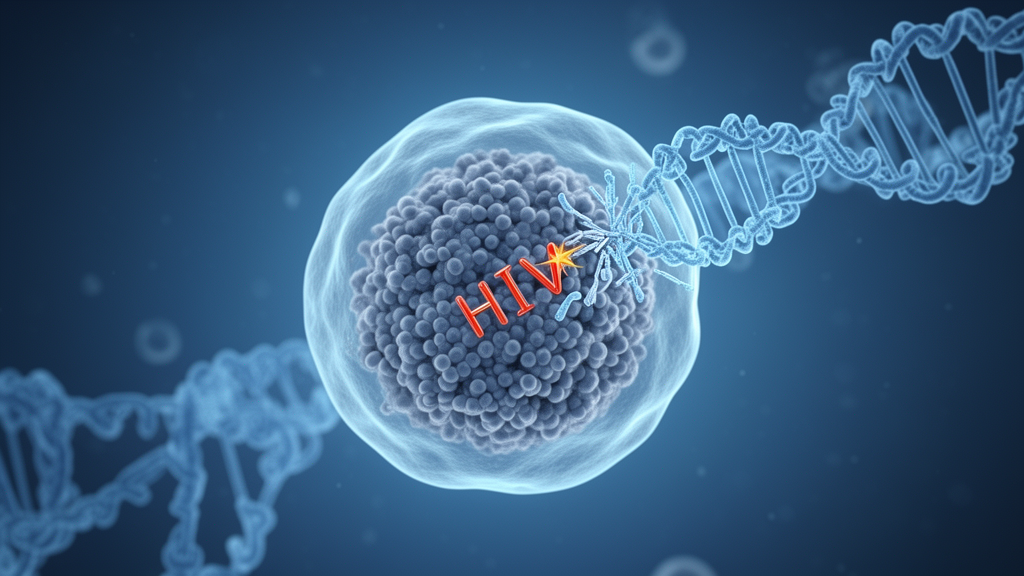
People living with HIV on antiretroviral therapy accumulate primarily defective proviral sequences in the genomes of often clonally expanded CD4 T cells, according to a cellular and molecular study. The researchers found that a substantial share of the HIV-derived DNA is transcriptionally active and preferentially located at distinct genomic loci, supporting a selective process in which integration-site-specific interactions between viral and host sequences influence the affected cells.

The study focused on BACH2, one of the most prominent selected integration genes, and used a cellular model containing BACH2-integrated proviruses. Proviral transcription drove abnormal BACH2 protein levels that escaped the gene’s autoregulatory feedback, producing BACH2-dependent changes in the cell’s transcriptomic program. The authors describe this process as exaptation: viral sequences use regulatory features associated with a host gene to alter cellular identity and behavior.

When the investigators mimicked the relevant changes in primary CD4 T lymphocytes, BACH2 shifted the cells toward a proliferative, precursor memory-like state. The reprogrammed cells had traits associated with persistent HIV reservoir cells in people living with HIV, including immune-evasion characteristics and enhanced cellular survival. These experiments provide a mechanistic model for how transcriptionally active, defective proviruses could influence long-lived HIV target cells; they do not directly demonstrate the same causal process in people receiving antiretroviral therapy.

Inhibition of proviral transcriptional activity mitigated exaptation in the experimental system, indicating that viral transcription can be a point of intervention for reducing the modeled effects. The result does not establish a clinical strategy or show that transcriptional inhibition would reduce HIV reservoirs in people. Effects also depended on the integration site: analysis of another prominently selected gene, STAT5B, suggested that proviral exaptation there drove a contrasting, effector-like T-cell fate. The findings therefore support a locus-dependent model in which structurally defective but transcriptionally active proviruses can alter CD4 T-cell differentiation, expansion and survival through insertional effects involving host genes.

Subject of Research: Mechanisms by which defective, transcriptionally active HIV-1 proviruses alter CD4 T-cell state during antiretroviral therapy

Article Title: Selective persistence of HIV-1-infected T cell clones can occur through immune reprogramming driven by defective, transcriptionally active proviruses

Article References: Hamann, M. V., Brauckmann, L., Schwarz, C., Spohn, M., Stoeck, R., Leddy, S. M., Frouard, J., Adiba, M., Winzer, R., Hausmann, F., Virdi, S., Grundhoff, A., Feschotte, C., Sauter, D., Muecksch, F., Roan, N. R., Tolosa, E., & Lange, U. C. (2026). Selective persistence of HIV-1-infected T cell clones can occur through immune reprogramming driven by defective, transcriptionally active proviruses. PLOS Pathogens, 22(10), e1014618. https://doi.org/10.1371/journal.ppat.1014618

Image Credits: AI Generated

DOI: 10.1371/journal.ppat.1014618

Keywords: HIV-1, proviruses, CD4 T cells, antiretroviral therapy, HIV reservoir, BACH2, STAT5B, integration sites, gene regulation, immune evasion, Selective, persistence

Cite Scienmag News

Juliet Wilcox. (October 20, 2026). Defective HIV proviruses reprogram T cells at selected integration sites. Scienmag. https://scienmag.com/defective-hiv-proviruses-reprogram-t-cells-at-selected-integration-sites/

Juliet Wilcox. "Defective HIV proviruses reprogram T cells at selected integration sites." Scienmag, 20 October 2026, https://scienmag.com/defective-hiv-proviruses-reprogram-t-cells-at-selected-integration-sites/. Accessed 20 October 2026.

Juliet Wilcox. "Defective HIV proviruses reprogram T cells at selected integration sites." Scienmag. October 20, 2026. https://scienmag.com/defective-hiv-proviruses-reprogram-t-cells-at-selected-integration-sites/


Tags: antiretroviral therapyBACH2BACH2 gene and HIV integrationCD4+ T cellsclonal expansion of HIV-infected CD4 T cellsdefective HIV DNA reprogramming T cellsGene regulationHIV and host gene interactionsHIV persistence and immune evasionHIV proviral exaptation mechanismsHIV provirus integration sitesHIV reservoirHIV reservoir cell persistenceHIV reservoir dynamics in ART-treated individualsHIV-1immune evasionimpact of defective HIV on T cell transcriptomicsintegration sitespersistenceprovirusesSelectiveSTAT5btranscriptionally active HIV provirusesviral influence on T cell behavior
Share26Tweet16
Previous Post

Systematic review finds healthcare AI publication governance remains fragmented

Next Post

Modeled structural resilience fell slightly despite adaptive-capacity gains in 10 dryland oasis units

Related Posts

Systematic review finds healthcare AI publication governance remains fragmented
Medicine

Systematic review finds healthcare AI publication governance remains fragmented

October 20, 2026
Faulty Mitochondrial Gene Behind Teen’s Severe Nerve Disease Revealed
Medicine

Case report links compound heterozygous NDUFS1 variants to severe axonal polyneuropathy in an adolescent boy

October 20, 2026
Turning Evolution Against Itself: How Collateral Sensitivity Could Outsmart Drug-Resistant Bacteria
Biology

Review outlines collateral-sensitivity strategies for antimicrobial resistance

October 20, 2026
Brief Shift Huddle Training Boosts Nurses’ Safety Knowledge, Study Finds
Medicine

Structured shift-huddle training linked with short-term gains in nurses’ knowledge and safety practice

October 20, 2026
Faith Meets State: How Ghana’s Church Hospitals Keep Health Care Alive
Medicine

Qualitative study identifies enablers and constraints of Ghanaian state–church health partnerships

October 20, 2026
Infected Canteen Workers Traced as Source of Norovirus GII.17 Outbreak at Chinese University
Medicine

Field investigation associates norovirus GII outbreak at Chinese university with canteen dining

October 20, 2026
Next Post
Oasis Cities on the Edge: New Model Reveals Hidden Weaknesses in Urban Drought Resilience

Modeled structural resilience fell slightly despite adaptive-capacity gains in 10 dryland oasis units

  • Mothers who receive childcare support from maternal grandparents show more optimized

    Mothers who receive childcare support from maternal grandparents show more parental warmth, finds NTU Singapore study

    27656 shares
    Share 11059 Tweet 6912
  • University of Seville Breaks 120-Year-Old Mystery, Revises a Key Einstein Concept

    1061 shares
    Share 424 Tweet 265
  • Bee body mass, pathogens and local climate influence heat tolerance

    682 shares
    Share 273 Tweet 171
  • Researchers record first-ever images and data of a shark experiencing a boat strike

    546 shares
    Share 218 Tweet 137
  • Groundbreaking Clinical Trial Reveals Lubiprostone Enhances Kidney Function

    531 shares
    Share 212 Tweet 133
Science

Embark on a thrilling journey of discovery with Scienmag.com—your ultimate source for cutting-edge breakthroughs. Immerse yourself in a world where curiosity knows no limits and tomorrow’s possibilities become today’s reality!

RECENT NEWS

  • Modeled structural resilience fell slightly despite adaptive-capacity gains in 10 dryland oasis units
  • Defective HIV proviruses reprogram T cells at selected integration sites
  • Systematic review finds healthcare AI publication governance remains fragmented
  • Nanocrystalline Ni-Cr-Y films reach 11.0 GPa hardness in doping study

Categories

  • Agriculture
  • Anthropology
  • Archaeology
  • Athmospheric
  • Biology
  • Biotechnology
  • Blog
  • Bussines
  • Cancer
  • Chemistry
  • Climate
  • Earth Science
  • Editorial Policy
  • Marine
  • Mathematics
  • Medicine
  • Pediatry
  • Policy
  • Psychology & Psychiatry
  • Science Education
  • Science News
  • Social Science
  • Space
  • Technology and Engineering

Subscribe to Blog via Email

Enter your email address to subscribe to this blog and receive notifications of new posts by email.

Join 5,150 other subscribers

© 2025 Scienmag - Science Magazine

Welcome Back!

Login to your account below

Forgotten Password?

Retrieve your password

Please enter your username or email address to reset your password.

Log In
No Result
View All Result
  • HOME
  • SCIENCE NEWS
  • CONTACT US

© 2025 Scienmag - Science Magazine

Discover more from Science

Subscribe now to keep reading and get access to the full archive.

Continue reading