


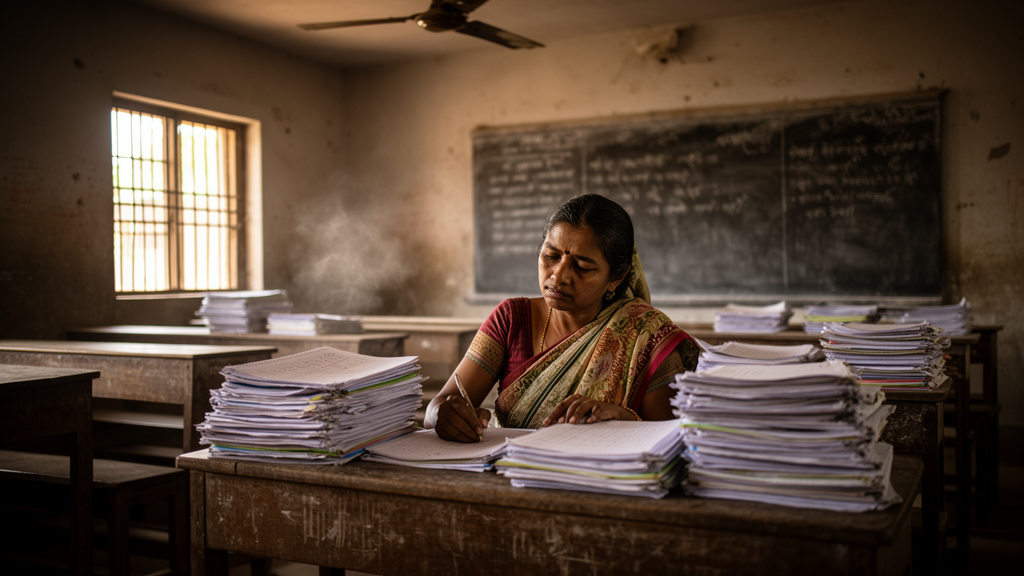
Bangladeshi teachers described work-life balance as being shaped primarily by workload, caregiving demands, leadership practices and institutional conditions rather than individual resilience alone, according to an abstract describing a qualitative study of 23 teachers in urban, regional and remote-Upazila school contexts. The analysis identified three themes: structural and personal barriers; a need for proactive, leadership-supported and system-level support; and principles of holism, flexibility and genuine teacher involvement in future wellbeing programs.
Researchers used a qualitative design grounded in constructivist-contextualist epistemology and applied reflexive thematic analysis to semi-structured interviews. The analysis was interpreted through a social-ecological lens. Reported barriers included workload intensification, gendered caregiving burdens, context-specific constraints in remote settings and unsupportive institutional cultures. Accounts from two participants in remote-Upazila schools illustrated local infrastructural constraints, but the authors state that the study does not establish geographical representativeness or systematic location effects.
The participants identified proactive, leadership-supported and system-level support as necessary elements of institutional support. They also described future wellbeing programs in terms of holism, flexibility and genuine teacher involvement. These findings are qualitative accounts from the interviewed sample rather than measurements of program effectiveness, causal effects or outcomes across Bangladeshi schools.
The study offers context-specific evidence about how teachers experience work-life balance, stress and the institutional conditions associated with their wellbeing. Its authors describe the findings as having analytic rather than statistical transferability to comparable settings, meaning that the themes may inform interpretation in similar contexts without demonstrating that they apply universally. The available evidence summarized here comes from the study abstract; it does not provide quantitative estimates, intervention results or a systematic comparison among the three school-setting categories.
Subject of Research: Qualitative analysis of Bangladeshi teachers’ work-life balance, stress and perceived institutional support
Article Title: Work-life balance and wellbeing among teachers in Bangladesh: a reflexive thematic analysis of stress, coping, and institutional support
Article References: Ahmed, M. K. (2026). Work-life balance and wellbeing among teachers in Bangladesh: a reflexive thematic analysis of stress, coping, and institutional support. BMC Psychology. https://doi.org/10.1186/s40359-026-05438-w
Image Credits: AI Generated
DOI: 10.1186/s40359-026-05438-w
Keywords: Bangladesh, teachers, work-life balance, wellbeing, stress, institutional support, reflexive thematic analysis, qualitative interviews, school leadership, Work-life, balance, reflexive
Cite Scienmag News
Glenn Wilkins. (October 20, 2026). Work-life balance and wellbeing among teachers in Bangladesh: a reflexive thematic analysis of stress, coping, and institutional support. Scienmag. https://scienmag.com/work-life-balance-and-wellbeing-among-teachers-in-bangladesh-a-reflexive-thematic-analysis-of-stress-coping-and-institutional-support/
Glenn Wilkins. "Work-life balance and wellbeing among teachers in Bangladesh: a reflexive thematic analysis of stress, coping, and institutional support." Scienmag, 20 October 2026, https://scienmag.com/work-life-balance-and-wellbeing-among-teachers-in-bangladesh-a-reflexive-thematic-analysis-of-stress-coping-and-institutional-support/. Accessed 20 October 2026.
Glenn Wilkins. "Work-life balance and wellbeing among teachers in Bangladesh: a reflexive thematic analysis of stress, coping, and institutional support." Scienmag. October 20, 2026. https://scienmag.com/work-life-balance-and-wellbeing-among-teachers-in-bangladesh-a-reflexive-thematic-analysis-of-stress-coping-and-institutional-support/


