


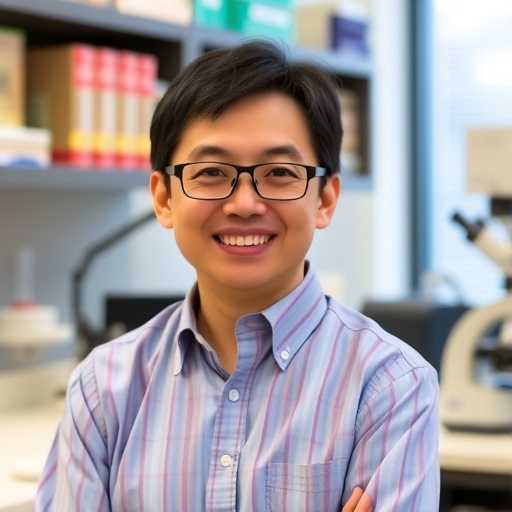
In a groundbreaking advancement in plant pathology and molecular biology, Li-Jun Ma, a professor of biochemistry and molecular biology at the University of Massachusetts Amherst, has been awarded the prestigious 2026 Mahoney Life Sciences Prize for her pioneering research addressing the ongoing threat posed by the fungal pathogen Fusarium oxysporum f.sp. cubense tropical race 4 (Foc TR4) to global banana production. This accolade not only recognizes her scientific contributions but also highlights the critical importance of mitigating the harmful effects of this pathogen on the cultivar that dominates the world’s banana markets.
Bananas, a staple fruit globally and a crucial economic crop, have suffered devastating losses due to fungal diseases throughout history. In the mid-20th century, the Gros Michel cultivar, once widely consumed, was rendered functionally extinct by an outbreak of Fusarium wilt caused by a strain of Fusarium oxysporum. The commercial banana industry’s response was the widespread adoption of the Cavendish banana, a variety bred to resist the original fungal outbreak and which came to dominate banana cultivation worldwide. For several decades, this monoculture thrived, but by the 1990s, a resurgence of Fusarium wilt, caused by a different strain known as tropical race 4 (TR4), began to threaten the stability of Cavendish plantations globally.
The central question that Ma and her colleagues sought to answer was whether this new Fusarium outbreak represented an evolutionary offshoot of the earlier strain that devastated the Gros Michel bananas or was an independent emerging threat. Their research, recently published in the journal Nature Microbiology, provided conclusive evidence that the Foc TR4 strain responsible for current outbreaks had not evolved from the Fusarium strain that ended the Gros Michel’s dominance. This finding disrupts prior assumptions and shifts the focus toward understanding the unique pathogenic mechanisms employed by Foc TR4.
Delving deeper into the molecular interactions between the pathogen and its banana host, Ma’s team uncovered a fascinating and complex virulence strategy involving accessory genes responsible for the production and detoxification of fungal nitric oxide (NO). Nitric oxide, a gaseous signaling molecule, plays a critical role in pathogen-host interactions in various organisms. Their study demonstrated that Foc TR4 leverages accessory genes to manipulate nitric oxide metabolism, producing NO to facilitate infection while simultaneously detoxifying excess NO to prevent self-damage.
By performing targeted gene deletions of two key genes involved in nitric oxide production, the researchers observed a significant attenuation in the virulence of Foc TR4. This direct correlation between fungal NO metabolism and pathogenicity opens new avenues for intervention strategies that disrupt the pathogen’s ability to infect its host. This mechanistic insight stands as a major leap forward in the field of plant pathology and offers a tangible molecular target for future disease control efforts.
Beyond theoretical understanding, Ma’s laboratory actively pursues translational applications of these findings in collaboration with expert banana researchers. They are investigating the development of novel fungicides aimed at inhibiting nitric oxide biosynthesis and the function of accessory genes identified as vital to Foc TR4’s pathogenicity. These fungicides promise specificity and effectiveness against the fungus while minimizing environmental impact.
In parallel, the research team is exploring RNA interference (RNAi) technologies to silence critical fungal virulence genes by deploying small RNA molecules that can selectively disrupt gene expression within the pathogen. This innovative and environmentally friendly approach could provide a precision tool to protect banana crops from Fusarium wilt without harming beneficial organisms or inducing resistance mutations common with broad-spectrum fungicides.
The Mahoney Life Sciences Prize, accompanied by a $25,000 award, recognizes not only the scientific novelty and academic rigor exemplified by Ma’s work but also its potential for transformative societal impact. Richard Mahoney, former CEO and chairman of Monsanto and a UMass alumnus, emphasized the importance of such research, noting how it could yield practical solutions that improve agricultural sustainability and food security on a global scale.
As a public land-grant research university, the University of Massachusetts Amherst continues its tradition of fostering innovative life sciences research addressing critical challenges. The Mahoney Life Sciences Prize is annually bestowed upon CNS faculty members whose work exemplifies the intersection of cutting-edge discovery and real-world applicability. Ma’s research fits this mandate perfectly, showcasing how fundamental molecular insights can be harnessed to combat pressing agricultural threats.
Carrie Williams, partner at McKesson Ventures and one of the prize reviewers, praised the project for its translational scope and collaborative strategy. The effective communication of scientific findings into actionable applications was a key factor in the research’s recognition, demonstrating readiness to bridge laboratory discoveries with field implementation.
Looking ahead, Ma and her team remain cautiously optimistic. While the recent discoveries illuminate crucial aspects of Foc TR4 pathogenesis, many questions remain unanswered in the quest to fully comprehend and control this fungal menace. Continued investigation into the molecular biology of Fusarium and host defense mechanisms will be essential in developing durable solutions that safeguard the future of banana cultivation, an economic staple and dietary cornerstone for millions worldwide.
The journey from curiosity-driven discovery to impactful societal benefit exemplifies the essence of modern life sciences research. Li-Jun Ma’s achievements not only contribute valuable knowledge to the scientific community but also inspire innovative approaches to protect global food security. As this research progresses, it carries the promise of preserving one of the world’s most beloved fruits against the looming threat of fungal extinction.
News Publication Date: 2026
Web References:
- https://umassfusariumlab.wixsite.com/ma-lab/people
- https://www.umass.edu/natural-sciences/research/mahoney-life-sciences-prize
- https://www.umass.edu/news/article/banana-apocalypse-near-umass-amherst-biologists-might-have-found-key-their-survival
- https://www.nature.com/articles/s41564-024-01779-7
Cite Scienmag News
Drew Townsend. (April 14, 2026). UMass Amherst Molecular Biologist Li-Jun Ma Awarded 2026 Mahoney Life Sciences Prize. Scienmag. https://scienmag.com/umass-amherst-molecular-biologist-li-jun-ma-awarded-2026-mahoney-life-sciences-prize/
Drew Townsend. "UMass Amherst Molecular Biologist Li-Jun Ma Awarded 2026 Mahoney Life Sciences Prize." Scienmag, 14 April 2026, https://scienmag.com/umass-amherst-molecular-biologist-li-jun-ma-awarded-2026-mahoney-life-sciences-prize/. Accessed 4 September 2026.
Drew Townsend. "UMass Amherst Molecular Biologist Li-Jun Ma Awarded 2026 Mahoney Life Sciences Prize." Scienmag. April 14, 2026. https://scienmag.com/umass-amherst-molecular-biologist-li-jun-ma-awarded-2026-mahoney-life-sciences-prize/


