


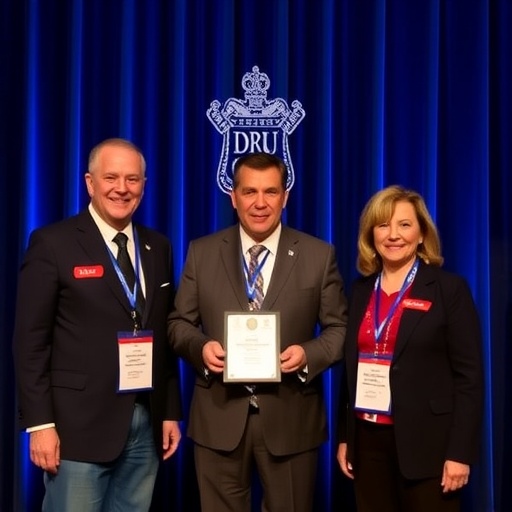
In a landmark announcement that has invigorated the dental research community, the International Association for Dental, Oral, and Craniofacial Research (IADR) together with the American Association for Dental, Oral, and Craniofacial Research (AADOCR) revealed the esteemed recipients of the prestigious William J. Gies Award for 2026. This accolade, named after the visionary founder of the Journal of Dental Research, honors the most outstanding papers published in the journal over the preceding year. The award ceremony took place during the opening session of the 104th General Session of the IADR, held alongside the 55th Annual Meeting of the AADOCR and the 50th Annual Meeting of the Canadian Association for Dental Research in San Diego, California, a global nexus for pioneering dental science.
The first recognized study, triumphant in the Biological Research category, sheds novel light on the complex microbiological interplay within the oral cavity, focusing on Aggregatibacter aphrophilus and its Type VI Secretion System (T6SS) effectors. These bacterial components are instrumental in mediating host-pathogen interactions, significantly influencing oral health and disease progression. Detailed molecular elucidations presented by K. Bao and colleagues unveil mechanisms by which these effectors modulate immune responses and bacterial survival strategies, thus opening new avenues for therapeutic interventions in periodontal and systemic infections. Published in volume 104, issue 13 of the Journal of Dental Research, the paper not only enhances the understanding of microbial pathogenesis but also positions T6SS as a promising target for antimicrobial drug development.
Advancing the frontier of bioengineering in dentistry, the award in the Biomaterials & Bioengineering category was conferred to a groundbreaking study led by P. Mulimani and collaborators. Their innovative creation of a three-dimensional engineered periodontal ligament model subjected to magnetic tensile loading represents a significant leap in in vitro modeling of periodontal biomechanics. This system meticulously replicates the physiological loading conditions experienced by periodontal tissues, enabling nuanced investigations into the cellular responses that govern ligament regeneration and homeostasis. The technical sophistication entailed combining cutting-edge biomaterials engineering with magnetic actuation techniques, facilitating real-time mechano-biological assessments. The findings published in volume 103, issue 10 demonstrate potential pathways to enhance tissue engineering strategies that could revolutionize periodontal therapy and improve clinical outcomes.
In the domain of Clinical Research, the spotlight was placed on a compelling study exploring the phenotypic expression of Amelogenesis Imperfecta within the context of Loeys–Dietz Syndrome Type II, a rare connective tissue disorder. O. Duverger and the research team meticulously characterized the distinctive dental enamel defects manifesting in affected individuals, integrating advanced genetic analyses with comprehensive dental histology. Their work elucidates the molecular underpinnings and pathophysiological correlations between systemic connective tissue anomalies and dental developmental disorders. These insights are paramount, providing clinicians with crucial diagnostic markers and guiding personalized management approaches for patients with syndromic enamel pathologies. This landmark paper appeared in volume 104, issue 8 of the Journal of Dental Research, further enriching the clinical understanding of genetic dental diseases.
The William J. Gies Award, supported by the J. Morita Corporation, underscores academic excellence by recognizing groundbreaking contributions that resonate across basic science, applied research, and clinical practice in dental, oral, and craniofacial health. Each awardee receives a $1,000 monetary prize alongside a commemorative plaque, symbolizing their exceptional contributions to the expansion of scientific knowledge. The ceremony not only celebrates individual achievements but also epitomizes the collective advancement in the field driven by rigorous, peer-reviewed scientific inquiry.
The IADR, a global nonprofit entity, dedicates itself to propelling research that enhances oral health and overall well-being across populations. It boasts a diverse membership comprising scientists, clinicians, and students devoted to translational and fundamental dental research. Meanwhile, the AADOCR functions as its largest division, amplifying outreach and impact within the United States and globally by promoting the dissemination of high-quality research through annual meetings, publications, and advocacy. Such symbiotic organizational frameworks catalyze multidisciplinary collaboration and foster innovation essential for addressing complex oral health challenges worldwide.
The 104th IADR General Session served as a dynamic confluence for the scientific community, facilitating rigorous exchanges of knowledge, methodologies, and emerging technologies. Attendees witnessed cutting-edge presentations that spanned genomics, biomaterials science, clinical innovation, and public health dentistry, reflecting the multifaceted nature of dental research today. This ecosystem creates fertile ground where translational science bridges the gap between laboratory findings and clinical applications, ultimately shaping patient care protocols and informing public health policies.
The scientific rigor exemplified by the awarded studies is characterized by meticulous methodological design, advanced analytical techniques, and comprehensive data interpretation. The biological research paper leveraged molecular microbiology tools such as gene knockout mutants and host cell infection assays to dissect bacterial secretion mechanisms. The bioengineering study employed state-of-the-art 3D bioprinting and magnetic field manipulation to replicate physiological forces accurately. Meanwhile, the clinical investigation utilized next-generation sequencing and enamel ultrastructural microscopy to unravel genotype-phenotype correlations. Altogether, these multifaceted approaches epitomize the depth and breadth of contemporary dental research.
This recognition also propels future research directions by highlighting critical gaps and emerging themes within dental and craniofacial science. Understanding bacterial effector proteins like those in Aggregatibacter aphrophilus enhances comprehension of polymicrobial biofilms and their role in chronic inflammatory diseases. The engineered periodontal ligament model opens exploratory vistas into tissue regeneration and mechanotransduction pathways. Investigations into syndromic enamel abnormalities illuminate intricate molecular networks underpinning developmental dysplasias, guiding precision dentistry. These insights collectively steer the community toward novel diagnostics, biomaterial innovations, and targeted therapeutics that could transform oral healthcare paradigms.
As global oral health disparities persist, the findings from these award-winning papers carry profound implications beyond academic circles. Innovations in biomaterials modeling and microbial pathogenesis inform the design of accessible treatments and preventive strategies with potential scalability in diverse socioeconomic settings. Furthermore, advancing knowledge of genetic disorders affecting oral tissues enriches the global narrative on personalized medicine. Such scientific progress underscores the IADR and AADOCR’s commitment to leveraging research as a vehicle for societal benefit, aligned with broader public health objectives.
In sum, the 2026 William J. Gies Award exemplifies the pinnacle of dental research excellence, reflecting an interdisciplinary tapestry of scientific endeavor dedicated to unraveling the complexities of oral health and disease. The celebrated studies epitomize the dynamic synergy between foundational biological research, engineering prowess, and clinical acumen, heralding a transformative era in dental science. As these findings disseminate through the global community, they kindle inspiration and set new standards for innovation, collaboration, and impact in the pursuit of improved health worldwide.
- “Aggregatibacter aphrophilus T6SS Effectors in Host–Bacterial Interactions”
- “Engineered 3D Periodontal Ligament Model with Magnetic Tensile Loading”
- “Distinctive Amelogenesis Imperfecta in Loeys–Dietz Syndrome Type II”
News Publication Date: March 28, 2026
Web References: www.iadr.org
References:
- K. Bao, J. Oscarsson, P. Gehring, J. Grossmann, G.N. Belibasakis, N. Bostanci. J Dent Res 104(13):1487-1494 (2025)
- P. Mulimani, N.A. Mazzawi, A.J. Goldstein, et al. J Dent Res 103(10):1008-1016 (2025)
- O. Duverger, S.K. Wang, Q.N. Liu, et al. J Dent Res 104(8):840-850 (2025)
Cite Scienmag News
Kristina Jarvis. (April 14, 2026). IADR and AADOCR Reveal 2026 Recipients of the William J. Gies Award. Scienmag. https://scienmag.com/iadr-and-aadocr-reveal-2026-recipients-of-the-william-j-gies-award/
Kristina Jarvis. "IADR and AADOCR Reveal 2026 Recipients of the William J. Gies Award." Scienmag, 14 April 2026, https://scienmag.com/iadr-and-aadocr-reveal-2026-recipients-of-the-william-j-gies-award/. Accessed 5 September 2026.
Kristina Jarvis. "IADR and AADOCR Reveal 2026 Recipients of the William J. Gies Award." Scienmag. April 14, 2026. https://scienmag.com/iadr-and-aadocr-reveal-2026-recipients-of-the-william-j-gies-award/


