A humble sugar found in mushrooms, shrimp, and baker’s yeast is emerging as one of the more intriguing candidates in the search for new ways to influence multiple sclerosis, and a new review published in Food Science and Biotechnology argues that its most exciting effects may begin not in the brain, but in the gut. The disaccharide trehalose, long prized by the food industry as a stabilizer and sweetener, has in recent years attracted serious scientific attention for its ability to trigger autophagy, the cellular housekeeping process that clears damaged proteins and organelles. Now, a team of researchers led by Saghar Amirpour and Majid Eslami of Semnan University of Medical Sciences in Iran has pulled together the scattered evidence linking trehalose to the microbiota-gut-brain axis and to the immune machinery that drives multiple sclerosis, a chronic immune-mediated disease characterized by neuroinflammation, demyelination, and progressive neurological disability.
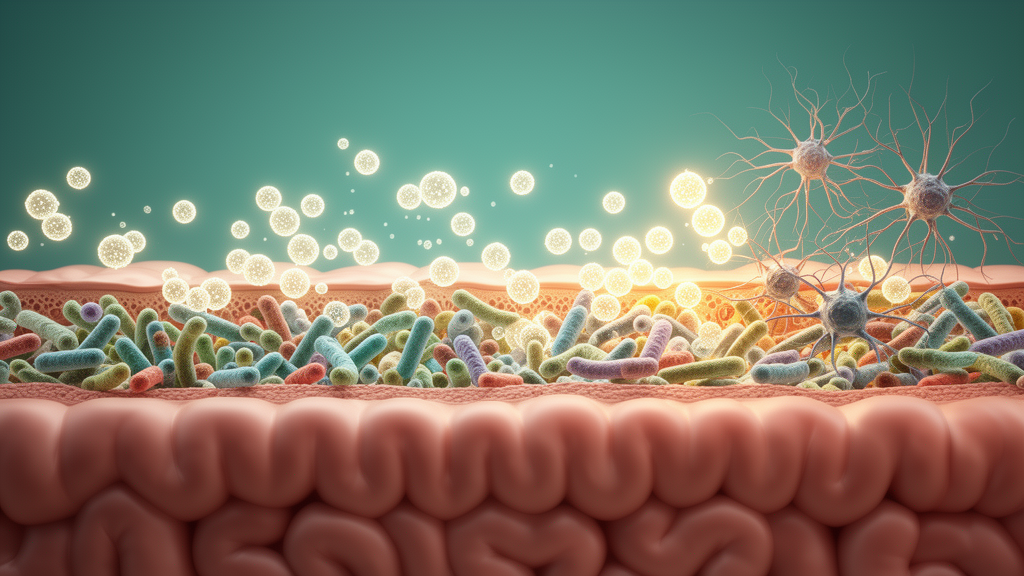
The review’s central premise rests on one of the most consequential shifts in modern neuroscience: the recognition that the trillions of microbes inhabiting the human intestine are not passive bystanders in neurological disease but active participants. Multiple sclerosis, in particular, has become a focal point for this line of research. Studies cited in the review show that gut bacteria isolated from patients with multiple sclerosis can worsen disease when transferred into mouse models, driving pro-inflammatory T-cell responses and even enabling spontaneous autoimmune encephalomyelitis in genetically susceptible animals. Conversely, commensal organisms and their metabolic products can protect against central nervous system demyelination. This bidirectional relationship, mediated through immune signaling, metabolites, and the integrity of the intestinal and blood-brain barriers, has opened what many researchers consider a genuine therapeutic frontier.
Where does trehalose fit into this picture? The review lays out several converging mechanisms. First, trehalose is one of the best-characterized dietary inducers of autophagy, a process first described in 2007 when researchers showed that the sugar accelerates the clearance of mutant huntingtin and alpha-synuclein, proteins implicated in Huntington’s and Parkinson’s disease. Unlike rapamycin, trehalose enhances autophagy through an mTOR-independent route, and later work revealed that it also inhibits solute carrier 2A (SLC2A) transporter proteins, contributing to its autophagy-inducing effects. In the context of neuroinflammation, this matters because autophagy in immune cells and glia appears to be essential for recovery from inflammatory damage. Research on experimental autoimmune encephalomyelitis, the standard animal model of multiple sclerosis, has shown that microglial autophagy-associated phagocytosis is required for clearing myelin debris and resolving neuroinflammation, while targeting lipophagy in macrophages improves repair in models of the disease.
Second, trehalose appears to exert direct anti-inflammatory and antioxidant effects that are relevant to the pathological cascade of multiple sclerosis. Experiments in RAW 264.7 macrophages demonstrated that trehalose inhibits inflammatory responses through mitochondrial reprogramming, and separate work showed that the sugar protects cells against oxidative stress by regulating the Keap1-Nrf2 pathway, a master switch of cellular antioxidant defense, in parallel with autophagy activation. In models of Parkinson’s disease, trehalose treatment has repeatedly reduced neurochemical and behavioral deficits, and in vitro studies report attenuation of neurotoxicity through reduced oxidative stress and dampened MAPK and AMPK signaling. The review also highlights a more structural role: trehalose, a well-known chemical chaperone, can stabilize misfolded proteins, and one study found it prevented the spherulite formation of myelin basic protein, the very protein targeted by the autoimmune attack in multiple sclerosis.
The third and perhaps most novel strand of evidence concerns the gut microbiota itself. Both in vitro and animal studies indicate that oral trehalose consumption can shift the abundance of specific microbial groups, including populations associated with the production of short-chain fatty acids, a class of bacterial metabolites that has become central to microbiome-immunology research. Short-chain fatty acids such as propionate and butyrate promote the generation of peripheral regulatory T cells, the immune cells that restrain autoimmune responses, and human studies have repeatedly found that patients with multiple sclerosis show gut dysbiosis and reduced short-chain fatty acid levels. A landmark study published in Cell in 2020 showed that propionic acid shapes the disease course of multiple sclerosis through an immunomodulatory mechanism, and follow-up work demonstrated that propionate promotes neurite recovery in damaged multiple sclerosis neurons. Other clinical studies have linked serum short-chain fatty acid concentrations to disability, T2 lesion counts, inflammatory profiles, and even pediatric onset of the disease.
By potentially enriching short-chain fatty acid-producing bacteria, trehalose could therefore act as a functional food that nudges the gut ecosystem toward an anti-inflammatory configuration. The review notes that these microbiota changes may help modulate intestinal barrier function and systemic immune responses, two factors with direct relevance to multiple sclerosis pathogenesis. Increased intestinal permeability and the resulting systemic inflammation are recognized features of the disease, and animal research has shown that the gut microbiota influences blood-brain barrier permeability in mice, providing a plausible mechanistic route by which a dietary sugar acting in the colon could ultimately affect the central nervous system. Earlier work also showed that trehalose ingestion modifies mucosal immune responses in the small intestine of mice, suggesting the sugar’s immunological reach extends beyond simple microbial feeding.
The authors are careful to situate these findings within the framework of experimental autoimmune encephalomyelitis, the induced model in which autoreactive T cells attack myelin in ways that mirror key features of human multiple sclerosis. In this model, trehalose’s potential to influence neuroprotective pathways and myelin-related processes represents a testable hypothesis rather than an established therapy. The model has been instrumental in dissecting the roles of Th17 cells, which attack the blood-brain barrier, and regulatory T-cell populations, which maintain tolerance, and the review suggests that trehalose’s combined actions on autophagy, inflammatory signaling, and microbiota composition could intersect with all of these cell types. Still, the gap between a mouse model and a heterogeneous human disease marked by relapsing and progressive courses remains substantial.
That caveat is the review’s most important message. Nearly all of the evidence supporting trehalose’s role in multiple sclerosis is preclinical, drawn from cell culture, in vitro colonic models, and animal experiments. Whether oral trehalose can reshape the microbiota of people with multiple sclerosis in the same way it does in laboratory settings is unknown, as are the clinical effectiveness, safety profile, and appropriate dosing of the sugar for this patient population. The authors state plainly that well-structured clinical trials are needed to confirm any therapeutic significance. There are also unresolved scientific questions embedded in the trehalose literature itself, including reports that the sugar can remodel human microbiota in ways that alter the outcome of Clostridioides difficile infection in vitro, a reminder that microbial interventions can cut in unexpected directions depending on context.
Nevertheless, the review makes a persuasive case that trehalose deserves a place in the growing portfolio of microbiota-targeted strategies being explored for multiple sclerosis, alongside fecal microbiota transplantation, propionate supplementation, and dietary interventions. Its appeal lies in its unusual breadth: a single, inexpensive, naturally occurring disaccharide that simultaneously engages autophagy, oxidative stress defenses, protein stabilization, and microbial ecology. As the global prevalence of multiple sclerosis continues to rise according to the Atlas of MS, and as existing disease-modifying therapies leave significant treatment gaps, particularly in neuroprotection and progression, the search for accessible interventions that regulate immunity rather than suppress it has intensified. Trehalose is not a cure, and the authors never claim it is. But as a probe of the microbiota-immunity-brain interface and a candidate for future clinical testing, the sugar that helps desert-dwelling organisms survive dehydration may prove to have unexpected value for the millions of people living with one of neurology’s most stubborn diseases.
Subject of Research: The potential of trehalose to modulate gut microbiota, autophagy, and immune pathways in multiple sclerosis
Article Title: Modulation of gut microbiota by trehalose and its immunomodulatory effects in multiple sclerosis: novel mechanisms and therapeutic perspectives
Article References: Modulation of gut microbiota by trehalose and its immunomodulatory effects in multiple sclerosis: novel mechanisms and therapeutic perspectives. (n.d.). https://doi.org/10.1007/s10068-026-02339-x
Image Credits: AI Generated
DOI: 10.1007/s10068-026-02339-x
Keywords: trehalose, multiple sclerosis, gut microbiota, autophagy, short-chain fatty acids, neuroinflammation, microbiota-gut-brain axis, experimental autoimmune encephalomyelitis, immunomodulation, demyelination, prebiotics, neuroprotection
Cite Scienmag News
Morgan Morrow. (October 14, 2026). Trehalose, the Gut Microbiome, and a New Lead in Multiple Sclerosis Research. Scienmag. https://scienmag.com/trehalose-the-gut-microbiome-and-a-new-lead-in-multiple-sclerosis-research/
Morgan Morrow. "Trehalose, the Gut Microbiome, and a New Lead in Multiple Sclerosis Research." Scienmag, 14 October 2026, https://scienmag.com/trehalose-the-gut-microbiome-and-a-new-lead-in-multiple-sclerosis-research/. Accessed 14 October 2026.
Morgan Morrow. "Trehalose, the Gut Microbiome, and a New Lead in Multiple Sclerosis Research." Scienmag. October 14, 2026. https://scienmag.com/trehalose-the-gut-microbiome-and-a-new-lead-in-multiple-sclerosis-research/