


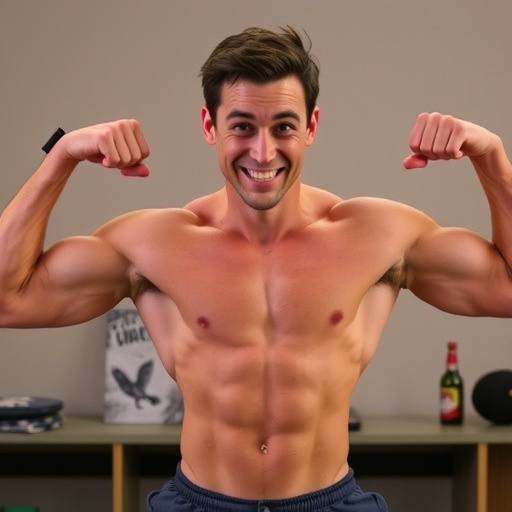
New research from Flinders University has revealed a troubling dynamic in the influence of social media on young men’s body image and health behaviors, particularly focusing on TikTok content related to fitness and supplements. This study exposes how short exposures—merely three minutes—of idealized fitness and muscle-building supplement videos can significantly undermine young men’s satisfaction with their own fitness and nutrition, while simultaneously fueling their interest in muscle-enhancing substances.
Published in the peer-reviewed journal Body Image, this groundbreaking experimental study represents one of the first empirical investigations into the immediate psychological and behavioral effects of TikTok’s fitness-related ecosystem on men aged 17 to 30. Unlike correlational studies that rely on self-report over time, this controlled experiment permits causal inferences by directly assessing the impact of highly visual, quickly consumable content on body-related attitudes and intentions.
The investigation enlisted over 280 young male participants who were randomized to view different video content blocks: fitness advice, supplement promotion, or unrelated travel videos as the control condition. After viewing just three minutes of these curated clips, participants completed assessments measuring satisfaction with their current fitness and nutritional status, along with their intentions to use creatine and other muscle-building substances. The brevity of exposure underscores how rapidly digital media can shape perceptions and intentions in vulnerable populations.
Results revealed that both fitness advice and supplement-focused videos led to significantly decreased satisfaction with personal fitness and nutrition compared to those who watched neutral travel content. Intriguingly, fitness advice videos exerted stronger negative effects than supplement advertisements, suggesting that instructional or motivational fitness content paradoxically heightens feelings of inadequacy. The phenomenon may arise because these videos implicitly convey standards that seem unattainable without supplemental assistance.
Further analysis demonstrated marked increases in the desire to use creatine, a commonly marketed muscle-building supplement, particularly among men with elevated drive for muscularity—a psychological construct indicating a strong desire for extreme muscular development. These individuals also reported greater dissatisfaction with their nutrition and were more prone to considering advanced or risky muscle-enhancing substances, indicating a potentially dangerous feedback loop between social media exposure and body dissatisfaction.
The mediating mechanism implicated by the researchers is social comparison, a cognitive process whereby individuals evaluate themselves relative to others. On visually saturated platforms like TikTok, this comparison is swift and continuous, intensifying the psychological impact when viewers juxtapose their own physique against hyper-muscular, digitally enhanced bodies. This dynamic leads to harmful self-evaluation, lowering body satisfaction and encouraging supplement use as compensatory behavior.
Senior author Professor Ivanka Prichard, who directs the Embrace Impact Lab at Flinders University, emphasizes that the problem is not the quantity of screen time alone but the quality and content of exposure—namely, repeated encounters with hyper-muscular physiques, promotional marketing for supplements, and steroid-style fitness content. Such exposure has been increasingly associated with muscle dysmorphia, a clinical mental health disorder characterized by obsessive concerns over insufficient muscularity.
Lead author Dr. Nepheli Beos, a psychologist who conducted the research as part of her doctoral studies, highlights that even brief exposure can produce immediate perceptual shifts. This demonstrates the potent, rapid influence of visual content on young men’s body image and health intentions. The findings challenge the simplistic view that social media can only inspire positive fitness behaviors, revealing instead a complex interplay where motivational content can paradoxically undermine wellbeing.
Importantly, the research clarifies that not all TikTok fitness content or supplement use is inherently harmful. The concern arises with idealized, sensationalized portrayals that oversimplify health benefits and minimize risks associated with certain supplements or performance enhancers. Young men need enhanced media literacy skills to critically evaluate these messages, resisting the urge to adopt unrealistic body ideals or unsafe substance use.
The authors advocate for targeted interventions that incorporate media literacy education tailored to young men, alongside calls for social media platforms to foster more responsible and transparent content practices. Given TikTok’s global reach and younger demographic, mitigating harmful influences requires a concerted, multidisciplinary effort spanning public health, psychological research, education, and digital policy.
This study underscores a growing public health concern: the subtle yet profound pressures exerted by rapidly evolving social media platforms. By elucidating the mechanisms of influence and demographic vulnerabilities, the research provides a foundation for developing evidence-based strategies to support men’s psychological and physical health in the digital age. As social media content continues to proliferate, understanding its nuanced effects remains critical.
Ultimately, the findings make clear that what may appear as innocuous fitness inspiration on TikTok can quickly morph into potent psychological pressure and risky behavior. The pervasive swirl of comparison, idealization, and promotion demands urgent attention to support young men in cultivating healthier relationships with their bodies, fitness pursuits, and nutritional choices.
News Publication Date: 29-Mar-2026
Web References:
- https://doi.org/10.1016/j.bodyim.2026.102082
- https://theembracehub.com/impact-lab/
- https://news.flinders.edu.au/blog/2024/10/30/the-dangerous-pursuit-of-muscularity-in-men-and-adolescent-boys/
References:
Beos, N., Kemps, E., & Prichard, I. (2026). The impact of fitness and supplement TikTok content on body, nutrition and fitness satisfaction, and intentions to use muscle-building substances in young men. Body Image. https://doi.org/10.1016/j.bodyim.2026.102082
Cite Scienmag News
Courtney Benton. (April 29, 2026). The Science Behind TikTok’s Muscle Obsession: Why It’s a Challenge for Young Men. Scienmag. https://scienmag.com/the-science-behind-tiktoks-muscle-obsession-why-its-a-challenge-for-young-men/
Courtney Benton. "The Science Behind TikTok’s Muscle Obsession: Why It’s a Challenge for Young Men." Scienmag, 29 April 2026, https://scienmag.com/the-science-behind-tiktoks-muscle-obsession-why-its-a-challenge-for-young-men/. Accessed 4 September 2026.
Courtney Benton. "The Science Behind TikTok’s Muscle Obsession: Why It’s a Challenge for Young Men." Scienmag. April 29, 2026. https://scienmag.com/the-science-behind-tiktoks-muscle-obsession-why-its-a-challenge-for-young-men/


