


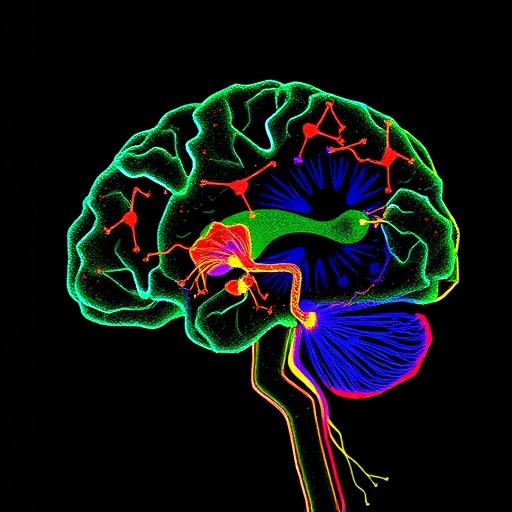
In a groundbreaking discovery emerging from Kanazawa University, researchers have unveiled a novel mechanism by which structural alterations in the cerebellum can profoundly influence social behavior. This insight challenges the traditional understanding of autism spectrum disorder (ASD) by highlighting the role of extracellular matrix components surrounding cerebellar neurons, specifically perineuronal nets (PNNs), in modulating broader brain networks implicated in social cognition. The study offers a transformative lens through which the neural substrates of ASD may be dissected and innovatively targeted.
Autism spectrum disorder, a pervasive neurodevelopmental condition, is predominantly marked by deficits in social interaction and communication. The heterogeneity of ASD manifestations and underlying pathology has long suggested a complex neural etiology involving widespread brain networks rather than a singular locus of dysfunction. Recent advances have underscored the cerebellum’s significance beyond its classical motor coordination role, implicating it as a vital hub in higher-order processes including cognitive flexibility, emotional regulation, and socio-behavioral integration. However, the precise molecular and cellular cascades by which cerebellar anomalies contribute to ASD symptomatology have remained elusive.
The Kanazawa team embarked on an investigative journey focusing on the cerebellar deep nuclei, key relay sites that act as the principal output stations of the cerebellum. Utilizing multiple mouse models that emulate different ASD risk factors—namely, prenatal valproic acid (VPA) exposure to mimic environmental insults and genetic alterations in the Chd8 gene—the researchers sought convergent neural signatures indicative of ASD pathogenesis. Among their pivotal findings was a pronounced diminution of perineuronal nets enveloping neurons in the deep cerebellar nuclei across both models. PNNs constitute intricate assemblies of extracellular matrix molecules, including chondroitin sulfate proteoglycans and link proteins, that ensconce neurons to stabilize synaptic connections, modulate ion fluxes, and facilitate circuit maturation.
To elucidate the functional ramifications of PNN disruption, the investigators employed enzymatic treatment to selectively degrade these extracellular structures within the cerebellar nuclei of adult mice. Behavioral assays revealed that such intervention recapitulated core social deficits: treated mice exhibited markedly reduced social engagement and diminished investigative behaviors toward novel conspecifics. These outcomes underscore the necessity of intact PNN scaffolds for the maintenance of normative social behaviors and suggest that PNN integrity is a critical determinant of cerebellar output function.
Neurophysiological assessments further demonstrated that, under normal conditions, social stimuli potentiate robust activation of deep cerebellar nuclei neurons, which propagate excitatory signals to integrative regions including the midbrain and thalamus. The enzymatic breakdown of PNNs attenuated this activation, leading to widespread suppression of neuronal firing within cerebellum-innervated circuits. This cascading hypoactivity substantiates the concept that PNN disruption destabilizes cerebellar circuit dynamics, thereby impairing the transmission of social information through interconnected brain networks.
Mechanistic insights were deepened by the identification of heightened expression of the transcription factor ARNT2 in neurons devoid of PNNs. ARNT2 is known to modulate gene expression patterns that fine-tune neuronal excitability and plasticity. Elevated ARNT2 levels appeared to induce a hypo-responsive neuronal phenotype, dampening the circuit’s responsiveness to environmental stimuli. Importantly, targeted suppression of ARNT2 using molecular interventions reversed both electrophysiological deficits and social behavioral abnormalities, positioning ARNT2 as a linchpin in the molecular cascade linking extracellular matrix perturbation to functional circuit disruption.
The implications of this research extend beyond a mere anatomical curiosity. By linking extracellular matrix modifications in the cerebellum to systemic neural network dysfunctions and resultant behavioral phenotypes, the study pioneers a conceptual shift. Prior ASD investigations predominantly concentrated on synaptic anomalies within cortical regions, particularly focusing on excitation-inhibition imbalances and neurotransmitter dysregulation. The revelation that cerebellar PNNs and transcriptional regulators orchestrate social behaviors introduces a new paradigm of extracellular influence over neural circuit homeostasis.
Additionally, this study highlights the cerebellum’s integral role not only in motor control but also in complex social processes, consolidating a growing consensus that cerebellar networks engage extensively with cortical and subcortical areas implicated in ASD. The broad network effects resulting from localized cerebellar PNN loss narrate the story of how microenvironmental alterations can ripple through brain connectivity to disrupt nuanced behavioral outputs.
Future investigations will need to evaluate whether such mechanisms are conserved in human neurobiology and, crucially, whether therapeutic modulation of cerebellar PNNs or ARNT2 expression can ameliorate social deficits in ASD patients. The tractability of extracellular matrix components to enzymatic or pharmacological targeting presents an intriguing therapeutic avenue. Moreover, dissection of the interplay between cerebellar circuitry and other socio-cognitive brain regions promises to elucidate the systems-level abnormalities defining ASD.
This pioneering work lays a critical foundation for reframing ASD from a predominantly cortical synaptopathy to a disorder encompassing extracellular matrix integrity and cerebellar network homeostasis. By expanding the scope of ASD research into the cerebellar domain and elucidating molecular underpinnings of circuit dysregulation, the study propels the scientific community toward novel interventions aimed at restoring social function.
As the neuroscience field embraces the multifaceted roles of the cerebellum and extracellular matrices, this research highlights the unity of structural components and transcriptional control in orchestrating behavior. The intricacies revealed by Kanazawa University’s group represent an essential stride in unraveling the complex biological tapestry of neurodevelopmental disorders, setting the stage for innovative diagnostic and therapeutic strategies.
The rich interplay of genetic and environmental risk factors, manifested through fragile extracellular scaffolding and transcriptional imbalances, underscores the nuanced architecture of brain dysfunction in ASD. Ultimately, these insights affirm the cerebellum’s underestimated influence on cognition and sociality, inviting a broader reconsideration of its place in human neuropsychiatric health.
News Publication Date: 14-May-2026.
Web References: 10.1038/s41398-026-03952-4
Cite Scienmag News
Cassandra Pierce. (June 12, 2026). New Insights Reveal How Cerebellar Extracellular Structures Influence Social Behavior and Autism-Linked Neural Mechanisms. Scienmag. https://scienmag.com/new-insights-reveal-how-cerebellar-extracellular-structures-influence-social-behavior-and-autism-linked-neural-mechanisms/
Cassandra Pierce. "New Insights Reveal How Cerebellar Extracellular Structures Influence Social Behavior and Autism-Linked Neural Mechanisms." Scienmag, 12 June 2026, https://scienmag.com/new-insights-reveal-how-cerebellar-extracellular-structures-influence-social-behavior-and-autism-linked-neural-mechanisms/. Accessed 3 September 2026.
Cassandra Pierce. "New Insights Reveal How Cerebellar Extracellular Structures Influence Social Behavior and Autism-Linked Neural Mechanisms." Scienmag. June 12, 2026. https://scienmag.com/new-insights-reveal-how-cerebellar-extracellular-structures-influence-social-behavior-and-autism-linked-neural-mechanisms/


