


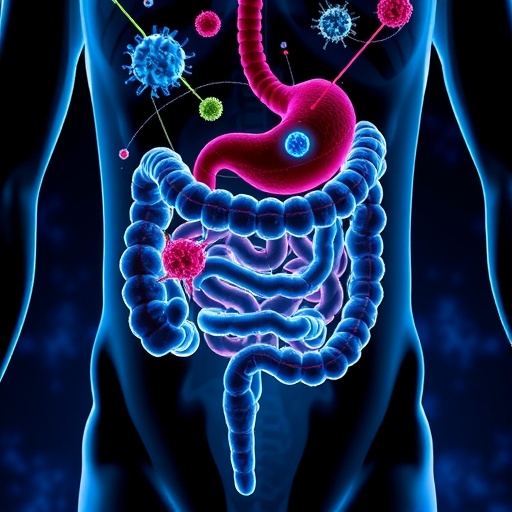
In a groundbreaking study published in Translational Psychiatry, researchers have unveiled compelling evidence linking preoperative gut microbiota alterations and disturbances in branched-chain amino acid (BCAA) metabolism to the onset of postoperative delirium (POD) following cardiac surgery. This prospective multi-omic investigation harnesses cutting-edge integrative methodologies to untangle the complex interplay between the gut microbial ecosystem and metabolic profiles, shedding new light on the enigmatic pathophysiology of delirium — a common but poorly understood neuropsychiatric complication after major surgical interventions.
Postoperative delirium, characterized by acute cognitive dysfunction and fluctuating consciousness, is a frequent and often devastating consequence of cardiac surgery. Despite decades of clinical observation, the causal mechanisms underpinning POD remain elusive, and current treatment options are predominantly symptomatic. The pioneering work led by Lyu, Wang, Zhao, and colleagues embarks on an ambitious journey to map the preoperative gut microbial networks and associated metabolic perturbations that may predispose patients to this debilitating condition.
The research cohort consisted of patients scheduled for complex cardiac procedures, matched prospectively to control for confounding variables such as age, comorbidities, and medication history. By deploying multi-omic approaches—including metagenomic sequencing to characterize microbial diversity and metabolomic profiling to measure systemic metabolites—the team orchestrated a comprehensive analysis that transcends the limitations of single-dimensional studies.
At the heart of their findings lies a significant disruption in the gut microbiota network of patients who subsequently developed POD. Specific perturbations were noted in microbial community structure, with diminished abundance of key taxa involved in neuroprotective functions. These microbial shifts were intricately correlated with aberrations in circulating levels of BCAAs — leucine, isoleucine, and valine — essential amino acids implicated in neurotransmitter synthesis and neuroinflammation modulation.
The investigation uncovered a unique signature of metabolic disturbance where elevated BCAA levels, contrary to traditional expectations, corresponded with increased delirium risk. This counterintuitive observation challenges prevailing assumptions about amino acid metabolism in neuropsychiatric conditions and suggests a nuanced, possibly bidirectional relationship between systemic metabolism and brain function during the perioperative period.
Crucially, the study’s network analysis exposed a reduction in microbial connectivity and resilience, indicating that the gut ecosystem’s robustness may play a protective role against delirium onset. The diminished microbial interactions parallel a breakdown in metabolic homeostasis, highlighting the gut-brain axis as a critical frontier for understanding and potentially mitigating POD.
This novel perspective aligns with burgeoning evidence implicating the microbiota-gut-brain axis in diverse neurocognitive disorders. By extending this framework to the acute, surgically-induced cognitive impairment spectrum, the researchers pave the way for innovative diagnostic and therapeutic strategies targeting microbial and metabolic biomarkers.
The implications for clinical practice are profound. Early identification of microbial and metabolic aberrations could enable preoperative risk stratification, allowing for tailored interventions such as microbiota modulation or metabolic support to avert delirium. Moreover, the multi-omic design exemplifies the power of integrative science, offering a template for future investigations into complex biological phenomena.
Mechanistically, the role of BCAAs in neuroinflammation and neurotransmission emerges as a promising focal point. Elevated BCAAs may influence glial activation and excitatory-inhibitory balance in neural circuits, processes intricately linked to delirium pathogenesis. Alternatively, microbial dysbiosis may elicit systemic inflammatory cascades exacerbating vulnerability to postoperative cognitive disturbances.
While causality cannot be definitively established in this observational framework, the robust associations unveiled provide fertile ground for hypothesis-driven experimental studies. Animal models and interventional trials manipulating gut microbiota and amino acid metabolism will be essential to decipher the causal pathways and therapeutically exploit these insights.
Additionally, the study raises intriguing questions about the influence of perioperative factors such as antibiotics, anesthetics, and nutrition on the gut ecosystem and metabolic milieu. Elucidating how these variables intersect with individual microbial and metabolic profiles could optimize perioperative care protocols to minimize delirium risk.
This research also underscores the importance of personalized medicine in surgical populations. The heterogeneity of microbiota compositions and metabolic responses suggests that one-size-fits-all approaches are inadequate. Instead, harnessing patient-specific data could revolutionize delirium prevention and management.
The potential for microbiome-targeted therapies—ranging from probiotics and prebiotics to fecal microbiota transplantation—emerges as an exciting frontier. Coupled with metabolic modulators, these interventions might restore gut and systemic balance, reinforcing neurocognitive resilience in vulnerable individuals.
In summary, Lyu and colleagues provide a compelling, multidimensional portrait of how preoperative gut microbial networks and BCAA metabolism intricately orchestrate the risk landscape for postoperative delirium following cardiac surgery. Their findings herald a paradigm shift, illuminating new molecular targets within the gut-brain axis that hold promise for transforming the prevention and treatment of this challenging clinical entity.
As we stand on the cusp of integrating microbiomics and metabolomics into routine preoperative assessment, this landmark study chips away at the mysteries of delirium. Future research that builds on these insights will not only deepen our mechanistic understanding but also catalyze novel, microbiome-centered therapeutic avenues to enhance outcomes for millions undergoing cardiac surgery worldwide.
Cite Scienmag News
Ophelia Keating. (June 13, 2026). Gut Microbes and BCAA Link to Post-Surgery Delirium. Scienmag. https://scienmag.com/gut-microbes-and-bcaa-link-to-post-surgery-delirium/
Ophelia Keating. "Gut Microbes and BCAA Link to Post-Surgery Delirium." Scienmag, 13 June 2026, https://scienmag.com/gut-microbes-and-bcaa-link-to-post-surgery-delirium/. Accessed 4 September 2026.
Ophelia Keating. "Gut Microbes and BCAA Link to Post-Surgery Delirium." Scienmag. June 13, 2026. https://scienmag.com/gut-microbes-and-bcaa-link-to-post-surgery-delirium/


