


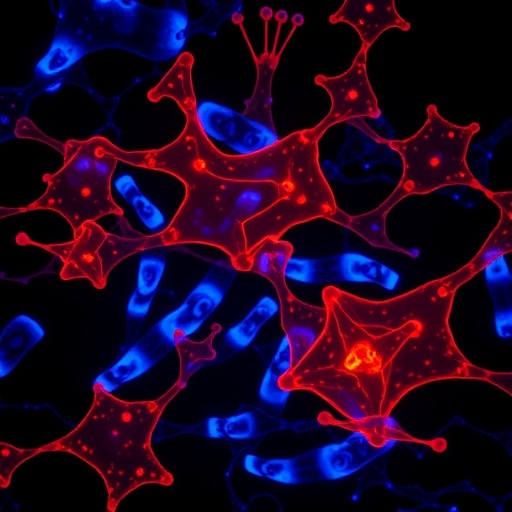
Tertiary lymphoid structures (TLSs)—immune-cell aggregates that form in many solid tumours—have been linked to better outcomes from immune checkpoint blockade. But how TLSs shape the internal state of tumour-specific T cells has remained an open question. In a new study spanning renal cell carcinoma (RCC), researchers map TLS-associated differences in T cell exhaustion programs and identify how these structures can simultaneously sustain antitumour immunity and enable immune escape.
Analysing 24 treatment-naive RCC tumours, the team reports that tumours containing TLSs accumulate more exhausted CD8⁺ T cells than TLS-negative counterparts. Surprisingly, despite this heightened infiltration, TLS+ tumours display a reduced terminal exhaustion transcriptional program, suggesting a less “locked-in” exhausted state. This indicates that exhaustion in the TLS context may retain plasticity rather than driving irreversible dysfunction.
To connect exhaustion phenotypes to tumour specificity, the authors performed specificity screening of 554 T cell clonotypes expanded from the microenvironment of six RCC tumours. They identified 82 TCRs reactive against tumour cells and/or RCC antigens, establishing a catalogue of tumour-associated lymphocyte specificities within the tumour ecosystem.
Only a fraction of the tumour-reactive repertoire—about 12%—was enriched inside TLSs. Yet this TLS-enriched subset carried an enhanced “stem-like progenitor” exhaustion program, a feature associated with the capacity for renewal and better responsiveness to therapy. By positioning stem-like exhausted T cells in specialized niches, TLSs may help preserve a population that can continue to expand or re-enter functional states.
The authors further integrate these findings with patient-scale profiling across 60 independent RCC tumours. In a key counterbalance to the T cell story, they infer that macrophages located at tumour margins in TLS-containing tumours adopt immunosuppressive phenotypes. These macrophage-rich regions were found to colocalize with exhausted, putative tumour-reactive T cells, providing a plausible mechanism for TLS-driven immune resistance.
Together, the results portray TLSs as reservoirs that concentrate tumour-specific T cells with favourable stem-like features, while simultaneously attracting suppressive myeloid programs that blunt their impact. In other words, the same microanatomy that nurtures T cell renewal can also cultivate local suppression.
From a translational perspective, the work suggests TLSs could be therapeutically leveraged by strategies that boost tumour-reactive stem-like exhaustion states while disrupting the suppressive macrophage circuits that accompany them. Such combination approaches may maximize the benefits of checkpoint blockade by maintaining effective T cell progenitors at the tumour site.
Cite Scienmag News
Nathaniel Bowman. (July 27, 2026). Tertiary lymphoid structures contain stem-like tumor-specific T cells. Scienmag. https://scienmag.com/tertiary-lymphoid-structures-contain-stem-like-tumor-specific-t-cells/
Nathaniel Bowman. "Tertiary lymphoid structures contain stem-like tumor-specific T cells." Scienmag, 27 July 2026, https://scienmag.com/tertiary-lymphoid-structures-contain-stem-like-tumor-specific-t-cells/. Accessed 3 September 2026.
Nathaniel Bowman. "Tertiary lymphoid structures contain stem-like tumor-specific T cells." Scienmag. July 27, 2026. https://scienmag.com/tertiary-lymphoid-structures-contain-stem-like-tumor-specific-t-cells/


