


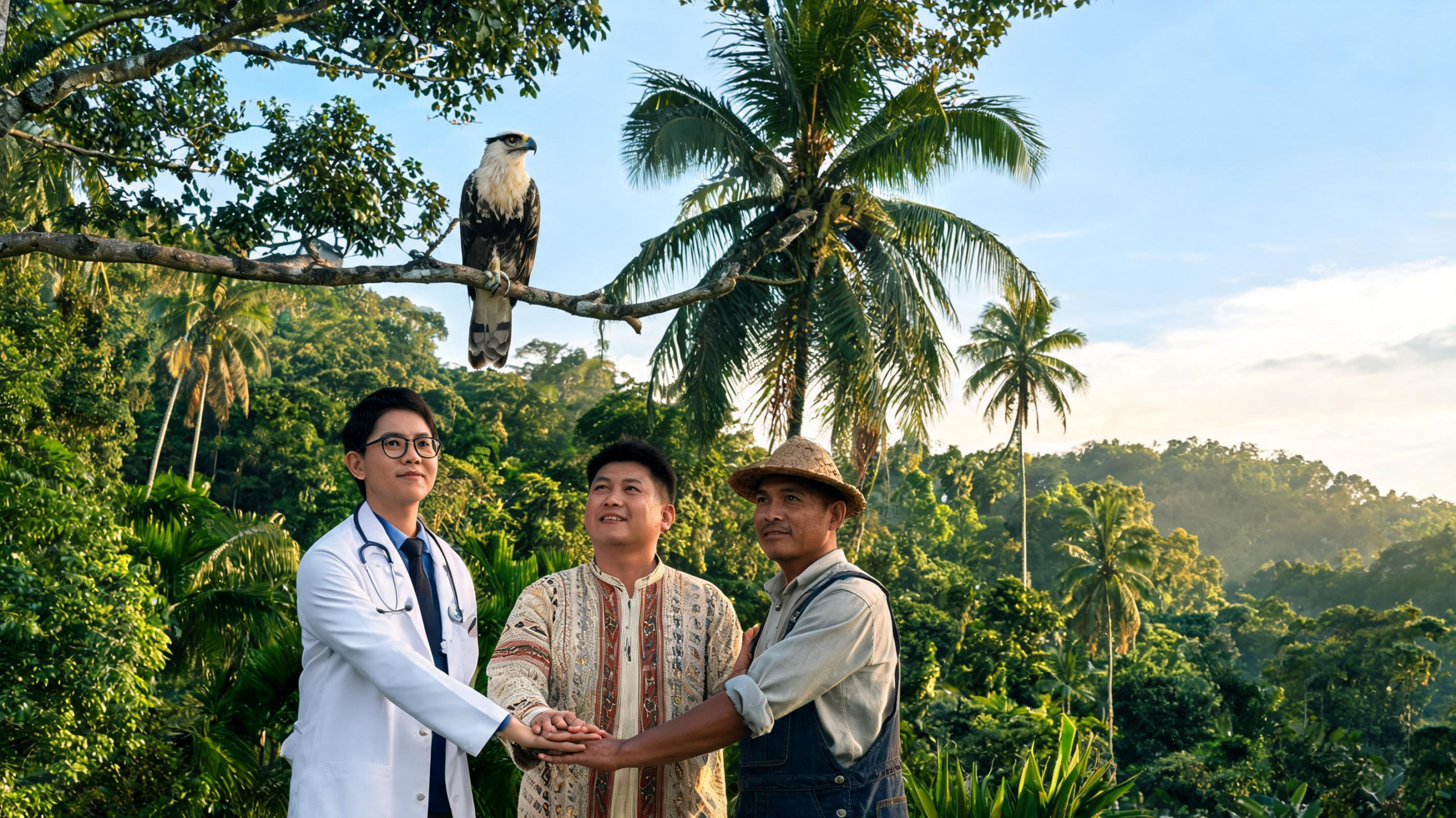
The Philippines is home to some of the richest biodiversity on Earth, a sprawling archipelago where hundreds of species exist nowhere else on the planet. Yet a new Perspective published in the journal Discover Conservation warns that this natural wealth is collapsing at an alarming rate, and that the consequences will not be confined to the animal kingdom. Led by Krizler C. Tanalgo of the Ecology and Conservation Research Laboratory at the University of Southern Mindanao, together with Lothy F. Casim, Kier C. Dela Cruz and Angelo R. Agduma, the paper argues that nearly one-quarter of the country’s terrestrial vertebrates are now threatened with extinction, driven overwhelmingly by habitat loss, land-use change and broader anthropogenic environmental degradation. Those same forces, the authors contend, are quietly dismantling the ecological buffers that keep dangerous pathogens at a safe distance from human populations. The message is stark: biodiversity conservation in the Philippines must stop being treated as a separate environmental concern and start being recognised as a fundamental component of preventive public health.
The COVID-19 pandemic exposed just how fragile healthcare systems can be when a novel pathogen crosses from animals into people, and how far-reaching the socio-economic fallout of a global health crisis becomes. It also renewed international attention on the One Health approach, a framework that emphasises the interdependence of human, animal and environmental health and highlights the role of intact ecosystems in reducing the risk of future pandemics. For the Philippines, these linkages are especially urgent. Recent assessments show that the country, one of the world’s recognised megadiverse nations and a global biodiversity hotspot, faces a concerning conservation impediment. If current declines continue unchecked, the ecosystem services provided by threatened species will erode, and the risk of wildlife-associated disease transmission will rise in parallel. The authors frame pandemics not as random misfortunes but as ecological events shaped by human disruption of nature, a reframing they argue offers a stronger basis for integrating conservation, health security and sustainable development.
The scientific logic linking forest loss to disease is well established in the literature the authors draw upon. Deforestation, wildlife hunting and unsustainable consumption degrade habitats and shrink species populations, forcing wildlife into closer proximity with human settlements and domestic animals. Research on land-use change in Southeast Asia has shown that such intensified contact increases opportunities for pathogen spillover and the emergence of novel infectious diseases, with studies of rhinolophid bats demonstrating how the livestock revolution and expanding cropland raise the risk of zoonotic coronavirus transmission. Over the past two decades the Philippines has lost more than one million hectares of tree cover, disrupting the ecological barriers that previously minimised interactions between wildlife, livestock and humans. Climate change compounds the problem: rising temperatures and shifting land use push bats, rodents and birds toward agricultural areas and human habitation, while warmer, wetter conditions expand the habitats of disease vectors, fuelling outbreaks of malaria, dengue and other infections in both human and wildlife populations.
Despite this growing evidence, the Perspective finds that One Health remains poorly integrated into Philippine biodiversity policy and practice. An analysis of research trends from 2000 to 2025 shows that One Health-related themes, including pandemic preparedness, public health and disease emergence, have been markedly underrepresented in national research output, with a notable increase only after the COVID-19 pandemic. Biodiversity-related studies remain considerably fewer than those focused on diseases and public health. The gap is especially striking for bats, which serve as natural reservoirs for a disproportionate number of zoonotic pathogens: fewer than 30 percent of bat species have been examined in disease-related studies, and both taxonomic and disease-type coverage across the order remain critically limited. Perhaps most tellingly, the Philippines is one of the Southeast Asian nations still lacking a national One Health Strategy, even as the region is recognised as a hotspot for emerging animal and human infectious diseases with potential for global spread.
The authors argue that this gap represents a missed opportunity to address the ecological drivers of disease emergence before they escalate into health and societal crises. Citing the Berlin Principles on One Health, which reaffirm the interdependence of human, animal and ecosystem health with economic and socio-political systems, they describe biodiversity conservation and One Health as mutually reinforcing endeavours: protecting biodiversity sustains health, and promoting health security strengthens environmental protection. Integrating One Health principles into conservation functions as a nature-based intervention and a preventive health strategy, helping to avert disease emergence while simultaneously protecting species. Shielding wildlife habitats from overexploitation minimises spillover risks to people and livestock, and curbing illegal wildlife trade conserves threatened species while reducing zoonotic risks associated with wildlife handling and consumption. The approach, they stress, should not be confined to disease surveillance but extended to actively safeguarding the wildlife and natural systems that sustain all life.
One persistent obstacle is institutional fragmentation. Biodiversity monitoring and disease surveillance in the Philippines largely operate independently, with the conservation and public health sectors rarely coordinating their efforts in a sustained manner. Agencies responsible for the environment, health and agriculture often work in isolation, producing fractured responses to deeply interrelated problems. The authors propose integrating these systems through coordinated monitoring of wildlife, livestock and human health across biodiversity-rich landscapes, which would enable early detection of both ecological tipping points and emerging infectious threats. They also recommend a dedicated One Health or Zoonotic Disease Unit with clear authority, adequate staffing and a defined budget, alongside a unified One Health-Biodiversity Fund built through interagency collaboration among the departments of health, environment, agriculture and science and technology, with investments distributed across capacity building, surveillance and early detection, open data sharing, prevention, and education.
Wildlife use presents one of the most delicate dimensions of the challenge. Hunting remains vital for the survival and socio-cultural heritage of rural and Indigenous communities, yet unregulated hunting has become a major driver of species decline in tropical forests. Large-bodied mammals and birds, including fruit bats, flying foxes, pangolins, wild pigs, civets and hornbills, are targeted for bushmeat, medicine and the exotic pet trade, creating interfaces where pathogens can cross species barriers when infected animals are handled or sold without safeguards. The authors do not call for an outright ban. Instead, they point to Republic Act No. 9147, the Wildlife Resources Conservation and Protection Act of 2001, which permits Indigenous Peoples to hunt wildlife for traditional subsistence rather than commercial trade, supported by the Indigenous Peoples’ Rights Act. The path forward, they argue, lies in health education, disease surveillance and wildlife monitoring in hunting areas, safe hunting zones, enforced quotas and alternative sources of protein and livelihood developed in genuine partnership with local communities.
Community engagement emerges throughout the paper as a prerequisite rather than an add-on. One Health approaches that centre local communities build environmental stewardship alongside health risk awareness, and link conservation to livelihood programmes such as community forestry, agroforestry and ecotourism, reducing dependency on wildlife exploitation and the frequency of human-wildlife conflict. Community-based forest management has been shown to reduce poverty incidence, easing pressure on agricultural expansion and limiting conflict at the wildlife-human interface. Indigenous and local communities bring generational knowledge of sustainable resource use that no external programme can replicate, and their meaningful inclusion in conservation planning, monitoring and decision-making is what makes One Health workable in practice. Expanding primary health clinics in remote, underserved areas bordering wildlife habitats, amplifying veterinary services in high-risk zones, and training protected area managers, rural health workers and community members to identify and report zoonotic risks would further anchor the approach on the ground.
Data infrastructure is another cornerstone. Effective conservation and zoonotic risk assessment depend on robust, open and FAIR, findable, accessible, interoperable and reusable, biodiversity data, such as those mobilised through the Global Biodiversity Information Facility. Integrating biodiversity information with health systems allows governments to identify overlaps between species persistence and disease vulnerability and to build early warning systems that fuse environmental and epidemiological data. Yet much Philippine biodiversity data remains poorly mobilised, and accessible zoonotic disease information is scarce: the global repository ZOVER holds only 24 records for Philippine bats, covering just seven of the country’s 78 bat species, and 19 records for ticks. The authors call for systematic wildlife disease surveillance, platforms for predicting high-risk species and areas, and strengthened university networks such as the Philippine One Health University Network, or PhilOHUN, to advance coordinated research regionally.
Ultimately, the Perspective reframes the extinction crisis as a public health, economic and ecological resilience concern. In a megadiverse country where habitat loss, wildlife trade, agricultural expansion, urbanisation and climate change overlap, biodiversity decline signals the weakening of the very systems that regulate disease transmission, support food and water security, sustain livelihoods and buffer communities from environmental shocks. The authors urge that One Health be embedded in national biodiversity and climate plans, supported by a national One Health council, interdisciplinary university programmes and biodiversity-health observatories, and adapted to the country’s institutional capacity and socio-ecological context. Poverty, inequality and limited resources make implementation difficult, but the alternative, responding to the next pandemic after it emerges, is far costlier. Conservation, they conclude, should become the foundation for a healthier Philippine society, in which ecosystem protection contributes directly to human well-being, animal health and environmental security for generations to come.
Subject of Research: Integration of One Health and biodiversity conservation in the Philippines
Article Title: Biodiversity conservation and One Health integration in the Philippines
Article References: Tanalgo, K. C., Casim, L. F., Dela Cruz, K. C., & Agduma, A. R. (2026). Biodiversity conservation and One Health integration in the Philippines. Discover Conservation, 3(1), Article 35. https://doi.org/10.1007/s44353-026-00104-z
Image Credits: AI Generated
DOI: 10.1007/s44353-026-00104-z
Keywords: One Health, biodiversity conservation, Philippines, zoonotic spillover, deforestation, wildlife trade, bats, public health, climate change, FAIR data, Indigenous communities, pandemic preparedness
Cite Scienmag News
Kristina Jarvis. (September 3, 2026). Saving Nature to Prevent Pandemics: Philippines Pushes One Health. Scienmag. https://scienmag.com/saving-nature-to-prevent-pandemics-philippines-pushes-one-health/
Kristina Jarvis. "Saving Nature to Prevent Pandemics: Philippines Pushes One Health." Scienmag, 3 September 2026, https://scienmag.com/saving-nature-to-prevent-pandemics-philippines-pushes-one-health/. Accessed 5 October 2026.
Kristina Jarvis. "Saving Nature to Prevent Pandemics: Philippines Pushes One Health." Scienmag. September 3, 2026. https://scienmag.com/saving-nature-to-prevent-pandemics-philippines-pushes-one-health/


