

Lab tests: microscale iron reduces rice arsenic but boosts methane
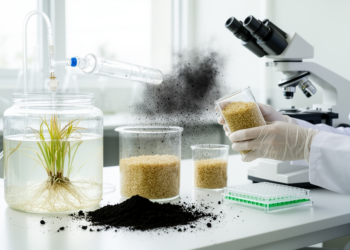
A controlled microcosm and greenhouse rice study found that microscale zero-valent iron reduced arsenic in grain by 34% while increasing ...
A controlled microcosm and greenhouse rice study found that microscale zero-valent iron reduced arsenic in grain by 34% while increasing ...

A pyoverdine-like siderophore and its co-produced metabolites from an Antarctic Pseudomonas strain mobilize iron-bound and calcium-bound phosphorus across acidic and ...
A year-long incubation study shows that biodegradable plastic mulch residues stimulate microbial biomass and reshape soil aggregates differently in loamy ...
A new opinion paper in Plant and Soil proposes that silicon fertilization reshapes paddy soil microbes to suppress methane emissions ...
An 18-month field experiment in Hangzhou Bay shows that plastic mulching during coastal wetland restoration desalinizes the entire soil profile, ...
A new perspective argues that dosing biochar by mass rather than by delivered functional capacity is the hidden reason soil ...
A three-season field study in Vietnam shows that alternate wetting and drying irrigation cuts methane production potential by roughly 62 ...
A long-term field study shows moss-dominated biocrusts retain winter snowpack in cold deserts, sustaining soil biogeochemistry and microbial carbon cycling ...
New pot experiments show that clay mineral surface area controls mineral-associated soil carbon while pore size governs physically protected particulate ...
A global analysis shows that soil carbon storage is controlled less by the amount of carbon entering soils and more ...

Embark on a thrilling journey of discovery with Scienmag.com—your ultimate source for cutting-edge breakthroughs. Immerse yourself in a world where curiosity knows no limits and tomorrow’s possibilities become today’s reality!