


Machine Learning Pins Down Where Edible Seaweed Comes From
Combining near-infrared spectroscopy, elemental profiles, and stable isotope ratios with random forest achieved 87.5 percent accuracy in identifying the geographical ...
Combining near-infrared spectroscopy, elemental profiles, and stable isotope ratios with random forest achieved 87.5 percent accuracy in identifying the geographical ...

A comprehensive review examines how seaweed-derived biopolymers provide renewable and biodegradable alternatives to petroleum plastics while confronting critical processing, contamination, ...
A randomized crossover trial in healthy Japanese adults found that adding 2 grams of calcium alginate-rich wakame powder to rice ...
In vitro tests show that an extract of the green seaweed Ulva, rich in sulfated ulvans and specific phenolics, is ...

Red soil covers 2.18 million square kilometers of southern China, roughly 22.7% of the national land area, and it is ...
A semi-quantitative assessment of Oualidia Lagoon reveals that native seaweeds and seagrasses deliver 70 to 85 percent of their potential ...
Ecuadorian researchers found that dilute Ulva seaweed extracts significantly raised chlorophyll content in young cacao plantlets, though some treatments proved ...
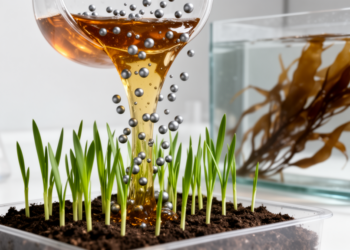
Researchers in India found that zinc oxide nanoparticles synthesized with seaweed extract outperformed commercial particles at lower doses, protecting salt-stressed ...

Researchers in China have optimized the extraction of ultraviolet-shielding mycosporine-like amino acids from six marine macroalgae and shown the purified ...

Carbon isotope analysis of fossilized teeth shows that coastal dinosaurs and their prey regularly supplemented their diets with seaweed and ...


Embark on a thrilling journey of discovery with Scienmag.com—your ultimate source for cutting-edge breakthroughs. Immerse yourself in a world where curiosity knows no limits and tomorrow’s possibilities become today’s reality!