


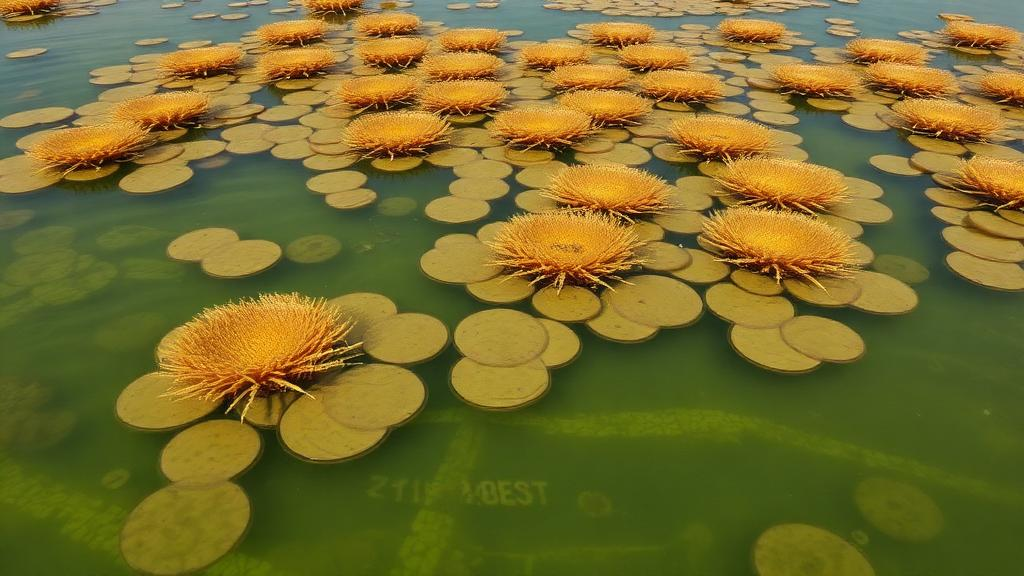
Along Morocco’s Atlantic coast, the shallow waters of Oualidia Lagoon shelter dense meadows of seagrass and forests of seaweed that scientists now say represent one of the region’s most underappreciated natural assets. A new study published in Estuarine Management and Technologies has systematically evaluated the marine and coastal ecosystem services provided by the algae and seagrass species that structure the lagoon, revealing that between 25 and 30 percent of their potential benefits remain entirely unused, while an invasive seaweed is quietly undermining nearly half of the services these habitats could deliver.
The research team focused on six key species: the native red seaweed Gracilaria gracilis, three green algae of the genus Ulva, the brown seaweeds Fucus spiralis and Cystoseira humilis, the seagrass Zostera noltei, and the invasive brown alga Sargassum muticum, originally from the Pacific coasts of Asia. Using scuba diving surveys conducted in February 2021 across 68 stations distributed throughout the lagoon, the researchers mapped how much space each species occupies. Gracilaria gracilis emerged as the dominant alga, covering more than 50 percent of the lagoon’s main channel, followed by Ulva at 17 percent, Zostera noltei at 10 percent, and Fucus spiralis, Cystoseira humilis, and Sargassum muticum each at roughly 6 percent.
To translate these ecological patterns into a rigorous assessment, the team applied a semi-quantitative multi-criteria approach built on the Marine and Coastal Ecosystem Services classification, which distinguishes 14 service categories ranging from food provision and water purification to climate regulation, coastal protection, and cultural values. Each species was scored with a value of +1 when it contributed positively to a service, -1 when its effect was negative, and 0 when no measurable effect could be documented. Crucially, these scores were then weighted by a Spatial Coverage Rate factor, so that a species blanketing half the lagoon counted far more heavily than one confined to a small patch. This design allowed the researchers to integrate both the functional role and the spatial footprint of each organism into a single comparable index.
The results paint a striking picture of untapped potential. Native algae and seagrasses positively influence 81 percent of the evaluated ecosystem services, with 70 to 85 percent of potential services documented in the scientific literature. Seagrasses proved to be the strongest performers in regulating and maintenance services, while native algae contributed predominantly to provisioning services such as food, bioactive materials, and biofuels. In sharp contrast, Sargassum muticum exerts a negative impact on approximately 43 percent of ecosystem services, degrading essential fish habitats, polluting shellfish farming installations, clogging industrial intake pipes, and displacing the native species on which the lagoon’s ecological balance depends.
The nutritional and industrial chemistry of these organisms helps explain why scientists are so enthusiastic. Gracilaria gracilis is a source of agar, a gelling agent extracted from cell walls and used worldwide as a thickener and stabilizer in jellies, puddings, ice creams, and sauces. The seaweed is low in calories and fat yet rich in dietary fiber, vitamins C, E, and K, folate, calcium, and magnesium, along with antioxidants that protect against oxidative stress. The three Ulva species offer complementary profiles: Ulva lactuca contains polysaccharides, phenolic compounds, potassium, and magnesium comparable in nutritional value to conventional vegetables when cultivated under controlled conditions, while Ulva fasciata is rich in amino acids and fatty acids beneficial for aquaculture, particularly abalone farming.
Beyond nutrition, the biochemical arsenal of these species is attracting attention from pharmaceutical and cosmetic researchers. Fucus spiralis produces polysaccharides such as algin, fucoidan, and laminarin, alongside polyphenols and bioactive phytosterols that make it a candidate for healthy diets, especially for people with high cholesterol. Its dermo-cosmetic applications, owing to antioxidant, anti-enzymatic, and photoprotective properties, have been demonstrated in recent Moroccan studies, and one research effort suggests it could yield novel natural antitumor agents. Cystoseira humilis contains eicosapentaenoic acid as a major constituent of its lipid fraction, with a favorable omega ratio and low atherogenicity indices that position it as a promising nutritional supplement. Even the seagrass Zostera noltei has yielded surprises: its detritus is a source of rosmarinic and zosteric acids, the latter a natural anti-adhesive compound that prevents biological fouling by bacteria, fungi, algae, and bivalves, offering an environmentally benign alternative to chemical treatments in agriculture and industry.
The regulating services these ecosystems perform may be even more consequential than their commercial potential. Gracilaria gracilis has shown strong bioremediation capacity in aquaculture effluents, absorbing excess nitrogen compounds and reducing eutrophication, while Ulva lactuca acts as a natural biofilter in integrated aquaculture systems, stripping ammonia and nitrates from the water. Seagrass meadows stabilize sediments with their extensive root systems, dampen wave energy, and protect shorelines from erosion during storms. Most remarkably, seagrasses rank among the most effective natural carbon sinks on the planet, outperforming certain terrestrial forests, with organic carbon stocks in Zostera accumulating over timescales of up to several centuries. Seagrass beds also suppress pathogenic bacteria in the water column, reducing levels of Escherichia coli, Salmonella, and Vibrio species through antimicrobial phenolic compounds.
Yet the gap between what these ecosystems could provide and what they actually deliver is wide. Apart from agar-agar extraction from Gracilaria, none of the studied species are currently exploited in Morocco for food, medical, cosmetic, or industrial purposes. The lagoon’s provisioning services are effectively negligible in economic terms, even though its biodiversity, pollution-sensitive bioindicator species, nursery function for juvenile fish, and importance as a feeding ground for migratory birds underscore the dominance of its regulating and maintenance services. Among cultural services, only cognitive benefits from scientific research register as significant. The comparison between theoretical potential and actual use reveals that a quarter to nearly a third of available services go unused, a finding that aligns with the lagoon’s designation as a Ramsar site since 2005, which promotes sustainable rather than intensive exploitation.
The study also situates Morocco within a broader regional and international context. Research in North-West African countries has focused overwhelmingly on species checklists, distribution mapping, and biomass estimation, with bioactive compound research only emerging in the last decade and still confined to laboratory analysis and testing rather than industrialization. By comparison, neighboring Southern European countries such as Spain, France, and Portugal have developed regulatory frameworks and industries around the same species: France was the first European country to regulate seaweeds for human consumption, authorizing twelve macroalgae species including Ulva, Fucus, and Gracilaria as vegetables and condiments. Algae extracts are also gaining traction as environmentally friendly biostimulants and biofertilizers that can mitigate the negative effects of synthetic fertilizers, and as dietary supplements in aquaculture that improve growth, immune response, and bacterial resistance in species such as gilthead bream and European sea bass.
The authors argue that promoting the cultivation of native algae could simultaneously enhance local economic outcomes and ecological resilience while contributing to multiple United Nations Sustainable Development Goals, including food security, climate action, and biodiversity conservation. The World Bank’s 2023 report on emerging seaweed markets estimated that seaweed ecosystem services could support at least nine of the seventeen SDGs, from eliminating hunger and improving health to mitigating climate change and creating decent jobs. For Oualidia Lagoon, where oyster farming has shaped the local economy since the 1950s and where agriculture, pasture, shore fishing, and tourism have expanded with limited environmental oversight, the message is clear: the seaweeds and seagrasses swaying beneath the surface represent a strategic resource whose careful development could transform the lagoon into a driver of blue growth, provided that the spread of Sargassum muticum is contained and that research, awareness-raising, and pilot aquaculture projects bridge the gap between ecological potential and human benefit.
Subject of Research: Ecosystem services assessment of lagoonal seaweeds and seagrasses on the Moroccan Atlantic coast
Article Title: Assessment of ecosystem services provided by lagoonal seaweeds and seagrasses along the Moroccan coast
Article References: Assessment of ecosystem services provided by lagoonal seaweeds and seagrasses along the Moroccan coast. (n.d.). https://doi.org/10.3897/emt.2.167289
Image Credits: AI Generated
DOI: 10.3897/emt.2.167289
Keywords: ecosystem services, seagrass, seaweed, Oualidia Lagoon, Morocco, Sargassum muticum, Gracilaria gracilis, Zostera noltei, blue carbon, invasive species, Ramsar, sustainable aquaculture
Cite Scienmag News
Gavin Prescott. (October 16, 2026). Hidden harvest: Moroccan lagoon seaweeds and seagrasses offer vast untapped ecosystem services. Scienmag. https://scienmag.com/hidden-harvest-moroccan-lagoon-seaweeds-and-seagrasses-offer-vast-untapped-ecosystem-services/
Gavin Prescott. "Hidden harvest: Moroccan lagoon seaweeds and seagrasses offer vast untapped ecosystem services." Scienmag, 16 October 2026, https://scienmag.com/hidden-harvest-moroccan-lagoon-seaweeds-and-seagrasses-offer-vast-untapped-ecosystem-services/. Accessed 16 October 2026.
Gavin Prescott. "Hidden harvest: Moroccan lagoon seaweeds and seagrasses offer vast untapped ecosystem services." Scienmag. October 16, 2026. https://scienmag.com/hidden-harvest-moroccan-lagoon-seaweeds-and-seagrasses-offer-vast-untapped-ecosystem-services/


