


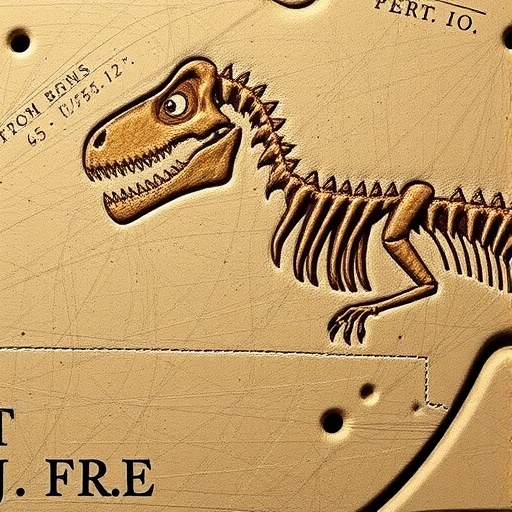
A new study published July 15, 2026 in PLOS One reports that a cluster of fossilized dinosaur bones from northeastern Wyoming bears bite-related damage consistent with predation. The work focuses on tooth marks—punctures and scored depressions—that preserve behavioral clues far beyond what bones alone typically reveal.
The researchers analyzed more than 3,000 fossils from the late Cretaceous (~72–66 million years ago), drawn primarily from a bonebed of Edmontosaurus annectens, a large herbivorous dinosaur. Because tooth-like impressions can also originate from non-feeding processes, the team emphasized careful identification rather than assuming every hole or groove reflects a bite.
Using an interpretive framework built from earlier research and augmented with new observations, the scientists categorized multiple tooth-trace types. They documented features such as punctures on opposing surfaces and deep, curved scores that indicate how teeth likely contacted and displaced bone material during feeding.
Only 12 bones showed tooth traces, and within that subset the team found four specimens with distinctive patterns—shape, depth, and spacing—that collectively fit the dental signature expected for T. rex. The remaining tooth traces may reflect other predators present at the same time, potentially including additional theropod dinosaurs or crocodilians.
A key technical signal came from the absence of healing around most marks. In paleontological terms, this suggests the injuries were made around or after death, rather than during prolonged survival. Combined with earlier findings from the site, the results support a scenario in which carcasses were exposed, scavenged, and then eventually buried and fossilized.
The paper also addresses a central challenge in vertebrate ichnology: bite marks can resemble depressions caused by disease, insect activity, or post-mortem erosion. To strengthen ecological interpretations, the authors propose criteria to distinguish true tooth traces from alternative taphonomic explanations.
Overall, the study advances a practical tool for turning scratchy fossils into testable evidence of predator–prey interactions. By improving reliability in identifying tooth marks, it helps researchers reconstruct more accurate stories of how ancient ecosystems functioned.
For readers, the freely available article can be accessed here: https://plos.io/4eVZgJ7
Cite Scienmag News
Violet Maxwell. (July 15, 2026). T. rex Likely Caused Tooth Marks on Cretaceous Fossil Bones in Wyoming. Scienmag. https://scienmag.com/t-rex-likely-caused-tooth-marks-on-cretaceous-fossil-bones-in-wyoming/
Violet Maxwell. "T. rex Likely Caused Tooth Marks on Cretaceous Fossil Bones in Wyoming." Scienmag, 15 July 2026, https://scienmag.com/t-rex-likely-caused-tooth-marks-on-cretaceous-fossil-bones-in-wyoming/. Accessed 4 September 2026.
Violet Maxwell. "T. rex Likely Caused Tooth Marks on Cretaceous Fossil Bones in Wyoming." Scienmag. July 15, 2026. https://scienmag.com/t-rex-likely-caused-tooth-marks-on-cretaceous-fossil-bones-in-wyoming/


