

Friday, August 14, 2026
Science
No Result
View All Result
  • Login
  • HOME
  • SCIENCE NEWS
  • CONTACT US
  • HOME
  • SCIENCE NEWS
  • CONTACT US
No Result
View All Result
Scienmag
No Result
View All Result
Home Science News Policy

Trump 2025 Roadless Rule repeal could affect drinking water for 25 million

July 15, 2026
in Policy
Reading Time: 2 mins read
0
Trump 2025 Roadless Rule repeal could affect drinking water for 25 million

Trump 2025 Roadless Rule repeal could affect drinking water for 25 million

65
SHARES
587
VIEWS
Share on FacebookShare on Twitter
ADVERTISEMENT

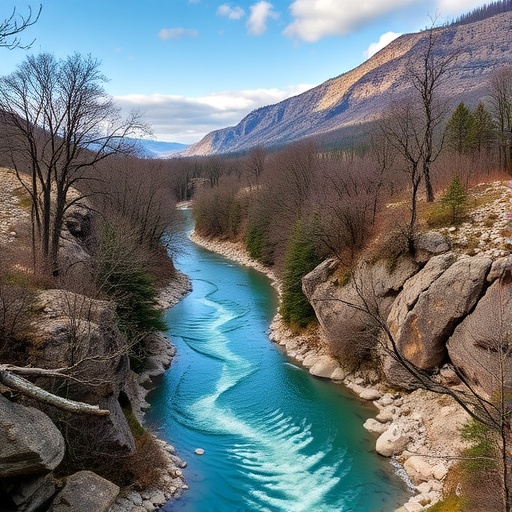
A new research paper examines how the United States’ “Roadless Rule”—a policy that has limited logging and road construction in national parks and wilderness areas—may translate into real-world benefits for both ecosystems and the people who depend on them. The study arrives amid renewed controversy over federal efforts to repeal or weaken the protections that restrict disturbance in previously roadless watersheds.

In the paper’s framing, the stakes are not abstract. Many of America’s rivers and streams are sustained by headwater areas that remained relatively undisturbed. When roads are built or harvesting expands, rainfall runoff patterns can change, erosion risk can rise, and sediment loads can increase. Those physical shifts can cascade downstream, affecting water quality even years later.

For communities, the concern is immediate: about 25 million Americans rely on drinking water sourced from watersheds that were previously classified as roadless. The researchers emphasize that watershed condition influences how easily water can be treated. More sediment and contaminants typically mean higher treatment costs and more frequent operational challenges.

The work also highlights how road building can alter habitat connectivity. Roads can fragment landscapes, facilitate invasive species, and change local microclimates, all of which can pressure aquatic and terrestrial biodiversity. In water systems, these ecosystem changes can influence nutrient cycling and the biological communities that help stabilize stream health.

Methodologically, the study evaluates the value of the Roadless Rule by connecting policy protections to measurable environmental outcomes and human benefits. This approach treats conservation as infrastructure—one that buffers water supplies and ecosystem services against disturbance-driven degradation.

The article, published in PLOS Water, provides a structured assessment of both “people” and “nature” outcomes, aiming to quantify what is gained when watersheds remain roadless. Its conclusions are relevant not only for conservation planning, but also for public health, budgeting, and risk management for water utilities.

With the policy landscape shifting in 2025 under the Trump administration’s actions, the findings offer a timely lens on how federal land decisions can reverberate through drinking-water systems. If road restrictions are loosened, the researchers suggest, the costs may extend beyond forests—into taps.

Finally, the paper’s transparency notes that the authors report no competing interests, and it lists support from the University of Washington and a contract involving Conservation Science Partners. As debates continue, the study adds a data-driven warning that watershed protection can function as a frontline safeguard for millions of people.

Subject of Research: Value of the U.S. Roadless Rule for people and nature; impacts of logging/road construction on drinking-water watersheds and ecosystems.
Article Title: Assessing the value of the U.S. Roadless Rule for people and nature
News Publication Date: 15-Jul-2026
Web References: https://plos.io/4eYT2bn
References: 10.1371/journal.pwat.0000538
Image Credits: Not provided in the provided content.

Keywords: Roadless Rule, drinking water, watersheds, logging, road construction, water quality, erosion, ecosystem services, PLOS Water.

Tags: biodiversity conservation in wilderness areasclimate microclimate changes from roadsecosystem benefits of roadless areaseffects of road construction in national parksenvironmental consequences of weakening roadless area protectionshabitat fragmentation from road buildingheadwater stream preservation and water qualityimplications of policy repeal on water treatment costsinvasive species spread due to roadsRoadless Rule impact on drinking water qualityUS federal water policy and environmental protectionwatershed protection and sediment runoff
Share26Tweet16
Previous Post

CUNY Study Confirms Discovery of New African Monkey Species

Next Post

T. rex Likely Caused Tooth Marks on Cretaceous Fossil Bones in Wyoming

Related Posts

Gipuzkoa study finds inclusive local AI governance matters more than technology
Policy

Gipuzkoa study finds inclusive local AI governance matters more than technology

August 14, 2026
UN warns 40% of England adults take no action on heat alerts
Policy

UN warns 40% of England adults take no action on heat alerts

August 14, 2026
European cities target carbon removal for one-fifth emissions, but few know how
Policy

European cities target carbon removal for one-fifth emissions, but few know how

August 14, 2026
Ontario wildfire smoke exposed Americans to unhealthy air for 106 million person-days
Policy

Ontario wildfire smoke exposed Americans to unhealthy air for 106 million person-days

August 13, 2026
American Journal of Public Health highlights the importance of public deliberation in developing efficient public health policies
Policy

American Journal of Public Health highlights the importance of public deliberation in developing efficient public health policies

August 12, 2026
Foreign-born doctors provide essential care to millions in underserved U.S. communities
Policy

Foreign-born doctors provide essential care to millions in underserved U.S. communities

August 12, 2026
Next Post
Greenland snow reveals industrial impact through rising atmospheric methane levels

Greenland snow reveals industrial impact through rising atmospheric methane levels

  • Mothers who receive childcare support from maternal grandparents show more

    Mothers who receive childcare support from maternal grandparents show more parental warmth, finds NTU Singapore study

    27656 shares
    Share 11059 Tweet 6912
  • University of Seville Breaks 120-Year-Old Mystery, Revises a Key Einstein Concept

    1061 shares
    Share 424 Tweet 265
  • Bee body mass, pathogens and local climate influence heat tolerance

    682 shares
    Share 273 Tweet 171
  • Researchers record first-ever images and data of a shark experiencing a boat strike

    546 shares
    Share 218 Tweet 137
  • Groundbreaking Clinical Trial Reveals Lubiprostone Enhances Kidney Function

    531 shares
    Share 212 Tweet 133
Science

Embark on a thrilling journey of discovery with Scienmag.com—your ultimate source for cutting-edge breakthroughs. Immerse yourself in a world where curiosity knows no limits and tomorrow’s possibilities become today’s reality!

RECENT NEWS

  • CDC73 Suppresses Lung Adenocarcinoma Through PTEN/AKT, Shows Extracellular Vesicle Biomarker Potential
  • Lead in Tap Water Linked to Reduced Executive Function in Young Children
  • Motor and Non-Motor Symptoms Shape Mobility Capacity and Performance in Parkinson’s Disease
  • European Ramsar wetlands establish baseline for surface water connectivity

Categories

  • Agriculture
  • Anthropology
  • Archaeology
  • Athmospheric
  • Biology
  • Biotechnology
  • Blog
  • Bussines
  • Cancer
  • Chemistry
  • Climate
  • Earth Science
  • Editorial Policy
  • Marine
  • Mathematics
  • Medicine
  • Pediatry
  • Policy
  • Psychology & Psychiatry
  • Science Education
  • Social Science
  • Space
  • Technology and Engineering

Subscribe to Blog via Email

Enter your email address to subscribe to this blog and receive notifications of new posts by email.

Join 5,149 other subscribers

© 2025 Scienmag - Science Magazine

Welcome Back!

Login to your account below

Forgotten Password?

Retrieve your password

Please enter your username or email address to reset your password.

Log In
No Result
View All Result
  • HOME
  • SCIENCE NEWS
  • CONTACT US

© 2025 Scienmag - Science Magazine

Discover more from Science

Subscribe now to keep reading and get access to the full archive.

Continue reading
