


An international team of researchers has extracted a previously unseen record of how methane’s isotopic “clumping” changed since the industrial era began. By measuring clumped methane isotopes—rare methane molecules in which two heavy isotopic atoms occur together—the scientists reconstructed part of the atmosphere’s methane history with an unexpected level of detail. The work was published in Science Advances and links an ice-core proxy to the physics and chemistry controlling methane’s rise.
Methane is the second most important greenhouse gas after carbon dioxide, accounting for roughly 30% of observed warming. Although concentrations have climbed for decades, the processes that govern methane’s balance—emission versus atmospheric breakdown—remain difficult to quantify over long timescales. The clumped-isotope approach provides a direct route to that balance by encoding how methane removal chemistry has evolved.
The key observational result was a strong temporal shift in the clumped isotope signal. Initial interpretations did not fully explain the change. Only after the team ran atmospheric model simulations over the last millennium were they able to identify the driver: human disruption of the methane emission–loss balance. In the researchers’ framing, the industrial period left a measurable fingerprint in the isotopic structure of methane itself.
Clumped isotope signals reflect the competition between how much methane is emitted and how rapidly it is removed. Because the clumped isotopologues react more slowly than “normal” methane, their atmospheric abundance becomes sensitive to removal pathways. With that sensitivity, the team reconstructed variations in methane balance over time—turning an isotopic measurement into a tool for assessing whether emission-reduction efforts are altering the atmospheric budget.
The study also began with a surprise. When the scientists measured clumped methane isotopes in the present atmosphere, the signal was far higher than expected from known methane sources such as wetlands, agriculture, and fossil fuels. Those sources alone could not reproduce the magnitude of the clumped signature, implying an atmospheric-removal origin.
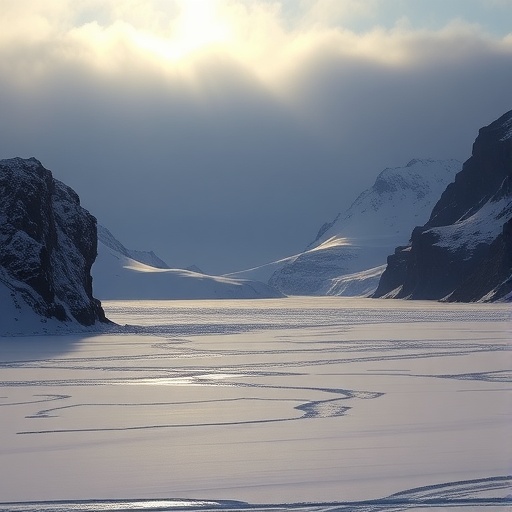
To access methane from the past, the researchers turned to Greenland firn: compacted snow that traps air between the surface and deeper ice. At the EastGRIP station, they collected large-volume samples (on the order of hundreds of liters) containing air roughly up to 40 years old. Despite being relatively young, this firn air provided enough information to resolve changes across recent decades.
Instrument capabilities proved crucial for precision. While the Utrecht University group worked with a measurement system requiring large volumes, a complementary instrument at the University of Maryland enabled the same clumped-isotope measurements using less air. First author Malavika Sivan traveled to collaborate for two months, and the group reports substantial iteration before achieving the final results.
Interpreting the isotopic record required extensive discussion and modeling, but the payoff was clear: the clumped methane signal captures how human activity reshaped methane removal chemistry during industrialization. The findings suggest that future policies targeting methane could be evaluated using isotopic indicators that respond quickly to changes in atmospheric processes.
In their broader context, reducing methane concentrations is emphasized as one of the fastest routes to slow warming in the short term. Continued emissions—and potential climate feedbacks from nature—could otherwise maintain or worsen methane growth. The new record offers a mechanistic way to test whether initiatives, such as global methane-reduction pledges, are shifting the atmospheric balance rather than merely changing emissions inventories.
Cite Scienmag News
Russell Cooper. (July 15, 2026). Greenland snow reveals industrial impact through rising atmospheric methane levels. Scienmag. https://scienmag.com/greenland-snow-reveals-industrial-impact-through-rising-atmospheric-methane-levels/
Russell Cooper. "Greenland snow reveals industrial impact through rising atmospheric methane levels." Scienmag, 15 July 2026, https://scienmag.com/greenland-snow-reveals-industrial-impact-through-rising-atmospheric-methane-levels/. Accessed 3 September 2026.
Russell Cooper. "Greenland snow reveals industrial impact through rising atmospheric methane levels." Scienmag. July 15, 2026. https://scienmag.com/greenland-snow-reveals-industrial-impact-through-rising-atmospheric-methane-levels/


