


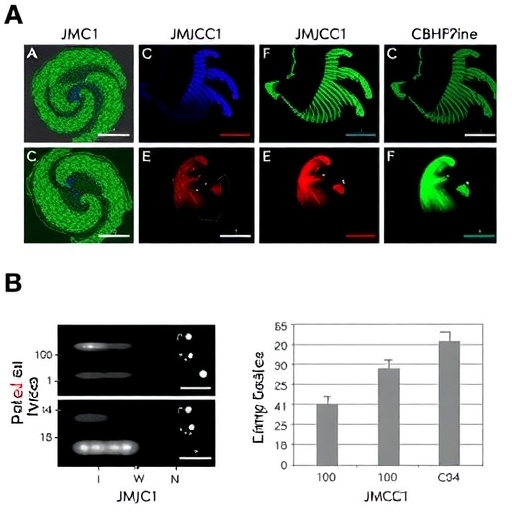
Malaria research has long focused on the parasite’s ability to invade red blood cells, evade immune defenses and alter the biology of its human host. A new study by Tang, Pang, Deng and colleagues places a different but closely connected process at the center of that battle: the chemical regulation of parasite DNA. Published in Nature Communications, the work identifies a critical role for the histone lysine demethylase JmjC1 in controlling genes associated with severe malaria in Plasmodium falciparum, the parasite responsible for the deadliest form of human malaria.
The finding draws attention to epigenetics, the system through which cells regulate gene activity without changing the underlying DNA sequence. In eukaryotic organisms, DNA is wrapped around proteins called histones, forming a compact structure known as chromatin. Chemical marks attached to histones can influence whether nearby genes remain silent or become active. Among these marks are methyl groups placed on lysine residues, specific amino acids within histone proteins. Histone lysine demethylases remove those methyl groups, helping reshape chromatin and alter the accessibility of genes.
JmjC1 belongs to the Jumonji C, or JmjC, family of enzymes. These proteins generally use iron and a co-substrate called 2-oxoglutarate to catalyze demethylation reactions. By modifying histones, a JmjC enzyme can act as a molecular regulator of transcription, the process by which genetic information is copied into RNA. In P. falciparum, such regulation is especially important because the parasite must rapidly change its gene-expression programs as it moves between mosquitoes and humans and progresses through different stages in the bloodstream.
The new research links JmjC1 to the expression of virulence-associated genes that contribute to severe malaria. These genes are not simply passive markers of infection. They can influence how infected red blood cells interact with blood-vessel walls, circulate through tissues and avoid destruction by the immune system. When parasite-infected cells adhere to the lining of small blood vessels, they may accumulate in organs such as the brain, lungs or kidneys. This sequestration is a central feature of life-threatening malaria and can interfere with blood flow and oxygen delivery.
The study’s significance lies in showing that the parasite’s virulence program is controlled not only by DNA sequence and transcription factors, but also by histone chemistry. JmjC1 appears to function as part of the regulatory machinery that determines when severe-malaria-associated genes are activated or repressed. This places the enzyme at a strategic point between the parasite’s genome and its disease-causing behavior. Rather than changing the genetic code, JmjC1 helps determine which sections of that code are available for use at a particular moment in the parasite’s life cycle.
This type of regulation may help explain how P. falciparum produces highly adaptable infections. The parasite must respond to changing conditions inside red blood cells, including nutrient availability, immune pressure and differences between individual hosts. Epigenetic mechanisms provide a flexible solution. They can switch gene networks on or off more quickly than genetic mutations can arise and spread. For a pathogen with a complex life cycle and a remarkable capacity to vary its surface molecules, that flexibility can be a major survival advantage.
The findings could also sharpen the search for new antimalarial therapies. If JmjC1 is essential for activating or maintaining pathogenic gene programs, then blocking its enzymatic activity might disrupt the parasite’s ability to cause severe disease. Drugs designed against epigenetic enzymes would need to distinguish the parasite protein from related human enzymes, an important challenge in drug development. Selectivity would be essential because human cells also rely on histone-modifying proteins to regulate normal growth, development and immune function.
The work may be particularly valuable because severe malaria remains difficult to predict and treat, even when effective antimalarial medicines are available. Parasite resistance to existing drugs continues to threaten control programs, while patients can deteriorate rapidly once complications develop. A strategy that targets the regulatory systems underlying virulence could complement treatments that directly kill parasites. It might also offer a way to reduce the harmful consequences of infection by suppressing disease-associated traits, although such an approach would require extensive validation in cellular, animal and clinical models.
Several questions remain open. Researchers will need to determine precisely which histone lysine marks JmjC1 removes, where the enzyme binds across the parasite genome and how its activity changes during different developmental stages. It will also be important to establish whether JmjC1 acts alone or in partnership with other chromatin regulators. Understanding how its activity connects to parasite sequestration, immune evasion and patient outcomes will help establish whether the enzyme is merely associated with severe malaria or represents a direct and druggable driver of pathology.
By revealing a molecular connection between histone modification and malaria virulence, the study expands the biological picture of one of humanity’s most persistent infectious diseases. P. falciparum is often described through the lens of invasion, resistance and transmission, but its success also depends on controlling its genome with precision. JmjC1 now emerges as an important component of that control system. The discovery offers a new direction for malaria biology and raises the possibility that future therapies could target not only the parasite itself, but also the epigenetic instructions that enable it to become so dangerous.
Cite Scienmag News
Juliet Wilcox. (August 6, 2026). JmjC1 Controls Virulence Genes Linked to Severe Malaria in Plasmodium falciparum. Scienmag. https://scienmag.com/jmjc1-controls-virulence-genes-linked-to-severe-malaria-in-plasmodium-falciparum/
Juliet Wilcox. "JmjC1 Controls Virulence Genes Linked to Severe Malaria in Plasmodium falciparum." Scienmag, 6 August 2026, https://scienmag.com/jmjc1-controls-virulence-genes-linked-to-severe-malaria-in-plasmodium-falciparum/. Accessed 7 September 2026.
Juliet Wilcox. "JmjC1 Controls Virulence Genes Linked to Severe Malaria in Plasmodium falciparum." Scienmag. August 6, 2026. https://scienmag.com/jmjc1-controls-virulence-genes-linked-to-severe-malaria-in-plasmodium-falciparum/


