


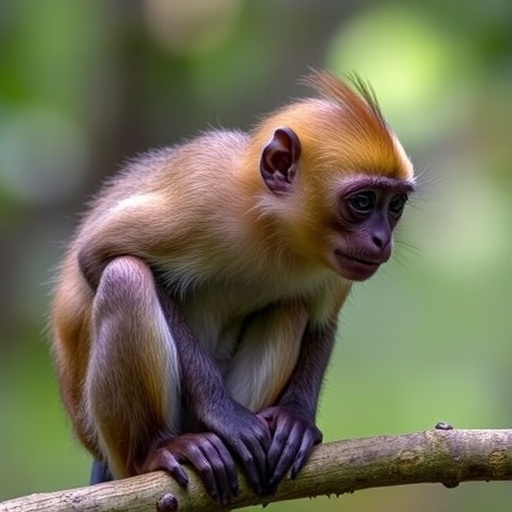
A research team, partly led by Christopher Gilbert (CUNY Graduate Center and Hunter College), has confirmed a previously unknown African monkey species in the rainforests of the Democratic Republic of Congo. The discovery, described as one of the most significant primate findings in decades, highlights how much mammal biodiversity in Central Africa remains undocumented.
Named Colobus congoensis—locally called “Likweli”—the species represents only the fifth new monkey species identified in Africa over the past 75 years. The study appears in PLOS One, and the authors argue that the evidence meets the high threshold required to validate a new evolutionary lineage rather than a regional variant of a known taxon.
The work integrates four complementary lines of evidence: genetics, anatomy, field observations, and local ecological knowledge. Researchers used museum holdings alongside comparative datasets, examining skull morphology, pelage traits, and skeletal characteristics to demonstrate that this monkey is distinct from other African colobus species.
Gilbert’s team focused on formal anatomical diagnosis after field researchers recovered specimens enabling high-resolution comparisons. Extensive reference collections from the Yale Peabody Museum and the American Museum of Natural History were analyzed, with key measurements compiled in a comparative database used to separate C. congoensis from its closest congeners.
Genetic analyses placed the new species within the genus Colobus while estimating that it diverged from its nearest known relative, Colobus satanas, roughly 4–5 million years ago. Independent anatomical assessments supported the same species-level conclusion.
The species is immediately recognizable for a glossy black coat, cape-like fur, a sweeping tail, and orange-cream facial markings. At about 15 pounds, it is smaller than its closest relatives and exhibits distinctive cranial, dental, and skeletal traits.
Beyond morphology, the researchers documented unique vocalizations. The Likweli’s deep, resonant roaring calls show structural differences from related colobus species, strengthening the behavioral case for taxonomic distinctiveness.
However, the monkey’s conservation outlook is concerning. Between 2018 and 2022, observers recorded only 114 sightings across an estimated 1,700 square kilometers, suggesting a restricted distribution vulnerable to habitat loss and hunting pressure.
The authors propose Endangered status, emphasizing that most confirmed habitat lies within Lomami National Park—making protection of the region a central priority for both biodiversity and evolutionary research.
Cite Scienmag News
Courtney Benton. (July 15, 2026). CUNY Study Confirms Discovery of New African Monkey Species. Scienmag. https://scienmag.com/cuny-study-confirms-discovery-of-new-african-monkey-species/
Courtney Benton. "CUNY Study Confirms Discovery of New African Monkey Species." Scienmag, 15 July 2026, https://scienmag.com/cuny-study-confirms-discovery-of-new-african-monkey-species/. Accessed 3 September 2026.
Courtney Benton. "CUNY Study Confirms Discovery of New African Monkey Species." Scienmag. July 15, 2026. https://scienmag.com/cuny-study-confirms-discovery-of-new-african-monkey-species/


