


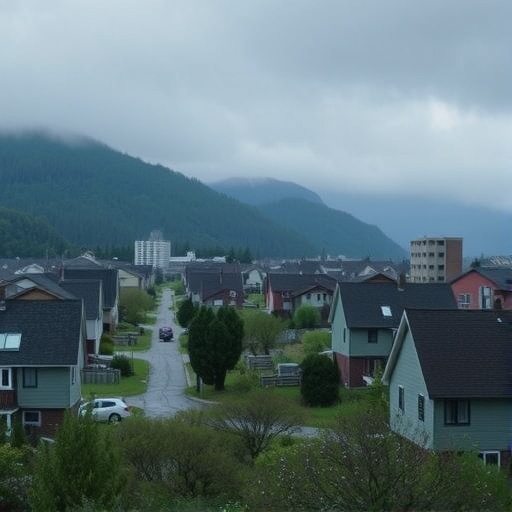
Across Japan, many small and medium-sized cities are confronting a future defined not by recovery, but by continued population loss and rapid aging. A new study from Osaka Metropolitan University suggests that the central challenge for these communities may not be how to reverse demographic decline, but how to protect residents’ well-being while decline continues. The research identifies specific conditions that can act as “buffers” against the effects of shrinking populations, including remote work for working-age adults and predictable long-term care costs for older people.
The study, led by Haruka Kato of Osaka Metropolitan University’s Graduate School of Human Life and Ecology, examined how city-level population change influences the relationship between everyday living conditions and life satisfaction. Researchers analyzed responses from 5,645 people living in small and medium-sized cities across Japan, using data from the country’s 2024 Survey on Satisfaction and Quality of Life. The analysis focused on whether factors such as employment, health, housing, finances, community connections and caregiving became more or less important depending on how quickly a city was losing population.
To investigate these relationships, the researchers used hierarchical linear modeling, a statistical technique designed for data in which individuals are nested within larger groups. In this case, residents were studied within their respective cities. This approach allowed the team to separate individual-level influences—such as a person’s health or work-life balance—from contextual influences linked to the city itself. It also enabled the researchers to test cross-level interactions, revealing whether the importance of a particular life condition changed as a city’s population decline became more severe.
The results showed that population decline was modestly associated with lower life satisfaction. However, the most significant finding was not simply that residents of shrinking cities reported lower well-being. Instead, the analysis indicated that some aspects of daily life became increasingly important under conditions of demographic stress. In other words, the same factor did not have an identical effect everywhere. Its relationship with life satisfaction strengthened or weakened depending on the broader population trajectory of the city in which a person lived.
For working-age adults, work-life balance emerged as a stronger predictor of life satisfaction in cities experiencing sharper population decline. The finding suggests that employment conditions may become especially consequential when local economies are losing residents, businesses and labor-market diversity. In a shrinking city, people may face fewer nearby job opportunities, longer travel distances, reduced access to specialized services or increased pressure on the remaining workforce. Under these circumstances, the ability to manage work alongside family and personal life may have an amplified influence on overall well-being.
A further analysis of work arrangements pointed to fully remote employment as a particularly important potential buffer. In cities declining more rapidly, residents who worked entirely remotely tended to report more favorable life satisfaction. Remote work may help disconnect economic opportunity from local job availability by allowing residents to remain in smaller communities while accessing employers, clients and professional networks elsewhere. The result does not prove that remote work directly causes higher life satisfaction, but it suggests that digital connectivity may help reduce the economic isolation associated with shrinking local labor markets.
The pattern was different among older adults. As population decline intensified, caregiving support became more strongly associated with life satisfaction. Among the specific factors examined, satisfaction with long-term care costs showed a particularly strong relationship with well-being in more rapidly shrinking cities. For older residents, predictable and manageable care expenses may provide more than financial relief. They may also reduce anxiety about whether local welfare systems, care providers and family networks will remain capable of meeting future needs as the population ages and the number of available caregivers falls.
These findings challenge a narrow interpretation of “Smart Decline,” a policy approach that generally emphasizes adapting infrastructure and public services to a smaller population. Compact urban development, the consolidation of facilities and the right-sizing of physical networks may be necessary, but the study suggests that demographic adaptation must also include social and digital protections. For adults, this could mean expanding high-speed internet access, remote-work facilities and digital skills programs that connect residents with opportunities beyond their immediate region. For older adults, it could involve stabilizing long-term care costs, strengthening household caregiving support and improving confidence in the continuity of local services.
“Our study suggests that Smart Decline policies should move beyond a narrow focus on physical right-sizing and compact city strategies,” Kato said. “For adults, this may mean investing in digital infrastructure and remote-work environments that expand access to economic opportunities beyond the local labor market. For older adults, it may mean stabilizing long-term care costs and supporting household caregiving arrangements.” Published in the journal Cities, the research offers a more targeted way to think about resilience in shrinking communities: rather than applying one solution to every resident, policies may need to strengthen the specific life domains that become most important as demographic decline accelerates.
News Publication Date: 20-May-2026
Web References: Osaka Metropolitan University; https://doi.org/10.1016/j.cities.2026.107231
References: Kato, H. “Well-being amidst population decline: Contextual effects of population change on life satisfaction in shrinking small and medium-sized cities in Japan.” Cities. DOI: 10.1016/j.cities.2026.107231
Cite Scienmag News
Courtney Benton. (August 6, 2026). Smart Decline Strategies Help Communities Weather Population Loss. Scienmag. https://scienmag.com/smart-decline-strategies-help-communities-weather-population-loss/
Courtney Benton. "Smart Decline Strategies Help Communities Weather Population Loss." Scienmag, 6 August 2026, https://scienmag.com/smart-decline-strategies-help-communities-weather-population-loss/. Accessed 5 September 2026.
Courtney Benton. "Smart Decline Strategies Help Communities Weather Population Loss." Scienmag. August 6, 2026. https://scienmag.com/smart-decline-strategies-help-communities-weather-population-loss/


