

Tuesday, July 28, 2026
Science
No Result
View All Result
  • Login
  • HOME
  • SCIENCE NEWS
  • CONTACT US
  • HOME
  • SCIENCE NEWS
  • CONTACT US
No Result
View All Result
Scienmag
No Result
View All Result
Home Science News Medicine

Study finds how sleep strengthens memory, and epilepsy disrupts the process

July 28, 2026
in Medicine
Reading Time: 2 mins read
0
Study finds how sleep strengthens memory, and epilepsy disrupts the process

Study finds how sleep strengthens memory, and epilepsy disrupts the process

65
SHARES
587
VIEWS
Share on FacebookShare on Twitter
ADVERTISEMENT

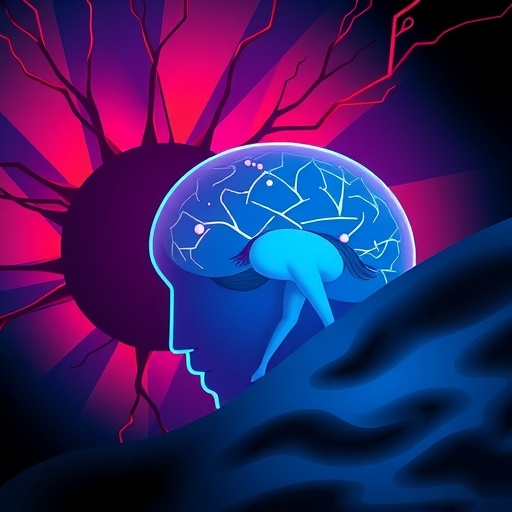
Baltimore, July 27, 2026 — A new human study from researchers at the Kennedy Krieger Institute and Johns Hopkins Medicine finds that memory consolidation during sleep relies on precisely coordinated interactions across three brain regions: the orbitofrontal cortex, the thalamus, and the hippocampus. Rather than acting independently, these areas appear to synchronize their activity into a sleep-time communication network that helps the brain stabilize newly formed memories.

The work is among the first in humans to directly link cross-region neural coordination to measurable memory outcomes. Using intracranial recordings from people with epilepsy, the team tracked how well the activity in these regions aligned during sleep, focusing on well-known electrophysiological events including sleep spindles and hippocampal ripples—signals associated with synaptic strengthening and information transfer.

A central feature of the analysis was the identification of rhythmic patterns and their timing relationships across the orbitofrontal cortex, thalamus, and hippocampus. By applying statistical methods to quantify coordination strength, the researchers determined that tighter coupling between these rhythms predicted better memory performance. In other words, when the three systems “locked together” more effectively, memory improved.

The study also shows what happens when the coordination is interrupted. Epileptic spikes—abnormal electrical discharges occurring during sleep—disrupted the rhythmic cascade linking the recorded regions. When spikes interrupted this coordinated patterning, memory performance declined, suggesting a mechanistic pathway for cognitive effects seen in epilepsy.

These results frame epilepsy-related cognitive difficulties as more than a secondary consequence of seizures. Instead, they point to a direct interference with the sleep circuitry that normally supports memory consolidation. The findings may help explain why patients with epilepsy often report problems retaining information.

Dr. Catherine Chu, a co-author and vice president of neurology at Kennedy Krieger, said the findings help close a long-standing gap in understanding how epilepsy affects memory. The study provides a direct bridge between brain dynamics during sleep and later cognitive performance.

Mark Kramer, a co-author and professor of applied mathematics and statistics at Johns Hopkins, emphasized that the complexity of neural recordings required interdisciplinary tools from mathematics and statistics to uncover clinically meaningful patterns. He noted that no single field could fully reveal the mechanism.

Supported by a grant from the National Institutes of Health, the study appears in Proceedings of the National Academy of Sciences. The authors highlight that the same principles could guide future approaches to detect, monitor, and potentially mitigate sleep-related cognitive disruption in epilepsy.

Subject of Research: People
Article Title: A hierarchical cascade of sleep rhythms supports motor memory and is hijacked by epileptic spikes in human epilepsy
News Publication Date: 27-Jul-2026 (article publication date: 30-Jun-2026)
Web References: https://www.pnas.org/doi/10.1073/pnas.2517454123
References: 10.1073/pnas.2517454123
Image Credits: (Not provided)

Keywords: Neurology, Epilepsy, sleep spindles, hippocampal ripples, memory consolidation, neural oscillations, orbitofrontal cortex, thalamus, hippocampus

Tags: effects of epileptic spikes on brain connectivityelectrophysiological signals in sleephippocampus and memory formationimpact of epilepsy on sleep-related memoryintracranial recordings in humansneural coordination during sleepneural synchrony and memory performanceorbitofrontal cortex function in memorysleep spindles and hippocampal ripplessleep-based mechanisms of memory stabilizationsleep-dependent memory consolidationthalamus role in sleep and learning
Share26Tweet16
Previous Post

Enzyme discovery may help clear deadly zombie cells from human tissues

Next Post

Grant Funds Brain Imaging Research to Improve Post-Stroke Bladder Treatments

Related Posts

Alcohol Intervention Proves Successful in Humanitarian Aid Setting
Medicine

Alcohol Intervention Proves Successful in Humanitarian Aid Setting

July 28, 2026
Genes Influence Diet Choices and Metabolic Health, New Research Suggests
Medicine

Genes Influence Diet Choices and Metabolic Health, New Research Suggests

July 28, 2026
Grant Funds Brain Imaging Research to Improve Post-Stroke Bladder Treatments
Medicine

Grant Funds Brain Imaging Research to Improve Post-Stroke Bladder Treatments

July 28, 2026
Study Warns of Hidden Sleep Crisis Among Workers Over 50
Medicine

Study Warns of Hidden Sleep Crisis Among Workers Over 50

July 28, 2026
Survey Reveals Gaps in Fungal Diagnostics and Antifungal Access in Latin America
Medicine

Survey Reveals Gaps in Fungal Diagnostics and Antifungal Access in Latin America

July 28, 2026
Legal obligations in perinatal care may harm patients in medical partnerships
Medicine

Legal obligations in perinatal care may harm patients in medical partnerships

July 28, 2026
Next Post
Grant Funds Brain Imaging Research to Improve Post-Stroke Bladder Treatments

Grant Funds Brain Imaging Research to Improve Post-Stroke Bladder Treatments

  • Mothers who receive childcare support from maternal grandparents show more

    Mothers who receive childcare support from maternal grandparents show more parental warmth, finds NTU Singapore study

    27656 shares
    Share 11059 Tweet 6912
  • University of Seville Breaks 120-Year-Old Mystery, Revises a Key Einstein Concept

    1061 shares
    Share 424 Tweet 265
  • Bee body mass, pathogens and local climate influence heat tolerance

    682 shares
    Share 273 Tweet 171
  • Researchers record first-ever images and data of a shark experiencing a boat strike

    546 shares
    Share 218 Tweet 137
  • Groundbreaking Clinical Trial Reveals Lubiprostone Enhances Kidney Function

    531 shares
    Share 212 Tweet 133
Science

Embark on a thrilling journey of discovery with Scienmag.com—your ultimate source for cutting-edge breakthroughs. Immerse yourself in a world where curiosity knows no limits and tomorrow’s possibilities become today’s reality!

RECENT NEWS

  • Alcohol Intervention Proves Successful in Humanitarian Aid Setting
  • Genes Influence Diet Choices and Metabolic Health, New Research Suggests
  • Grant Funds Brain Imaging Research to Improve Post-Stroke Bladder Treatments
  • Study finds how sleep strengthens memory, and epilepsy disrupts the process

Categories

  • Agriculture
  • Anthropology
  • Archaeology
  • Athmospheric
  • Biology
  • Biotechnology
  • Blog
  • Bussines
  • Cancer
  • Chemistry
  • Climate
  • Earth Science
  • Editorial Policy
  • Marine
  • Mathematics
  • Medicine
  • Pediatry
  • Policy
  • Psychology & Psychiatry
  • Science Education
  • Social Science
  • Space
  • Technology and Engineering

Subscribe to Blog via Email

Enter your email address to subscribe to this blog and receive notifications of new posts by email.

Join 5,146 other subscribers

© 2025 Scienmag - Science Magazine

Welcome Back!

Login to your account below

Forgotten Password?

Retrieve your password

Please enter your username or email address to reset your password.

Log In
No Result
View All Result
  • HOME
  • SCIENCE NEWS
  • CONTACT US

© 2025 Scienmag - Science Magazine

Discover more from Science

Subscribe now to keep reading and get access to the full archive.

Continue reading
