


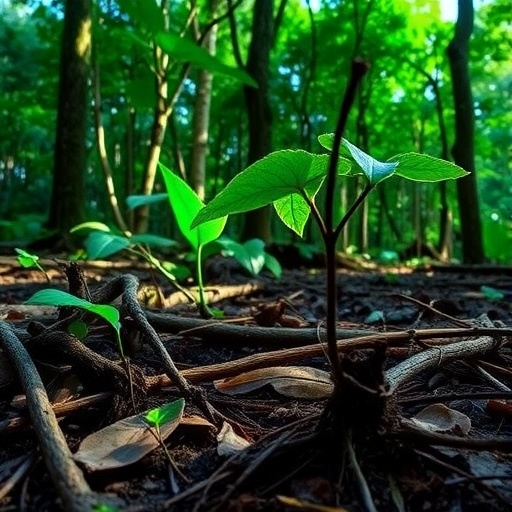
Halting and reversing biodiversity loss by 2030 is no longer a distant aspiration but an immediate imperative to prevent catastrophic consequences for human well-being and Earth system stability. A groundbreaking paper recently published in Frontiers in Science delivers a powerful call for global action to adopt a “Nature Positive” approach, urging humanity to surpass fragmented biodiversity frameworks. The authors advocate for integrating biodiversity goals on par with climate change and human development objectives to secure our planet’s future.
The urgency of this shift stems from the accelerating decline in biodiversity—a multifaceted crisis impacting species diversity, ecosystems, and the large-scale natural processes that sustain life on Earth. These processes include intricate biotic and abiotic interactions such as hydrological cycles and climate regulation. Without preserving the integrity of these natural systems, the interwoven fabric of ecological functions that regulate our climate, water availability, and agricultural productivity unravels, threatening global food security and human health.
At the heart of this scientific appeal is the necessity to protect intact biomes and ecosystems, whose loss is both irreplaceable and contributory to climate destabilization. Current global frameworks, including the Kunming-Montreal Global Biodiversity Framework (GBF) established at COP15 in 2022, set ambitious targets to halt biodiversity loss by 2030. However, this critical analysis reveals that these frameworks largely overlook the vast complexity of natural processes, such as biome functionality, hydrology, and species migration corridors, which are essential for achieving holistic and sustainable conservation outcomes.
With ecosystems facing unprecedented pressures, halting tropical forest loss emerges as a critical priority. Large-scale deforestation not only exacerbates carbon emissions but also risks irreversible ecological tipping points that undermine Earth’s capacity to self-regulate. The significance of migration corridors for species is also emphasized, highlighting the need for preserving movement pathways and mitigating human-induced hazards that fragment habitats and disrupt natural population dynamics.
Beyond technical conservation metrics, the authors stress the indispensable role of Indigenous and local knowledge systems in shaping effective and equitable biodiversity strategies. Indigenous worldviews encompass a profound connection to the environment, recognizing the intrinsic relationships between humans, animals, plants, land, and the cosmos. This holistic perspective aligns with scientific understandings of biotic and abiotic processes, underscoring a unified approach that incorporates traditional ecological knowledge alongside empirical scientific data to bolster conservation success.
Furthermore, the paper illuminates the profound nexus between biodiversity loss and human health. As natural habitats deteriorate, the incidence and spread of infectious diseases escalate, propelled by disrupted ecological balances. Ecosystem degradation also impacts mental health and social well-being, reinforcing the argument that nature preservation is foundational to public health policy and global disease prevention efforts.
Equally important is the call to embed Nature Positive objectives within the broader architecture of global governance frameworks. This entails harmonizing international agreements concerning climate action, human development, and ocean conservation under a unified agenda that prioritizes biodiversity with equivalent commitment and resources. Such an approach positions nature protection as a fundamental pillar not only for environmental sustainability but also for economic prosperity and social equity.
Transitioning to an economy that operates fully within Earth’s natural limits requires transformative changes in production and consumption patterns. Businesses must adapt by rigorously assessing and disclosing their nature-related risks and dependencies, while innovative financial mechanisms are needed to incentivize investments in nature-positive initiatives. Coordinated governance structures should ensure inclusivity, particularly elevating the voices and rights of Indigenous peoples and local communities who steward some of the planet’s most vital ecosystems.
This comprehensive vision encapsulates a paradigm shift away from viewing biodiversity conservation as a luxury or add-on, instead recognizing it as central to maintaining planetary homeostasis. Biodiversity functions as the underlying framework that sustains climate systems, freshwater cycles, soil fertility, and ultimately human civilization’s viability. Ignoring this reality jeopardizes not only ecological integrity but also the socioeconomic fabrics that depend on it.
The imperative to halt and reverse biodiversity loss by 2030 is thus both a scientific and moral mandate. Delays in action risk crossing ecological thresholds beyond restoration, while synchronized efforts that fuse conservation science, traditional knowledge, and adaptive governance can chart a viable path toward Earth system stability and human thriving. Only through such unified and ambitious action can the intertwined challenges of biodiversity decline, climate change, and sustainable development be effectively addressed.
In conclusion, this research underscores the necessity of embedding Nature Positive goals at the core of international environmental and economic policy frameworks. Aligning these goals across multiple sectors will require unprecedented cooperation, innovative financing, and systemic transformation in how societies value and interact with the natural world. The opportunity to secure a resilient and biodiverse future depends on immediate and sustained global commitment.
Cite Scienmag News
Margaret Porter. (April 9, 2026). Stopping and Reversing Biodiversity Loss by 2030 Essential to Prevent Catastrophic Impacts on Human Well-Being. Scienmag. https://scienmag.com/stopping-and-reversing-biodiversity-loss-by-2030-essential-to-prevent-catastrophic-impacts-on-human-well-being/
Margaret Porter. "Stopping and Reversing Biodiversity Loss by 2030 Essential to Prevent Catastrophic Impacts on Human Well-Being." Scienmag, 9 April 2026, https://scienmag.com/stopping-and-reversing-biodiversity-loss-by-2030-essential-to-prevent-catastrophic-impacts-on-human-well-being/. Accessed 4 September 2026.
Margaret Porter. "Stopping and Reversing Biodiversity Loss by 2030 Essential to Prevent Catastrophic Impacts on Human Well-Being." Scienmag. April 9, 2026. https://scienmag.com/stopping-and-reversing-biodiversity-loss-by-2030-essential-to-prevent-catastrophic-impacts-on-human-well-being/


