


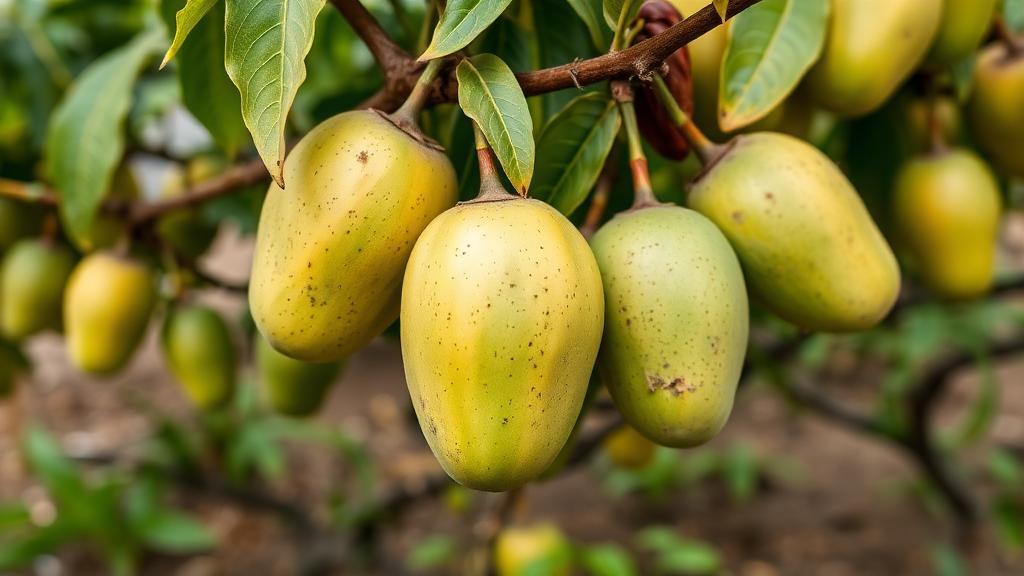
Deep in the rhizospheric soil of a mango orchard at India’s ICAR-Central Institute for Subtropical Horticulture in Lucknow, researchers have found an unexpected ally in the fight against one of modern agriculture’s most stubborn chemical residues. Two strains of Pseudomonas bacteria, isolated from soil repeatedly exposed to the neonicotinoid insecticide thiamethoxam, can break down the compound with remarkable efficiency, using it as their sole carbon source. The discovery, published in BMC Environmental Science, offers a biologically grounded path toward cleaning up contaminated orchard soils without the cost and collateral damage of chemical or physical remediation.
Thiamethoxam is a second-generation neonicotinoid that has become a mainstay of pest control in mango cultivation. As a systemic insecticide, it is absorbed by the plant and transported through its vascular system, reaching leaves, stems, flowers, and roots, so that any insect feeding on the plant encounters the chemical. Its molecular target is the insect nicotinic acetylcholine receptor: by binding to these receptors, thiamethoxam overstimulates the pest’s nervous system, causing paralysis and death. That mechanism makes it devastatingly effective against sap-sucking insects such as aphids, whiteflies, and leafhoppers, but it also underlies the compound’s well-documented hazards to beneficial pollinators, including bees, whose receptors are similarly sensitive.
The environmental profile of thiamethoxam compounds the concern. The molecule is highly water soluble, leaches readily, adsorbs poorly to soil particles, and persists with a long environmental half-life, particularly in dry, sandy, low-organic-matter soils and at lower temperatures. It is classified as a class III hazard compound by the World Health Organization and considered moderately hazardous to humans by the United Nations Food and Agriculture Organization. Reported human health effects include acute kidney injury through direct tubular toxicity, potentially mediated by inhibition of α7 nicotinic receptors in the proximal tubule. Because residues can persist at contaminated sites, disrupting microbial communities, reducing soil fertility, and entering aquatic systems where they harm non-target invertebrates, the search for effective degradation strategies has taken on real urgency.
Physical approaches such as soil solarization and land farming have proven largely ineffective against persistent pesticides, while chemical treatments are costly, slow, and inconsistently successful. Microbial remediation, by contrast, is environmentally benign and comparatively cheap, and decades of research have identified a growing roster of thiamethoxam-degrading microorganisms, including species of Bacillus, Ensifer, Sphingomonas, Streptomyces, Catenulispora, Chloroflexi, Nitrospirae, and Labrys, alongside numerous Pseudomonas strains. What set the new study apart was its origin: no previous work had isolated thiamethoxam-degrading bacteria from the rhizospheric soil of a mango orchard, and the enzymatic machinery responsible for degradation remained poorly characterized.
The research team, led by Pradeep Kumar Shukla and Govind Kumar, employed a culture enrichment technique on contaminated orchard soil and recovered eight gram-negative bacterial isolates. Molecular identification based on partial 16S ribosomal RNA gene sequencing, with BLAST alignment against the NCBI database and phylogenetic tree construction using the neighbor-joining method in MEGA version 5, pinpointed two standout strains: Pseudomonas aeruginosa strain A2 (accession OP597530) and a Pseudomonas sp. strain C1 (accession OP678013). Both carried an impressive suite of plant growth-promoting rhizobacteria traits. Strain A2 solubilized phosphate at 0.85 milligrams of phosphorus per milligram of protein, produced 9.05 micrograms of indole acetic acid per milligram of protein, 421.22 micrograms of gibberellic acid per milligram of protein, and 73.11 micrograms of ammonia per milligram of protein, alongside potassium and zinc solubilization, hydrogen cyanide production, and catalase activity. Strain C1 matched these capabilities closely, with phosphate solubilization of 0.88 milligrams per milligram of protein, 9.02 micrograms of indole acetic acid, and 455.13 micrograms of gibberellic acid per milligram of protein.
Degradation performance was tested rigorously across three systems: mineral salt medium broth, autoclaved sterile soil, and non-sterile soil, each fortified with thiamethoxam at 0.2, 0.5, and 1.0 grams per kilogram or liter, and monitored over 210 days at ambient temperature. Residues were quantified by ultra fast liquid chromatography on a reverse-phase C-18 column with photodiode array detection at 242 nanometers, and validated by ultra high-performance liquid chromatography coupled to a SCIEX QTRAP 5500 triple quadrupole mass spectrometer. Recovery efficiencies from soil ranged from 90.35 to 95.39 percent across five fortification levels, confirming the reliability of the analytical pipeline. In broth after 210 days, strain C1 degraded 98.33, 96.67, and 95.92 percent of the pesticide at the three concentrations respectively, while strain A2 achieved 96.15, 95.83, and 89.79 percent. Uninoculated controls managed only 41.18, 33.33, and 25.53 percent, roughly a third of the bacterial performance.
In sterile soil, both strains exceeded 90 percent degradation at the two lower doses, with A2 reaching 97.06 percent at 0.2 grams per kilogram while controls lagged at 35.29 percent. Non-sterile soil produced the single highest figure of the study: A2 degraded 99.09 percent of thiamethoxam at 0.5 grams per kilogram, against 40.74 percent in the corresponding control. Interestingly, degradation in non-sterile control soil exceeded that in sterile controls, suggesting that indigenous microbial communities contribute meaningfully to breakdown, yet the inoculated strains still outperformed them decisively. Kinetic modeling using a pseudo-first-order exponential model revealed the practical stakes: half-lives in inoculated broth ranged from 49.50 to 138.60 days, compared with 346.50 to 693.00 days in untreated controls, with similar reductions in both soil systems. Degradation followed a two-phase pattern, rapid for the first 120 days and slower thereafter, and efficiency consistently declined as initial pesticide concentration rose, with colony-forming-unit counts dropping at the highest dose, a sign of microbial inhibition under chemical stress.
Perhaps the most mechanistically revealing result came from enzyme localization experiments. The researchers fractionated bacterial cells into extracellular supernatant, outer membrane, inner membrane, and cytosolic fractions, incubated each with thiamethoxam for 30 days, and tracked residual pesticide. Starting from an average residue of 13.78 micrograms per gram at day zero, strain A2 reduced residues to 10.03 micrograms per gram in the extracellular fraction but to 0.63, 0.83, and 0.89 micrograms per gram in the outer membrane, inner membrane, and cytosolic fractions respectively, with strain C1 showing a parallel pattern. Degradation is therefore mediated primarily by membrane-bound enzymes, with negligible extracellular activity, likely because enzyme-substrate interaction outside the cell is limited. The finding echoes earlier work on periplasmic detoxification enzymes such as organophosphorus hydrolase and carbaryl hydrolase in Pseudomonas species, and it suggests that the bacteria must first take up the pesticide before dismantling it, an important consideration for engineering or selecting strains with maximal substrate access.
The soil health dimension of the study adds ecological weight to the biodegradation data. Dehydrogenase activity, an intracellular marker of overall microbial metabolism, and fluorescein diacetate hydrolysis, a proxy for total microbial activity encompassing lipases, esterases, and proteases, were tracked in both sterile and non-sterile soils. At lower thiamethoxam doses of 0.2 and 0.5 grams per kilogram, both indicators remained largely stable, indicating minimal disruption to soil biochemistry, and the inoculated strains helped sustain enzymatic function over the full 210 days. At 1.0 grams per kilogram, however, dehydrogenase activity in A2-treated sterile soil collapsed from 2.01 to 0.83 TPF micrograms per gram over 20 hours, and fluorescein diacetate activity fell sharply, confirming a dose-dependent toxicity to the soil microbial community. Bacterial counts told the same story: populations remained robust at lower doses, peaking at 61 and 67 million colony-forming units per milliliter in non-sterile and sterile soils respectively, but were consistently suppressed at the highest concentration.
The authors conclude that a thiamethoxam dose of 0.2 grams per kilogram is appropriate for field use, escalating to 0.5 grams per kilogram only if pest resistance emerges, and that their Pseudomonas isolates, combining degradative power with plant growth-promoting traits, are promising agents for in situ remediation of contaminated orchard soils. The persistence of detectable residues even at the lowest dose for 210 days underscores how difficult natural attenuation alone will be. Field validation across diverse soils and climates remains the necessary next step, but the vision is compelling: orchards that can be protected from insect pests while native, pesticide-trained bacteria quietly restore the ground beneath them, turning the soil’s own microbiology into a sustainable engine of detoxification.
Subject of Research: Microbial biodegradation of the neonicotinoid insecticide thiamethoxam in mango orchard soil by Pseudomonas strains
Article Title: Biodegradation of thiamethoxam in mango orchards by Pseudomonas spp.: a study on soil health and sustainability
Article References: Shukla, P. K., Kumar, G., Soni, S. K., Lal, S., Singh, N. S., Bhattacherjee, A. K., & Saxena, R. K. (2025). Biodegradation of thiamethoxam in mango orchards by Pseudomonas spp.: a study on soil health and sustainability. BMC Environmental Science, 2(1), Article 19. https://doi.org/10.1186/s44329-025-00032-8
Image Credits: AI Generated
DOI: 10.1186/s44329-025-00032-8
Keywords: thiamethoxam, Pseudomonas, biodegradation, bioremediation, neonicotinoid, mango orchard, soil health, soil enzymes, pesticide residues, PGPR, degradation kinetics, UFLC
Cite Scienmag News
Alan Morgan. (October 1, 2026). Soil Bacteria From Mango Orchards Devour Persistent Neonicotinoid Pesticide. Scienmag. https://scienmag.com/soil-bacteria-from-mango-orchards-devour-persistent-neonicotinoid-pesticide/
Alan Morgan. "Soil Bacteria From Mango Orchards Devour Persistent Neonicotinoid Pesticide." Scienmag, 1 October 2026, https://scienmag.com/soil-bacteria-from-mango-orchards-devour-persistent-neonicotinoid-pesticide/. Accessed 4 October 2026.
Alan Morgan. "Soil Bacteria From Mango Orchards Devour Persistent Neonicotinoid Pesticide." Scienmag. October 1, 2026. https://scienmag.com/soil-bacteria-from-mango-orchards-devour-persistent-neonicotinoid-pesticide/


