


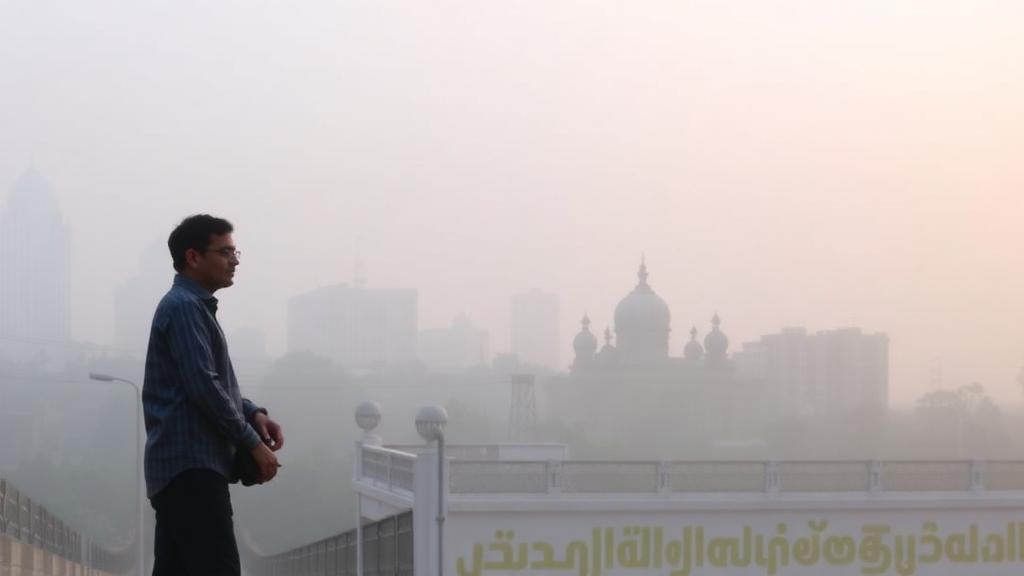
Bangladesh has spent years near the top of global rankings for the world’s most hazardous air, and a new nationwide analysis now offers the clearest picture yet of how the country’s particulate pollution crisis has evolved. By drawing together eight years of continuous measurements from government monitoring stations, researchers have quantified not only how dirty the air has been, but when, where, and how dangerously it threatens the roughly 170 million people who breathe it. The findings, published in Environmental Geochemistry and Health, reveal a pollution landscape in which modest long-term improvement coexists with alarmingly high lifetime cancer risk and a ferocious seasonal cycle.
The study, led by Rafi Bin Shahadat of Sonargaon University with colleagues from Bangladesh University of Engineering and Technology and the New Jersey Institute of Technology, examined records of fine particulate matter known as PM2.5 and coarser particles called PM10 collected at sixteen continuous monitoring stations operated by Bangladesh’s Department of Environment between 2018 and 2025. These two pollutants are the primary targets of air quality regulation worldwide because of their ability to penetrate deep into the lungs and, in the case of the finer fraction, to cross into the bloodstream. The researchers evaluated annual, monthly, and seasonal variability using descriptive statistics, non-parametric comparisons, and Spearman correlation, and applied the Seasonal Mann-Kendall test to detect underlying trends in the data.
The headline numbers are stark. In every single year of the study period, every one of the sixteen stations exceeded both Bangladesh’s own National Ambient Air Quality Standards and the far stricter guidelines issued by the World Health Organization. The network-wide annual mean concentration of PM2.5 stood at 91.54 micrograms per cubic meter in 2018, more than eighteen times the WHO annual guideline value. PM10 averaged 155.7 micrograms per cubic meter that same year. For context, the WHO recommends that annual PM2.5 exposure stay at or below 5 micrograms per cubic meter, a threshold that even the cleanest monitoring location in Bangladesh never approached.
Yet the analysis also uncovered a genuine, if fragile, sign of progress. By 2025, the network-wide annual mean PM2.5 had fallen to 77.64 micrograms per cubic meter, a decline of 15.2 percent, while PM10 dropped from 155.7 to 132.3 micrograms per cubic meter, a 15.0 percent reduction. However, the researchers emphasize that these decreases were non-monotonic. Concentrations reached a minimum around 2020, coinciding with the COVID-19 pandemic and its associated lockdowns, then rebounded as economic activity resumed. This pattern suggests that the apparent improvement owes part of its magnitude to a temporary disruption rather than a sustained structural transformation of the country’s emission profile, and that the post-pandemic rebound has partly eroded earlier gains.
The most dramatic feature of the data is seasonal. Mean winter concentrations of PM2.5 were approximately 4.2 times higher than those recorded during the monsoon, and winter PM10 ran about 3.0 times above monsoon levels. The physical explanation lies in the interaction between emission patterns and South Asian meteorology. During the dry winter months, cooler temperatures and persistent temperature inversions trap pollutants near the surface, while reduced rainfall removes far fewer particles through wet deposition. Brick kilns, which burn coal and wood in large numbers across the Dhaka region and beyond, operate at peak intensity in the dry season, and transboundary transport of pollution from upwind regions adds to the domestic load. The monsoon, by contrast, scours the atmosphere with heavy rain and strong winds, temporarily flushing the air clean.
That meteorological control emerges clearly from the correlation analysis. Particulate concentrations were generally negatively associated with temperature, relative humidity, wind speed, and rainfall, meaning that pollution fell when these cleansing and dispersing factors strengthened. This relationship cuts both ways for policy. It implies that some portion of the year-to-year variability in measured concentrations reflects the vagaries of weather rather than changes in emissions. It also implies that emission reductions are most critical during the winter window, when the atmosphere has the least capacity to dilute what is released. The researchers found that most seasonal trends were statistically non-significant, indicating that interannual variability, rather than a consistent nationwide downward trend, characterized the study period.
The health risk calculations translate these concentrations into human terms. Using established risk assessment frameworks, the team computed the Excess Lifetime Cancer Risk for PM2.5 exposure and Hazard Quotients for both pollutants. The mean ELCR values ranged from 0.476 to 0.950, figures that sit well above the range generally considered acceptable by regulatory agencies, which typically treat risks up to one in a million, expressed as 0.000001, as tolerable. Mean Hazard Quotients came out at 3.60 for PM2.5 and 2.73 for PM10, both exceeding the threshold value of 1.0 that signals potential non-carcinogenic health effects. A Hazard Quotient above 1 indicates that the estimated exposure dose surpasses a reference level considered safe, implying meaningful risk of respiratory and cardiovascular harm across the exposed population.
These risk estimates align with a growing body of epidemiological evidence linking Bangladesh’s particulate burden to serious disease outcomes. Earlier studies in Dhaka have associated combustion-derived fine particle exposure with cardiovascular morbidity and mortality, and the International Agency for Research on Cancer classifies outdoor air pollution as a human carcinogen. Fine particles are particularly insidious because their small size allows them to lodge in the deepest recesses of the lungs, where they trigger inflammation, oxidative stress, and, over years of chronic exposure, contribute to cancers, heart disease, strokes, and chronic respiratory illness. In a densely populated country where hundreds of millions of people live in affected urban corridors, the population-level burden of disease attributable to particulate pollution is enormous.
The researchers acknowledge limitations in their approach, most notably in spatial mapping. They employed kriging, a geostatistical interpolation technique, to visualize pollution patterns across the country, but found its predictive performance limited by the sparse and uneven distribution of monitoring stations. They therefore restricted the kriging output to exploratory visualization rather than treating it as a predictive map. This is a common challenge in South Asian air quality science: reliable ground-based monitoring remains concentrated in major cities, leaving large rural and peri-urban areas effectively unmeasured. The authors call for expanded air quality monitoring infrastructure to close these gaps and to enable more robust spatial modeling in the future.
The policy implications of the study are direct. The authors argue that their findings support stronger particulate emission controls, expanded monitoring, and seasonally targeted interventions aimed at reducing population exposure. In practical terms, that means cracking down hardest on winter sources such as brick kilns, construction dust, and unpaved road traffic, while preparing public health advisories timed to the dry season when concentrations peak. The researchers suggest that the modest downward drift in annual means, however fragile, shows that interventions can move the needle, but the rebound after 2020 demonstrates that progress is reversible. For a country whose air has repeatedly ranked among the most toxic on Earth, the message of this analysis is that improvement is possible, but that without sustained structural emission reductions, Bangladesh’s residents will continue to carry a cancer risk many orders of magnitude above what international guidelines deem safe.
Subject of Research: Spatiotemporal variability, trends, and health risks of ambient PM2.5 and PM10 pollution in Bangladesh during 2018–2025
Article Title: Spatiotemporal variability, trends, and health risk assessment of ambient PM2.5 and PM10 in Bangladesh during 2018–2025
Article References: Shahadat, R. B., Keya, S. S., & Ali, M. T. (2026). Spatiotemporal variability, trends, and health risk assessment of ambient PM2.5 and PM10 in Bangladesh during 2018–2025. Environmental Geochemistry and Health, 48(15), Article 609. https://doi.org/10.1007/s10653-026-03506-z
Image Credits: AI Generated
DOI: 10.1007/s10653-026-03506-z
Keywords: PM2.5, PM10, air pollution, Bangladesh, health risk assessment, winter smog, Excess Lifetime Cancer Risk, Hazard Quotient, meteorology, Seasonal Mann-Kendall test, WHO air quality guidelines, Department of Environment
Cite Scienmag News
Nathaniel Bowman. (October 1, 2026). Bangladesh’s Air Is Slowly Improving, but Winter Smog Still Poses Serious Cancer Risks. Scienmag. https://scienmag.com/bangladeshs-air-is-slowly-improving-but-winter-smog-still-poses-serious-cancer-risks/
Nathaniel Bowman. "Bangladesh’s Air Is Slowly Improving, but Winter Smog Still Poses Serious Cancer Risks." Scienmag, 1 October 2026, https://scienmag.com/bangladeshs-air-is-slowly-improving-but-winter-smog-still-poses-serious-cancer-risks/. Accessed 5 October 2026.
Nathaniel Bowman. "Bangladesh’s Air Is Slowly Improving, but Winter Smog Still Poses Serious Cancer Risks." Scienmag. October 1, 2026. https://scienmag.com/bangladeshs-air-is-slowly-improving-but-winter-smog-still-poses-serious-cancer-risks/


