


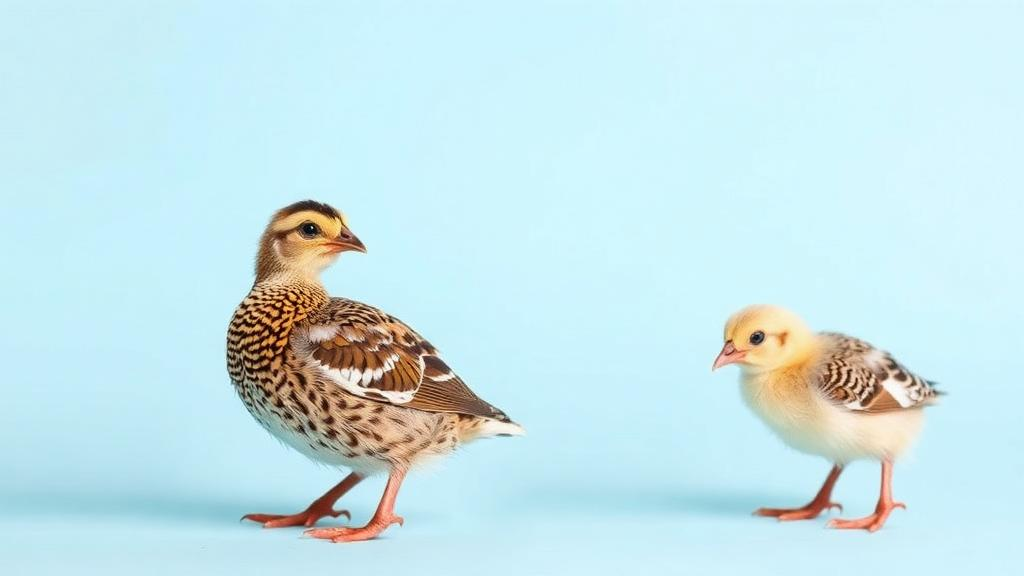
Japanese quail may be small, but they are big business. Prized for their rapid growth, early maturity and remarkable feed conversion efficiency, these birds are a staple of sustainable poultry production across the globe. Yet the nutritional blueprint guiding their feeding has been showing its age. A new dose–response study published in Veterinary Medicine and Science suggests that lysine requirements for quail chicks during their first two weeks of life are substantially higher than many historical recommendations, and that the right amount depends critically on how much crude protein the rest of the diet contains.
Lysine occupies a special place in poultry nutrition. In conventional corn–soybean meal diets it is typically the second most limiting essential amino acid, and it serves as the reference point around which the entire ‘ideal protein’ concept is built. Once lysine is supplied at the correct level, all other essential amino acids can be balanced against it in fixed ratios, allowing nutritionists to formulate diets that match physiological needs while minimising costly and environmentally damaging nitrogen excretion. But lysine does far more than simply build protein. It is a precursor for carnitine, which shuttles fatty acids into mitochondria for energy production, and it helps activate the mTOR signalling pathway that governs the rate of protein synthesis in growing tissues. Deficiency stunts growth and weakens immunity; oversupply disrupts amino acid balance and forces the body to pay a metabolic penalty for degrading the excess.
Despite this central role, estimates of lysine requirements for starter-phase Japanese quail have varied widely in the literature, generally falling between 1.20% and 1.40% of the diet. Part of the discrepancy reflects methodological differences, part reflects genetic progress: modern quail strains bred for faster growth and better feed efficiency may simply need more than the standards set decades ago. To resolve the question, researchers at the University of Tabriz in Iran conducted one of the most comprehensive requirement studies to date, raising 900 day-old quail chicks across 15 different dietary treatments in a carefully controlled 3 × 5 factorial design.
The experimental architecture was deliberately thorough. Three crude protein levels—22%, 24% and 26%—were crossed with five lysine levels ranging from 0.95% to 1.55% of the diet. Chicks were housed in 90 floor pens with six replicate pens per treatment, under a 23-hour light photoperiod with ambient temperature stepping down from 35°C to 29°C over the two-week trial. Crucially, all other essential amino acids were held in fixed ratios to lysine according to the ideal protein concept, with crystalline amino acids used to guarantee that methionine, threonine, tryptophan, arginine, leucine, isoleucine and the sulphur amino acids never became limiting. Diets were verified analytically by high-performance liquid chromatography, confirming that what was formulated was what the birds actually ate.
The growth results told a clear story. Body weight and weight gain rose as dietary protein increased, with chicks on 26% crude protein reaching a final body weight of 71.72 grams compared with roughly 69.3 grams at the lower protein levels. Feed intake, intriguingly, moved in the opposite direction, declining as protein density rose—a pattern the authors attribute to improved amino acid balance and metabolic efficiency reducing the drive to overeat. Lysine produced a classic quadratic response: performance climbed steadily up to 1.4% dietary lysine, where chicks achieved their peak body weight of 73.93 grams and weight gain of 66.50 grams, then declined at 1.55%, signalling that beyond a physiological threshold, extra lysine becomes a liability rather than an asset.
Perhaps the most consequential finding was the significant interaction between protein level and lysine for feed intake, feed conversion ratio and protein efficiency ratio. At 22% crude protein, performance kept improving as lysine rose to 1.4%, indicating that birds on reduced-protein diets depend heavily on supplemental lysine to compensate for the lower total amino acid supply. At 24% and 26% protein, the response flattened out much earlier, with little benefit beyond 1.25% lysine, because intact protein sources were already delivering ample lysine on their own. This context-dependence helps explain why lysine requirement estimates have bounced around the literature for years: studies using different basal protein levels were, in effect, measuring different things.
Carcass data reinforced the message that balance beats brute force. Carcass yield and breast muscle yield peaked at 24% crude protein and declined at 26%, suggesting that very high protein intake carries metabolic costs—extra heat production and increased liver workload from nitrogen deamination—that erode the efficiency of protein deposition. Breast muscle proved especially sensitive to lysine, climbing from 29.6% of live weight at 0.95% lysine to 32.0% at 1.25% before plateauing. Because breast meat yield is a key economic driver in meat-type quail production, this sensitivity matters commercially. A significant protein × lysine interaction for breast yield confirmed that the optimal lysine level for muscle development shifts with the surrounding dietary protein context.
The statistical side of the study carries lessons of its own. The researchers fitted both linear and quadratic broken-line regression models, which locate the ‘breakpoint’ at which the response to a nutrient plateaus. Across nearly all response criteria, the linear model outperformed the quadratic version, delivering higher coefficients of determination and tighter confidence intervals. The quadratic model consistently produced requirement estimates 0.04 to 0.07 percentage points higher, likely reflecting overfitting of the pronounced peaks in the data. Using linear broken-line analysis, the lysine requirement for weight gain was estimated at 1.20% of diet at 22% crude protein, 1.32% at 24%, and 1.40% at 26%—values that generally exceed older recommendations but align with recent factorial modelling of modern quail strains, including a 2023 estimate of roughly 1.35% to 1.45% of diet for growing quail.
Mechanistically, the response patterns map neatly onto established biochemistry. Suboptimal lysine intake dampens mTOR activation, slowing translational efficiency and cell growth, which explains the steep performance gains as lysine approaches the requirement. Beyond the breakpoint, surplus lysine must be deaminated and converted to urea, processes that generate metabolic heat and burden the liver and kidneys—a penalty visible in the reduced protein efficiency ratio observed at 1.55% lysine. The study’s authors are careful to note limitations: the trial used optimal environmental conditions that may not reflect commercial farms, covered only the 0–14 day starter phase, and did not include economic analysis of supplementation decisions.
The practical take-home for producers is a set of context-specific targets rather than a single magic number. For diets containing 22% or 26% crude protein, the study supports lysine levels of 1.40% to 1.42%, while 1.32% to 1.35% suffices at 24% crude protein. These figures prioritise both growth and feed efficiency while limiting nitrogen excretion, a growing regulatory and environmental concern for poultry operations worldwide. The authors call for follow-up work on later growth phases, dynamic requirement models that track changing needs along the growth curve, interactions with alternative protein ingredients, and the influence of heat stress on lysine metabolism. For now, the message is clear: as quail genetics have sprinted ahead, feeding standards have lagged behind, and precision nutrition—right amino acid, right protein context, right statistical model—is the way to catch up.
Subject of Research: Lysine requirement estimation for starter-phase Japanese quail using dose–response modelling across dietary protein levels
Article Title: Lysine Requirements in Starter‐Phase Japanese Quail (Coturnix japonica) Through Dose–Response Modelling: Interactions With Dietary Protein Level
Article References: Valizadeh, H., Taghinejad‐Roudbaneh, M., & Kianfar, R. (2026). Lysine Requirements in Starter‐Phase Japanese Quail ( Coturnix japonica ) Through Dose–Response Modelling: Interactions With Dietary Protein Level. Veterinary Medicine and Science, 12(6), Article e71142. https://doi.org/10.1002/vms3.71142
Image Credits: AI Generated
DOI: 10.1002/vms3.71142
Keywords: Japanese quail, lysine, poultry nutrition, dose–response modelling, broken-line regression, ideal protein, crude protein, feed conversion ratio, breast muscle yield, starter phase, amino acid requirements, precision feeding
Cite Scienmag News
Daisy Hatcher. (October 1, 2026). Precision Feeding for Quail: Study Pins Optimal Lysine Levels for Fast-Growing Chicks. Scienmag. https://scienmag.com/precision-feeding-for-quail-study-pins-optimal-lysine-levels-for-fast-growing-chicks/
Daisy Hatcher. "Precision Feeding for Quail: Study Pins Optimal Lysine Levels for Fast-Growing Chicks." Scienmag, 1 October 2026, https://scienmag.com/precision-feeding-for-quail-study-pins-optimal-lysine-levels-for-fast-growing-chicks/. Accessed 4 October 2026.
Daisy Hatcher. "Precision Feeding for Quail: Study Pins Optimal Lysine Levels for Fast-Growing Chicks." Scienmag. October 1, 2026. https://scienmag.com/precision-feeding-for-quail-study-pins-optimal-lysine-levels-for-fast-growing-chicks/


