


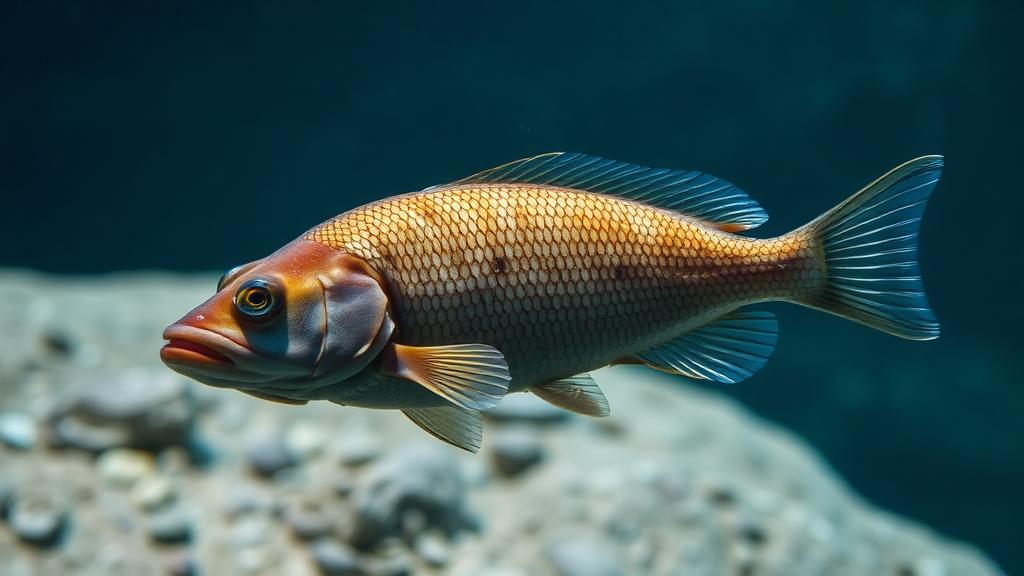
High on the Qinghai-Tibetan Plateau, where rivers run cold and oxygen is scarce even at the surface, lives a fish that has turned environmental extremes into an evolutionary specialty. Gymnocypris eckloni, an endemic schizothoracine species, tolerates hypoxic waters that would stress or kill many lowland fish. A new study published in BMC Genomics has now mapped, in unusual molecular detail, how the immune system of this remarkable fish responds to two very different forms of oxygen deprivation: a severe short-term hypoxic shock lasting twelve hours, and a moderate prolonged hypoxia sustained for up to a week. The findings reveal that the fish does not simply dial its immune defenses up or down, but instead deploys distinct regulatory strategies depending on the severity and duration of the oxygen crisis.
The research team, led by Shenji Wu and corresponding author Delin Qi of Qinghai University’s State Key Laboratory of Plateau Ecology and Agriculture, together with Fei Tian of the Northwest Institute of Plateau Biology at the Chinese Academy of Sciences, combined liver and blood biochemistry with transcriptome-wide gene expression profiling. They also tracked the expression of key immune-related genes in the gills and spleen, the two organs that sit at the front line of a fish’s interaction with its watery environment. By integrating biochemical measurements with mRNA expression data, the researchers were able to connect physiological damage with the genetic machinery that responds to it, painting a dynamic picture of immune regulation under oxygen stress.
The clearest signal emerged from the comparison between the two hypoxia regimes. Severe short-term hypoxia, the twelve-hour acute challenge, exacerbated oxidative damage in the fish and significantly altered the expression of genes governing apoptosis, the controlled program of cell death, and autophagy, the cellular recycling process that degrades damaged components. This makes intuitive biological sense: when oxygen supply collapses suddenly, mitochondria leak reactive oxygen species, membranes are peroxidized, and cells must decide whether to repair themselves or self-destruct. Malondialdehyde, a standard marker of lipid peroxidation, served as one of the biochemical readouts of this damage, alongside antioxidant enzymes such as total superoxide dismutase and catalase, which mop up reactive oxygen species before they can wreak havoc.
At the pathway level, the transcriptomic response to severe short-term hypoxia was strikingly specific. Gene sets involved in phagosome function, lysosomal activity, Toll-like receptor signaling and NOD-like receptor signaling were all significantly enriched under the acute challenge. These pathways form the backbone of the innate immune system: phagosomes and lysosomes engulf and digest cellular debris and invading microbes, while TLRs and NLRs are pattern-recognition receptors that detect molecular signatures of pathogens and tissue damage. Notably, none of these pathways showed comparable enrichment under moderate prolonged hypoxia, suggesting that the fish’s immune system interprets a sudden oxygen crash as an emergency requiring full innate immune mobilization, whereas a gradual, sustained oxygen decline is managed through quieter, more homeostatic mechanisms.
To move beyond simple lists of differentially expressed genes, the researchers applied two complementary computational approaches. Short Time-series Expression Miner, or STEM, was used to identify genes that follow coherent temporal expression profiles across the moderate hypoxia time course of 24, 96 and 168 hours. Weighted Gene Co-expression Network Analysis, or WGCNA, was then used to detect modules of genes that behave in a coordinated fashion and to link those modules to the measured biochemical traits. Together, these methods pinpointed a set of key immune-related genes whose expression patterns define the fish’s hypoxic immune response, including nod1, irf3, ifnα, pi3k, akt, p38, il-12, jak1, stat1, nlrp3, bax, bcl2, bcl-xl, atg5 and lc3.
Each of these genes tells part of the story. NOD1 is an intracellular pattern-recognition receptor that senses bacterial peptidoglycan and triggers inflammatory signaling. IRF3 and interferon alpha sit at the heart of the antiviral response, while the IL-12, JAK1 and STAT1 axis connects innate detection to the activation of adaptive immune cells. PI3K and AKT are central survival kinases that also feed into autophagy regulation, and the BAX, BCL2 and BCL-XL proteins are the arbiters of the mitochondrial apoptosis pathway, deciding whether stressed cells live or die. ATG5 and LC3 are core components of the autophagy machinery itself, and NLRP3 is the inflammasome sensor that can ignite potent inflammatory responses. The fact that most of these genes showed similar expression trends in the hypoxia-challenged gills indicates that the respiratory epithelium, in constant contact with the oxygen-poor water, orchestrates a coordinated immune program.
The spleen told its own story. In this immune organ, the expression of nod1, irf3, akt, pi3k, jnk and cyld was remarkably induced by severe short-term hypoxia. CYLD, a deubiquitinating enzyme, acts as a brake on inflammatory signaling pathways including NF-κB, so its induction alongside NOD1 and IRF3 suggests a carefully balanced response: the fish activates antiviral and antibacterial defenses while simultaneously engaging negative regulators to prevent runaway inflammation. This kind of calibrated response is critical, because uncontrolled inflammation in a hypoxic animal can compound tissue damage rather than repair it. The spleen’s sensitivity to the acute challenge underscores that hypoxia is not merely a respiratory problem but a systemic immune event.
Why does this matter beyond the biology of one Tibetan fish? Aquatic hypoxia is an increasingly common stressor in natural waters and aquaculture systems alike, driven by eutrophication, warming temperatures and high stocking densities. Hypoxic episodes suppress growth, impair immune competence and increase susceptibility to disease in farmed fish, imposing substantial economic losses. Understanding how a naturally hypoxia-tolerant species regulates its immune system under different oxygen regimes provides a template for what robust fish look like at the molecular level. The authors explicitly frame their results as valuable information for breeding hypoxia-tolerant fish, and the gene set they identified, from pattern-recognition receptors to apoptosis regulators, offers candidate markers for selective breeding or genome editing programs aimed at hardier aquaculture stocks.
The study also carries a broader conceptual message about how stress biology should be measured. Had the researchers tested only a single hypoxia condition or a single time point, they might have concluded that hypoxia uniformly activates innate immune pathways. Instead, the contrast between severe short-term and moderate prolonged exposure reveals that the nature of the stressor, not just its presence, determines the immune strategy. Acute severe hypoxia triggers oxidative damage, cell-death decisions and full innate immune mobilization, while chronic moderate hypoxia appears to be absorbed without triggering the same pathway-level enrichment, implying that the fish either adapts metabolically or relies on regulatory mechanisms that do not register as classical immune activation in the transcriptome.
For Gymnocypris eckloni itself, the work adds a new dimension to its reputation as a survivor of the roof of the world. Plateau fishes face a double challenge: cold temperatures slow their metabolism while low oxygen constrains their aerobic capacity, and immune defenses are energetically expensive to maintain. The dynamic regulation documented in this study, with its interplay of phagocytosis, inflammasome signaling, interferon responses, apoptosis and autophagy, shows that tolerance to hypoxia is not a passive tolerance of damage but an actively managed physiological state. As climate change alters oxygen dynamics in lakes and rivers worldwide, the molecular playbook of this high-altitude fish may prove to be one of the most valuable resources aquaculture and conservation biology have yet uncovered, and the Qinghai-Tibetan Plateau continues to yield insights found nowhere else on Earth.
Subject of Research: Immune gene regulation in the Tibetan plateau fish Gymnocypris eckloni under severe short-term and moderate prolonged hypoxia
Article Title: Dynamic immune regulation of Gymnocypris eckloni in response to severe short-term hypoxia and moderate prolonged hypoxia
Article References: Wu, S., Wang, Z., Xia, M., Liu, D., Wang, W., Zhang, C., Jia, J., Tian, F., & Qi, D. (2026). Dynamic immune regulation of Gymnocypris eckloni in response to severe short-term hypoxia and moderate prolonged hypoxia. BMC Genomics. https://doi.org/10.1186/s12864-026-13296-4
Image Credits: AI Generated
DOI: 10.1186/s12864-026-13296-4
Keywords: hypoxia, Gymnocypris eckloni, immune regulation, transcriptome, Qinghai-Tibetan Plateau, innate immunity, apoptosis, autophagy, TLR signaling, NLR signaling, WGCNA, aquaculture
Cite Scienmag News
Gavin Prescott. (October 5, 2026). Plateau Fish Rewire Their Immune Systems to Survive Oxygen Starvation. Scienmag. https://scienmag.com/plateau-fish-rewire-their-immune-systems-to-survive-oxygen-starvation/
Gavin Prescott. "Plateau Fish Rewire Their Immune Systems to Survive Oxygen Starvation." Scienmag, 5 October 2026, https://scienmag.com/plateau-fish-rewire-their-immune-systems-to-survive-oxygen-starvation/. Accessed 5 October 2026.
Gavin Prescott. "Plateau Fish Rewire Their Immune Systems to Survive Oxygen Starvation." Scienmag. October 5, 2026. https://scienmag.com/plateau-fish-rewire-their-immune-systems-to-survive-oxygen-starvation/


