


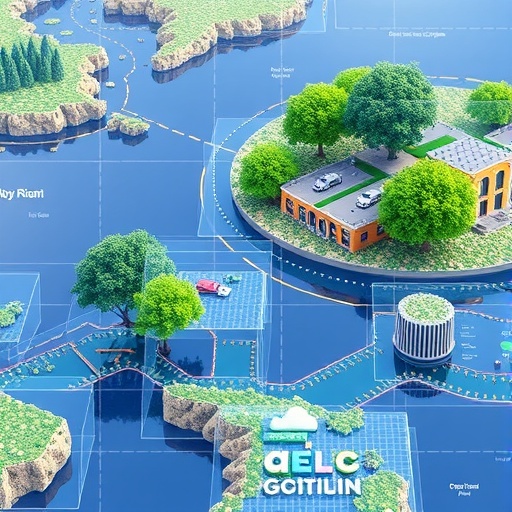
In a groundbreaking study, researchers Das and Rahman have unveiled a revolutionary approach that melds geospatial intelligence with advanced machine learning techniques, aimed at optimizing environmental monitoring and management. This pioneering work, published in the highly regarded journal “Environmental Science and Pollution Research,” marks a significant leap forward in our quest to tackle the multifaceted challenges of environmental degradation. The study emphasizes the pressing need for innovative solutions that enhance our capacity to monitor and manage our rapidly changing environment.
Environmental challenges such as air and water pollution, deforestation, and climate change necessitate an urgent response. As the world grapples with these complex issues, the integration of geospatial intelligence—a discipline that harnesses geographic data—and machine learning presents a formidable toolset. By employing these technologies in tandem, researchers can significantly improve the accuracy and efficiency of environmental assessments. Das and Rahman’s study articulates the potential of this integration in yielding actionable insights that promote sustainable practices.
Geospatial intelligence provides critical context to environmental data. By capturing spatially explicit information, it allows researchers and policymakers to visualize trends and relationships that are often obscured in traditional datasets. This spatial awareness is vital for understanding phenomena such as urban heat islands or the distribution of pollutants. The researchers effectively harness this capability, utilizing advanced remote sensing technologies and geographic information systems (GIS) to acquire rich datasets that inform their analysis.
Machine learning, on the other hand, empowers analysts to sift through vast amounts of data to identify patterns and make predictions. In environmental contexts, where data can be both abundant and complex, machine learning algorithms offer an efficient means of processing information. Das and Rahman utilized sophisticated algorithms that learn from historical data to predict future trends in environmental conditions. This predictive capacity is especially valuable for managing resources and preparing for adverse environmental events.
One of the key highlights of their research is the pragmatic application of these technologies in real-world scenarios. The researchers conducted extensive case studies that demonstrate how their approach can be deployed to monitor air quality, predict pollution spread, and assess changing land use patterns. These case studies serve as compelling evidence of the practical benefits of their methods, showcasing how integrating geospatial intelligence with machine learning enhances decision-making in environmental management.
The study further elucidates the significance of data fusion—the process of integrating multiple data sources to produce more comprehensive insights. Through effective data fusion, Das and Rahman argued, environmental managers can achieve a more nuanced understanding of environmental dynamics. This is particularly important in regions where data may be sparse or inconsistent, as it allows for a holistic view of environmental conditions by combining satellite imagery, ground-based measurements, and socio-economic data.
A notable aspect of the research lies in its focus on scalability and accessibility. Das and Rahman have prioritized the development of user-friendly platforms that facilitate access to their methodologies. This democratization of technology is crucial, as it ensures that non-experts and policymakers can leverage these advanced techniques to make informed decisions regarding environmental stewardship. By making these tools widely available, the researchers aim to foster a more engaged and informed public.
Moreover, the ethical implications of utilizing machine learning and geospatial intelligence in environmental monitoring were thoroughly examined. The researchers advocated for transparency in model development and the importance of considering socio-economic factors that could affect the applicability of their findings. This consideration is vital to avoid biases that may arise from overgeneralizing data across different contexts, ensuring that the solutions proposed are equitable and just.
As urbanization accelerates globally, the researchers underscored the urgency of adopting smart environmental management strategies. The integration of these advanced technologies holds promise for addressing urban environmental issues, such as heat management, waste management, and green space planning. By predicting urban growth patterns and analyzing their environmental impact, studies like Das and Rahman’s pave the way for cities to evolve in a more sustainable manner, ensuring a healthier living environment for future generations.
In addition to urban applications, the potential of this research extends to biodiversity conservation efforts. The use of geospatial intelligence combined with machine learning can enhance the monitoring of wildlife populations and habitat changes, allowing for timely interventions that protect vulnerable species. Das and Rahman illustrated how their methodologies could be employed to identify critical habitats, assess threats, and inform conservation strategies effectively.
Another significant contribution of this research is its potential to enhance climate change adaptation strategies. The predictive capabilities of machine learning can aid in identifying regions most vulnerable to the effects of climate change, such as flooding or drought. By anticipating these challenges, governments and organizations can allocate resources more effectively and develop robust adaptation frameworks that mitigate the impacts on communities and ecosystems alike.
While this research is promising, Das and Rahman also acknowledged the limitations and challenges associated with implementing these technologies. They pointed out issues such as data quality, model interpretability, and the need for interdisciplinary collaboration. Addressing these challenges will be crucial to fully harness the transformative potential of geospatial intelligence and machine learning in environmental monitoring and management.
In conclusion, the study conducted by Das and Rahman represents a significant advancement in the integration of geospatial intelligence and machine learning for environmental monitoring. As society faces unprecedented environmental challenges, this research offers a beacon of hope for developing intelligent, data-driven strategies that can inform sustainable management practices. The implications of their findings are vast, highlighting the need for continued innovation and collaboration in tackling environmental issues that affect us all. The fusion of technology and environmental science, as exemplified by this study, may well be the key to securing a more resilient and sustainable future.
Das, J., Rahman, A.T.M.S. Integrating geospatial intelligence and machine learning for smart environmental monitoring and management.
Environ Sci Pollut Res (2025). https://doi.org/10.1007/s11356-025-37312-4
Cite Scienmag News
Violet Maxwell. (December 20, 2025). Smart Environmental Monitoring: Merging Geospatial Intelligence and AI. Scienmag. https://scienmag.com/smart-environmental-monitoring-merging-geospatial-intelligence-and-ai/
Violet Maxwell. "Smart Environmental Monitoring: Merging Geospatial Intelligence and AI." Scienmag, 20 December 2025, https://scienmag.com/smart-environmental-monitoring-merging-geospatial-intelligence-and-ai/. Accessed 4 September 2026.
Violet Maxwell. "Smart Environmental Monitoring: Merging Geospatial Intelligence and AI." Scienmag. December 20, 2025. https://scienmag.com/smart-environmental-monitoring-merging-geospatial-intelligence-and-ai/


