


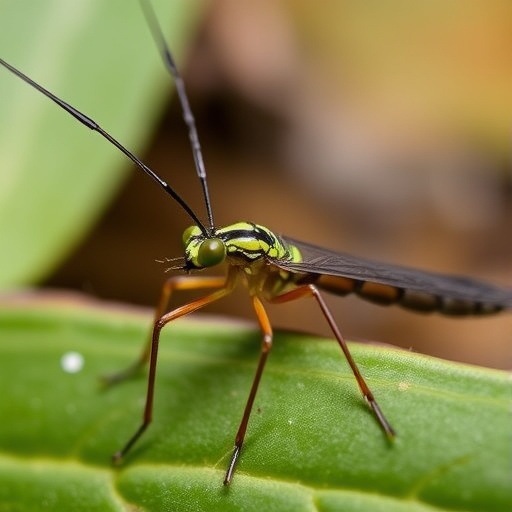
In the heart of the Amazonian savanna, a rich tapestry of biodiversity unfolds, with streams serving as vital lifelines for countless aquatic and semi-aquatic species. Recent research led by de Lima, E.S., Ramos, T., and Vareira, L. has shed light on the intricate environmental and spatial determinants that influence the diversity of Heteroptera, commonly known as true bugs, within these ecosystems. The findings, published in the journal Environmental Monitoring and Assessment, underscore the importance of understanding ecological interactions that shape these unique habitats.
Heteroptera are a crucial but often underappreciated component of freshwater ecosystems. Their roles as predators, herbivores, and detritivores contribute significantly to energy flow and nutrient cycling. The research team meticulously catalogued various factors contributing to Heteroptera diversity, focusing on both abiotic and biotic elements that govern their abundance and distribution. Among the primary variables examined were water quality parameters, habitat structure, and the surrounding landscape’s characteristics.
Water quality is vital in shaping aquatic life; thus, the researchers prioritized measuring key indicators such as pH, nitrogen levels, and dissolved oxygen content in the streams they studied. These parameters not only influence the health of Heteroptera populations but also impact the broader aquatic community dynamics. A deeper understanding of these correlations can inform conservation efforts and improve the management of aquatic ecosystems that are under threat from various anthropogenic activities like mining and agriculture.
In addition to water quality, the structural complexity of the habitat plays a pivotal role in promoting biodiversity. The researchers highlighted how variations in vegetation cover, substrate types, and stream morphology create diverse microhabitats that can support various Heteroptera species. Stream banks lined with lush vegetation offer shelter and breeding grounds, while particulate organic matter provides necessary nutritional resources for these organisms.
Furthermore, the influence of landscape connectivity and spatial distribution of resources cannot be overlooked. The study emphasizes how human activities often fragment habitats, leading to decreased populations of Heteroptera and other aquatic organisms. In fragmented landscapes, essential processes such as seed dispersal and nutrient transfer can be severely disrupted, cascading into broader ecological consequences. This research serves as a crucial reminder of the interconnectedness of ecosystems and the urgent need for holistic conservation approaches.
The Amazonian savanna’s unique climatic conditions also impose specific stressors and influences on Heteroptera diversity. Seasonal floods and dry periods pose challenges that species have adapted to over generations. Understanding these natural rhythms allows researchers and conservationists to tailor strategies that can mitigate the impacts of climate change, which is a looming threat to many ecosystems worldwide.
Data collection was a cornerstone of this research. By employing robust field sampling techniques and utilizing advanced statistical analyses, the authors were able to draw meaningful conclusions about Heteroptera diversity across spatial and environmental gradients. Such methodologies not only reinforce the need for empirical data in ecological studies but also pave the way for future researchers to build upon these findings in different ecological contexts.
The implications of de Lima et al.’s research extend beyond academic curiosity. As human-induced changes escalate, understanding the delicate balance of aquatic ecosystems becomes paramount. Policymakers and conservationists can leverage these insights to implement targeted measures that protect essential habitats and the myriad of life they support.
Moreover, prioritizing the health of freshwater habitats resonates with broader environmental objectives aimed at halting biodiversity loss. Efforts to integrate ecological knowledge into land-use planning and water resource management are vital not only for sustaining Heteroptera diversity but also for preserving the integrity of entire freshwater ecosystems that face increasing pressure.
In conclusions, the study by de Lima and colleagues offers significant insights that contribute to our comprehension of ecological processes that govern species diversity. Their findings provide a scientific basis for advocating for the protection of biodiversity hotspots in the Amazonian savanna, underlining the vital link between environmental stewardship and sustainable resource management. By fostering an informed public discourse, we can elevate the urgency of conservation efforts in the region and support initiatives that are grounded in robust scientific evidence.
Ultimately, as the Amazonian savanna confronts the dual challenges of climate change and habitat destruction, the research underscores a vital truth: preserving Heteroptera diversity is not merely an issue of environmental aesthetics; it is intrinsically tied to the health and resilience of ecosystems that provide critical services for human survival as well.
Cite Scienmag News
Violet Maxwell. (December 20, 2025). Exploring Heteroptera Diversity in Amazonian Savanna Streams. Scienmag. https://scienmag.com/exploring-heteroptera-diversity-in-amazonian-savanna-streams/
Violet Maxwell. "Exploring Heteroptera Diversity in Amazonian Savanna Streams." Scienmag, 20 December 2025, https://scienmag.com/exploring-heteroptera-diversity-in-amazonian-savanna-streams/. Accessed 5 September 2026.
Violet Maxwell. "Exploring Heteroptera Diversity in Amazonian Savanna Streams." Scienmag. December 20, 2025. https://scienmag.com/exploring-heteroptera-diversity-in-amazonian-savanna-streams/


