Wednesday, October 28, 2026
Science
No Result
View All Result
  • Login
  • HOME
  • SCIENCE NEWS
  • CONTACT US
  • HOME
  • SCIENCE NEWS
  • CONTACT US
No Result
View All Result
Scienmag
No Result
View All Result
Home Science News

SIRT5 Loss Drives Ferroptotic Kidney Damage in Sepsis, Mouse and Cell Study Finds

October 27, 2026
in Science News
Jerry Hayes
By Jerry Hayes Scienmag Editorial Profile - Nephrology
Reading Time: 2 mins read
0
SIRT5 Loss Drives Ferroptotic Kidney Damage in Sepsis, Mouse and Cell Study Finds

SIRT5 Loss Drives Ferroptotic Kidney Damage in Sepsis, Mouse and Cell Study Finds

65
SHARES
587
VIEWS
Share on FacebookShare on Twitter
ADVERTISEMENT

Loss of the mitochondrial enzyme SIRT5 worsens sepsis-associated acute kidney injury by tipping renal tubular cells into ferroptosis, an iron-dependent form of cell death, according to a study using a cecal ligation and puncture (CLP) mouse model and lipopolysaccharide-stimulated human HK-2 proximal tubular cells.

The researchers found that SIRT5, a mitochondrial NAD+-dependent desuccinylase, is significantly downregulated in septic kidney injury. When they specifically deleted the Sirt5 gene in renal tubules of mice, CLP-induced renal dysfunction, structural damage, and tubular cell death became more severe. Conversely, delivering SIRT5 via AAV9-mediated overexpression attenuated these pathological changes in the same model.

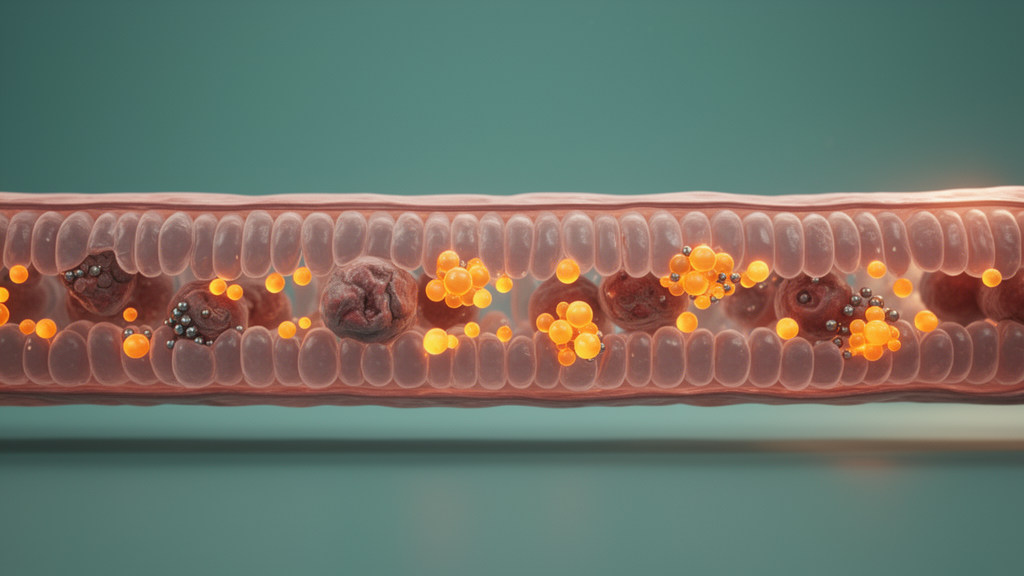
Mechanistically, the study traced the damage to an ACSL4/FTH1 axis. SIRT5 deficiency increased ACSL4-dependent membrane lipid remodeling and reduced FTH1-mediated iron sequestration, while also suppressing the antioxidant enzyme GPX4. The result was amplified lipid peroxidation, iron overload, and mitochondrial damage in the kidney tubules.

Experiments in SIRT5-deficient HK-2 cells reinforced the role of ACSL4 as a downstream effector: knocking down ACSL4 effectively reversed lipid peroxidation, iron accumulation, and cell death in these cells. This positioned ACSL4 as a key mediator through which SIRT5 normally restrains ferroptotic susceptibility in renal tubular cells during sepsis.

Sepsis-associated acute kidney injury is a major cause of morbidity and mortality in critically ill patients, and effective targeted therapies remain lacking, in part because the pathogenesis is incompletely understood. The authors suggest that pharmacological restoration of SIRT5 activity or blockade of ACSL4-driven ferroptosis may offer novel therapeutic avenues, though these findings derive from preclinical mouse and cell models and require further validation before any clinical application.

Subject of Research: The role of SIRT5 in regulating ferroptosis during sepsis-associated acute kidney injury

Article Title: SIRT5 deficiency exacerbates sepsis acute renal injury by activating ACSL4/FTH1 axis dependent ferroptosis

Article References: Jiang, L., Yu, X., Shan, G., He, Z., Liu, Y., Lin, W., Song, L., & Xia, Z. (2026). SIRT5 deficiency exacerbates sepsis acute renal injury by activating ACSL4/FTH1 axis dependent ferroptosis. PLOS One, 21(10), e0361332. https://doi.org/10.1371/journal.pone.0361332

Image Credits: AI Generated

DOI: 10.1371/journal.pone.0361332

Keywords: SIRT5, ferroptosis, sepsis, acute kidney injury, ACSL4, FTH1, GPX4, lipid peroxidation, renal tubular cells, preclinical study, deficiency, exacerbates

Cite Scienmag News

Jerry Hayes. (October 27, 2026). SIRT5 Loss Drives Ferroptotic Kidney Damage in Sepsis, Mouse and Cell Study Finds. Scienmag. https://scienmag.com/sirt5-loss-drives-ferroptotic-kidney-damage-in-sepsis-mouse-and-cell-study-finds/


Jerry Hayes. "SIRT5 Loss Drives Ferroptotic Kidney Damage in Sepsis, Mouse and Cell Study Finds." Scienmag, 27 October 2026, https://scienmag.com/sirt5-loss-drives-ferroptotic-kidney-damage-in-sepsis-mouse-and-cell-study-finds/. Accessed 28 October 2026.

Jerry Hayes. "SIRT5 Loss Drives Ferroptotic Kidney Damage in Sepsis, Mouse and Cell Study Finds." Scienmag. October 27, 2026. https://scienmag.com/sirt5-loss-drives-ferroptotic-kidney-damage-in-sepsis-mouse-and-cell-study-finds/

Tags: ACSL4ACSL4/FTH1 axis in kidney damageacute kidney injuryDeficiencyexacerbatesferroptosisferroptosis biomarkers in kidney diseaseferroptosis in renal tubular cellsFTH1GPX4iron-dependent cell death in sepsislipid peroxidationlipid peroxidation in sepsis-related kidney injurylipopolysaccharide-stimulated HK-2 cell modelmitochondrial dysfunction in septic kidneysNAD+-dependent desuccinylase role in renal injurypreclinical studyrenal tubular cellssepsisSepsis-induced acute kidney injurySIRT5SIRT5 mitochondrial enzyme deficiencySIRT5 overexpression protective effects
Share26Tweet16
Previous Post

Perceived stress partly links job strain to fatigue in operating room nurses

Next Post

Older Lung Cancer Patients Struggle to Keep Exercising After Leaving Hospital

Related Posts

Systematic review maps end-of-life psychosocial and spiritual needs in physical disability
Medicine

Systematic review maps end-of-life psychosocial and spiritual needs in physical disability

October 28, 2026
Text Message Campaign Reached Only a Third of Patients Overdue for Colorectal Cancer Screening
Medicine

Text Message Campaign Reached Only a Third of Patients Overdue for Colorectal Cancer Screening

October 28, 2026
FOXO1 Emerges as Candidate Regulator and Biomarker in Hip Dysplasia
Medicine

FOXO1 Emerges as Candidate Regulator and Biomarker in Hip Dysplasia

October 28, 2026
Regulators, developers and clinicians in Shenzhen voice concerns over medical AI governance
Medicine

Regulators, developers and clinicians in Shenzhen voice concerns over medical AI governance

October 28, 2026
CO2-Rich Fluids Alter How Sandstone Permeability Responds to Stress in Lab Tests
Earth Science

CO2-Rich Fluids Alter How Sandstone Permeability Responds to Stress in Lab Tests

October 28, 2026
Laboratory Generations of Sugarcane Parasitoid Wasp Lose Fitness Within Ten Generations
Agriculture

Laboratory Generations of Sugarcane Parasitoid Wasp Lose Fitness Within Ten Generations

October 28, 2026
Next Post
Iron paradox found in primary sclerosing cholangitis patients

Iron paradox found in primary sclerosing cholangitis patients

  • Mothers who receive childcare support from maternal grandparents show more optimized

    Mothers who receive childcare support from maternal grandparents show more parental warmth, finds NTU Singapore study

    27656 shares
    Share 11059 Tweet 6912
  • University of Seville Breaks 120-Year-Old Mystery, Revises a Key Einstein Concept

    1061 shares
    Share 424 Tweet 265
  • Bee body mass, pathogens and local climate influence heat tolerance

    682 shares
    Share 273 Tweet 171
  • Researchers record first-ever images and data of a shark experiencing a boat strike

    546 shares
    Share 218 Tweet 137
  • Groundbreaking Clinical Trial Reveals Lubiprostone Enhances Kidney Function

    531 shares
    Share 212 Tweet 133
Science

Embark on a thrilling journey of discovery with Scienmag.com—your ultimate source for cutting-edge breakthroughs. Immerse yourself in a world where curiosity knows no limits and tomorrow’s possibilities become today’s reality!

RECENT NEWS

  • Systematic review maps end-of-life psychosocial and spiritual needs in physical disability
  • Text Message Campaign Reached Only a Third of Patients Overdue for Colorectal Cancer Screening
  • FOXO1 Emerges as Candidate Regulator and Biomarker in Hip Dysplasia
  • Regulators, developers and clinicians in Shenzhen voice concerns over medical AI governance

Categories

  • Agriculture
  • Anthropology
  • Archaeology
  • Athmospheric
  • Biology
  • Biotechnology
  • Blog
  • Bussines
  • Cancer
  • Chemistry
  • Climate
  • Earth Science
  • Editorial Policy
  • Marine
  • Mathematics
  • Medicine
  • Pediatry
  • Policy
  • Psychology & Psychiatry
  • Science Education
  • Science News
  • Social Science
  • Space
  • Technology and Engineering

Subscribe to Blog via Email

Enter your email address to subscribe to this blog and receive notifications of new posts by email.

Join 5,151 other subscribers

© 2025 Scienmag - Science Magazine

Welcome Back!

Login to your account below

Forgotten Password?

Retrieve your password

Please enter your username or email address to reset your password.

Log In
No Result
View All Result
  • HOME
  • SCIENCE NEWS
  • CONTACT US

© 2025 Scienmag - Science Magazine

Discover more from Science

Subscribe now to keep reading and get access to the full archive.

Continue reading