


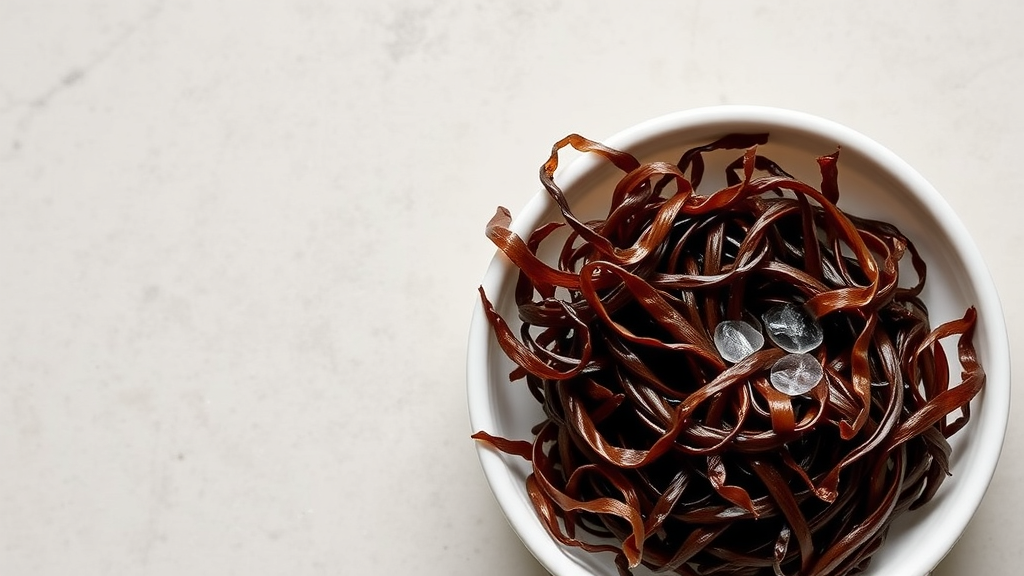
Some of the most valuable chemicals in the ocean may be hiding inside humble brown seaweeds that wash up along India’s coasts, and a new study suggests that unlocking them requires nothing more exotic than hot water. Researchers at the ICAR-Central Institute of Fisheries Technology in Kochi, working with a colleague at the ICAR-National Institute of Animal Nutrition and Physiology in Bangalore, have shown that plain water heated to 90 degrees Celsius can extract impressive quantities of antioxidant-rich bioactive compounds from three Indian brown seaweed species. The findings, published in the journal Waste and Biomass Valorization, position hot water extraction as a genuinely green alternative to the organic solvents that have long dominated the field of marine natural product chemistry.
The team focused on three widely distributed brown seaweeds: Sargassum polycystum, Turbinaria ornata, and Rosenvingea intricata. These species are abundant along Indian shorelines, yet they remain largely underexploited as raw materials for nutraceuticals, functional foods, and pharmaceuticals. Brown seaweeds in general are known to be reservoirs of valuable molecules, including phenolic compounds, flavonoids, sulfated polysaccharides such as fucoidan, and the carotenoid fucoxanthin, all of which have attracted intense scientific interest for their antioxidant, anti-inflammatory, and potential anticancer properties. The challenge has always been extraction: how to pull these compounds out of a tough, gelatinous algal matrix efficiently, cheaply, and without resorting to toxic chemicals that compromise the safety and sustainability of the final product.
Hot water extraction offers an elegant answer. Water is non-toxic, inexpensive, non-flammable, and universally available, making it arguably the greenest solvent that exists. The technique sits conceptually close to subcritical water extraction, a method in which heated liquid water becomes an increasingly capable solvent as its dielectric constant drops with rising temperature, allowing it to dissolve compounds that would normally require organic solvents. In this study, the researchers compared extraction performance at three temperatures: 28.5 degrees Celsius, representing ambient conditions, 70 degrees Celsius, and 90 degrees Celsius. The differences they observed were striking and statistically significant, underscoring how profoundly temperature shapes both the quantity and the quality of what can be recovered from seaweed biomass.
The yield data tell the first part of the story. At 90 degrees Celsius, extraction yielded 9.18 percent for Sargassum polycystum, 10.14 percent for Turbinaria ornata, and 8.78 percent for Rosenvingea intricata, each figure significantly higher than what was obtained at the lower temperatures. In practical terms, roughly a tenth of the dried seaweed biomass was converted into soluble extract simply by treating it with hot water. For an industry built on margins, that recovery rate matters. It means that a coastal biorefinery could valorize seaweed harvests with minimal solvent costs, minimal hazardous waste streams, and straightforward equipment, since the process requires nothing more technically demanding than controlled heating and filtration.
Yield alone, however, says nothing about biological activity, and this is where the study delivers its most compelling evidence. Across all three species, extracts obtained at 90 degrees Celsius showed significantly higher antioxidant properties than extracts prepared at lower temperatures, as measured by total phenolic content, total flavonoid content, and ferric reducing antioxidant power assays. The researchers attribute this to the thermal disruption of the seaweed matrix at higher temperatures. Heat softens and breaks down cell walls and liberates bound phenolic compounds that remain locked inside the algal tissue under ambient conditions. In effect, boiling water does mechanically and chemically what harsher solvents do, but without the environmental baggage.
The antioxidant story was reinforced by two free radical assays. Extracts from the 90 degree Celsius treatments showed significantly greater scavenging activity against 2,2-diphenyl-1-picrylhydrazyl, the stable free radical commonly known as DPPH that serves as a standard benchmark for antioxidant capacity. They also performed significantly better in the deoxyribose assay, a test that evaluates both site-specific and non-site-specific radical scavenging by measuring the protection of deoxyribose sugar from degradation by hydroxyl radicals. Because hydroxyl radicals are among the most reactive and damaging species generated in living tissues, strong performance in this assay hints at genuine protective potential in biological systems rather than mere laboratory chemistry.
Perhaps the most visually dramatic evidence came from the DNA nicking assay. In this experiment, plasmid DNA is exposed to Fenton’s reagent, a mixture that generates hydroxyl radicals and converts the intact supercoiled DNA into fragmented, nicked forms that migrate differently on a gel. When the seaweed extracts were added, they shielded the DNA from this oxidative damage, preserving its structural integrity. The result demonstrates that the compounds recovered by hot water extraction are not just chemically active in solution but capable of protecting a biologically central molecule, DNA, from radical-induced breakage. That protective effect strengthens the case for these extracts as candidates for dietary supplements, nutraceuticals, and functional food ingredients aimed at reducing oxidative stress.
The implications extend well beyond human nutrition. The authors point to the potential of these seaweed extracts as immune boosters and growth enhancers for animals, fish, and shellfish, a direction that could matter enormously for India’s vast aquaculture sector. Natural antioxidant additives derived from marine algae could reduce reliance on synthetic antioxidants in feed, improve animal health, and add value to seaweed harvests that currently command low prices. Given that global interest in seaweed farming is rising rapidly, both as a food source and as a tool for climate mitigation, methods that convert raw biomass into high-value products are exactly the kind of technology that could accelerate the so-called blue economy.
There are, of course, caveats and next steps. The study reports crude extracts rather than purified single compounds, so further work will be needed to identify precisely which molecules drive the observed antioxidant and DNA-protective effects, and to confirm that the activity survives digestion, storage, and processing at industrial scale. Temperature optimization will also need balancing against the thermal sensitivity of individual compounds, since prolonged high heat can degrade some bioactives even as it releases others. Nevertheless, the central message stands: for three abundant Indian brown seaweeds, ordinary hot water outperformed milder conditions on every measure of yield and antioxidant potency tested, all with a solvent that costs essentially nothing and harms nothing. In a field often enamored with exotic solvents and high-tech equipment, the humble kettle may turn out to be the biorefinery’s most underrated tool.
Subject of Research: Hot water extraction of antioxidant bioactive compounds from Indian brown seaweeds
Article Title: Optimization of Hot Water Extraction as a Green Approach to Valorise Bioactive Compounds from Indian Brown Seaweeds: A Comparative Study of Sargassum polycystum, Turbinaria ornata, and Rosenvingea intricata
Article References: Shambhulingaiah, T. C., Mannur, V. S., Malik, P. K., Gopakumar, L. R., Thankachan, S., Kasim, A. K., Ninan, G., & Anandan, R. (2026). Optimization of Hot Water Extraction as a Green Approach to Valorise Bioactive Compounds from Indian Brown Seaweeds: A Comparative Study of Sargassum polycystum, Turbinaria ornata, and Rosenvingea intricata. Waste and Biomass Valorization. https://doi.org/10.1007/s12649-026-03789-4
Image Credits: AI Generated
DOI: 10.1007/s12649-026-03789-4
Keywords: brown seaweeds, hot water extraction, green extraction, antioxidant activity, bioactive compounds, Sargassum polycystum, Turbinaria ornata, Rosenvingea intricata, DNA protection, nutraceuticals, phenolic compounds, waste valorization
Cite Scienmag News
Denise Maddox. (September 12, 2026). Simple Hot Water Unlocks Powerful Antioxidants from Indian Brown Seaweeds. Scienmag. https://scienmag.com/simple-hot-water-unlocks-powerful-antioxidants-from-indian-brown-seaweeds/
Denise Maddox. "Simple Hot Water Unlocks Powerful Antioxidants from Indian Brown Seaweeds." Scienmag, 12 September 2026, https://scienmag.com/simple-hot-water-unlocks-powerful-antioxidants-from-indian-brown-seaweeds/. Accessed 17 October 2026.
Denise Maddox. "Simple Hot Water Unlocks Powerful Antioxidants from Indian Brown Seaweeds." Scienmag. September 12, 2026. https://scienmag.com/simple-hot-water-unlocks-powerful-antioxidants-from-indian-brown-seaweeds/


