

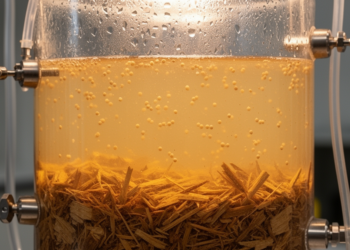
Nutrient tuning raises ethanol concentration from sugarcane bagasse extract
A laboratory study using Saccharomyces cerevisiae MTCC 180 found that optimized sucrose, ammonium sulfate and potassium chloride raised ethanol concentration ...
A laboratory study using Saccharomyces cerevisiae MTCC 180 found that optimized sucrose, ammonium sulfate and potassium chloride raised ethanol concentration ...

A laboratory study found that peptide-modified nanocellulose made from dairy sludge and crustacean waste achieved reported removal efficiencies of 97.80% ...
An editorial in Frontiers in Soft Matter argues that sustainable, active food packaging depends on multiscale organization, engineered interfaces, and ...
Researchers used adaptive genetic and particle swarm-optimized neural networks to convert oil-based drilling cuttings into Na-X zeolite with record ammonia ...
A systematic review of 116 studies reveals that coffee-industry residues can be converted into biogas, biochar, and biofuels through pyrolysis ...
A systematic review of a decade of research finds that nanoparticles made from agricultural waste show reduced toxicity and strong ...
Scientists transformed spent vetiver roots from the perfume industry into a high-surface-area biochar that removes up to 100 percent of ...
Metagenomic tracking of oolong tea waste decomposition reveals a three-phase microbial succession that breaks down lignocellulose and cuts antibiotic resistance ...
Researchers in India have transformed steel slag and sugarcane bagasse ash into a geopolymer concrete that meets structural strength standards ...
A new study shows that fermenting fruit and vegetable waste at 45 degrees Celsius and choosing sugar-rich substrates like apple ...

Embark on a thrilling journey of discovery with Scienmag.com—your ultimate source for cutting-edge breakthroughs. Immerse yourself in a world where curiosity knows no limits and tomorrow’s possibilities become today’s reality!