


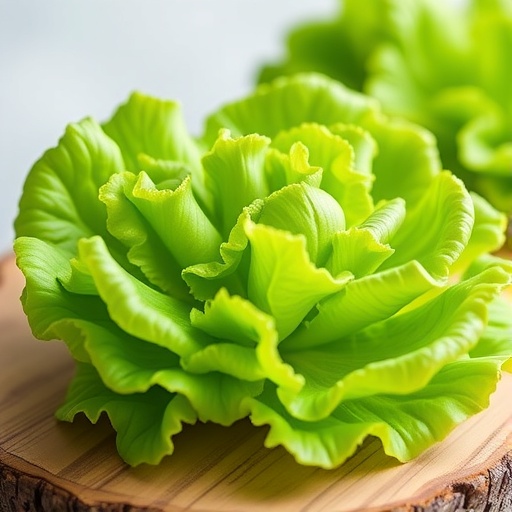
An ethanol extract of green sea lettuce (Ulva lactuca) can simultaneously tint, fortify, and enrich sugar-based confections, but only within narrow dosing windows, according to a study from Ege University in Türkiye that tested the marine macroalga in two contrasting model systems: fondant, a dense sugar-crystal matrix, and meringue, a delicate aerated protein foam. The work, funded by the Scientific and Technological Research Council of Turkey (TUBITAK), found that optimal incorporation levels of 0.31 percent extract in fondant and 0.16 percent in meringue delivered measurable gains in phenolic content and antioxidant activity while preserving acceptable color, texture, and sensory qualities. Above those thresholds, the benefits persisted but the products suffered significant deterioration in appearance, mouthfeel, and overall consumer acceptability.
The research responds to growing pressure on the confectionery industry to move away from synthetic colorants. Regulatory trends in both the European Union and the United States increasingly restrict synthetic food dyes in favor of plant- and marine-derived alternatives, and in the EU, natural coloring ingredients can often be classified as "coloring foodstuffs" rather than additives, sidestepping stringent E-number regulations and aligning with clean-label consumer demands. Ulva lactuca, common green seaweed known for rapid growth and ease of cultivation, is rich in phenolic compounds, chlorophylls, carotenoids, and sulfated polysaccharides such as ulvan, making it a candidate for multifunctional, rather than purely cosmetic, ingredient roles. The choice of two dissimilar confectionery matrices was deliberate: fondant represents a low-moisture, crystalline sugar system in which added ingredients interact primarily with sucrose crystals and the saturated syrup surrounding them, while meringue is a whipped egg white foam whose structure depends on intact protein films stretched around air cells. Any single functional ingredient can behave very differently in these two environments, so testing both provides a broader picture of how an algal extract might perform across the wider confectionery landscape, from gummies and icings to foamed desserts and nougats.
The researchers harvested fresh U. lactuca thalli from Cakalburnu Lagoon in southern Izmir Bay during a seasonal bloom in January 2024. After rinsing to remove sand and epibionts, the biomass was freeze-dried to protect heat-sensitive pigments, pulverized, and stored at minus 18 degrees Celsius. Bioactives were recovered using ultrasound-assisted extraction in absolute ethanol at 40 degrees Celsius for 30 minutes, with calcium carbonate and the antioxidant pyrogallol added to guard against pigment degradation. The resulting extract contained 0.849 milligrams of chlorophyll a and 1.756 milligrams of chlorophyll b per gram of dry biomass, plus 0.235 milligrams of total carotenoids per gram. Ultrasound-assisted extraction works by propagating acoustic cavitation — the rapid formation and collapse of microscopic bubbles — through the solvent, which ruptures cell walls and accelerates the release of intracellular compounds without the prolonged heating that would otherwise degrade chlorophylls. Calcium carbonate buffers acidity that can convert the bright green chlorophylls into olive-brown pheophytins, while pyrogallol scavenges oxygen species that would otherwise bleach carotenoids during processing. Together these choices reflect the central technical challenge of working with marine pigments: the same molecules that provide vivid natural color are chemically fragile.
The extract was then blended into fondant at 0.31, 0.63, and 1.25 percent by weight — added late in processing, once the sugar mass had cooled to roughly 40 degrees Celsius to minimize thermal damage — and into meringue foam at 0.08, 0.16, 0.31, and 0.63 percent before baking at 105 degrees Celsius for 90 minutes. This design allowed a direct comparison of processing impacts: post-thermal addition in fondant versus pre-baking exposure in meringue. In practice, the fondant protocol mirrors what a commercial confectionery line could do with minimal process change, since coloring pastes are routinely folded in at the cooling stage, whereas the meringue protocol exposes the bioactives to nearly an hour and a half of moderate oven heat — a much harsher test of pigment and antioxidant survival.
Color analysis using CIE Lab* measurements showed strong, concentration-dependent pigmentation. Untreated fondant was off-white with a lightness value near 89; even the lowest extract dose dropped lightness to about 60, deepened green tones, and produced a total color difference far above the threshold of human perception. Meringues followed a similar pattern, with lightness falling from 94.4 in controls to 66.2 at the highest dose. In the Lab* system, L* measures lightness, a* spans red to green, and b* spans blue to yellow; total color difference, or delta-E, aggregates shifts across all three axes, with values above roughly two to three typically visible to the average observer. After one month of storage, the lowest fondant dose showed the best color stability, with chromatic shifts below the roughly 5 percent level generally considered imperceptible to consumers, while higher doses exhibited greenness and yellowness losses exceeding 20 percent. In meringues, the green parameter was notably stable even at higher doses, which the authors attribute to a hypothesized protective role of the egg white protein network surrounding chlorophyll pigments — a safeguard absent in the sucrose-rich fondant. The implication for product developers is that the matrix itself can act as a pigment stabilizer, and that pairing seaweed extracts with protein-rich foods may extend shelf-life color performance without added stabilizers.
Functional enrichment was evident in both matrices. Total phenolic content in fondant rose from 0.80 to 9.96 milligrams of gallic acid equivalents per 100 grams of dry sample, while meringue phenolics climbed roughly sevenfold, from 19.13 to 150.95 milligrams GAE per 100 grams. Antioxidant activity measured by ABTS assay in fondant increased about 2.4-fold at the highest dose, and DPPH scavenging in meringue surged more than sixfold, from 8.37 to 53.28 micromolar Trolox equivalents per gram of dry matter. The two assays work by slightly different mechanisms — ABTS measures the ability of antioxidants to quench a pre-formed radical cation, while DPPH tracks reduction of a stable nitrogen radical — so observing gains in both strengthens the conclusion that the extract genuinely confers radical-scavenging capacity rather than merely interfering with a single test chemistry. The authors suggest that pre-baking incorporation in meringue may have enhanced the release or extractability of bound phenolics during thermal processing, and that egg white proteins may stabilize phenolics through non-covalent bonding — though they note the mechanisms behind the fondant-meringue discrepancy remain theoretical. If confirmed, protein–polyphenol associations, often viewed purely as a problem in beverage haze, could be reframed as a deliberate tool for carrying fragile bioactives through thermal processing.
The trade-offs appeared most clearly in structure and texture. Meringue baking yield fell steadily from 77.25 percent in controls to 69.66 percent at 0.63 percent extract, and the volume index collapsed from 319 to 88, consistent with phenolic interference in the egg white protein network that stabilizes the foam. Phenolic compounds are well known to bind proteins non-covalently, and in whipped foams such binding can hinder the unfolding and cross-linking of ovalbumin and other egg white proteins at the air–water interface, weakening the films that hold gas cells together during baking. Hardness in meringues dropped from 1,776 grams in controls to 963 grams at the highest dose, shifting the texture from dry and brittle to soft and plastically deformable. Fondant showed subtler changes: hardness peaked slightly at the lowest dose before declining, while springiness, cohesiveness, and chewiness all fell in a dose-dependent manner, likely because the extract's bioactives disrupt sucrose crystallization and hydrogen bonding within the sugar network. Because fondant's characteristic smooth, pliable body depends on a fine, controlled population of sucrose microcrystals, any ingredient that interferes with crystal nucleation or growth can soften the matrix and alter its shortness. Water activity dropped in both products — from 0.81 to 0.70 in fondant and 0.45 to 0.30 in meringue — as the extract's hydroxyl-rich compounds bound free water. Lower water activity generally improves microbiological stability and extends shelf-life in low-moisture foods, so this side effect could prove commercially useful, provided the accompanying texture shifts remain within consumer tolerance.
Sensory panels of 15 semi-trained assessors confirmed the dose-response trade-off. In fondant, the 0.31 percent sample maintained overall acceptability above 7.0 on a nine-point hedonic scale, while the 1.25 percent version scored 5.39. Meringues remained resilient up to 0.16 percent extract but deteriorated sharply beyond that. Panelists cited the intense green pigmentation and marine, earthy odors as the main detriments at elevated doses, alongside texture losses tied to disrupted crystallization and foam collapse. The hedonic scale, which ranges from "dislike extremely" at one to "like extremely" at nine, is a standard industry benchmark, and a fall from above 7.0 to 5.39 represents the difference between a product consumers would readily rebuy and one they would likely reject. Notably, the optimal doses identified analytically — 0.31 percent in fondant and 0.16 percent in meringue — coincided with the sensory tipping points, suggesting that laboratory measurements of color, antioxidant capacity, and texture track consumer perception closely in these systems.
Complementary structural analyses supported the biochemical picture. Fourier-transform infrared spectroscopy identified hydroxyl groups, carboxylate stretches, and sulfate ester signals characteristic of ulvan, providing a molecular basis for the water-binding and antioxidant behaviors observed. Scanning electron microscopy revealed an irregular, wrinkled, microporous morphology in the raw seaweed, features that support high extraction efficiency and bioactive release. Ulvan, the signature sulfated polysaccharide of Ulva species, carries abundant sulfate and carboxyl groups along its backbone, giving it strong affinity for water molecules and a capacity to interact with proteins and minerals — properties increasingly exploited in the food industry for films, stabilizers, and encapsulation carriers.
The authors acknowledge important limitations. The study focused on freshly prepared products, with color stability monitored for only one month; algal chlorophylls and other bioactives remain vulnerable to light- and oxygen-driven degradation over longer horizons. Quantification of iodine and heavy metals — key safety parameters for regulatory compliance under EFSA guidelines — was explicitly beyond the scope of this work and will be essential before commercial application. Seaweeds are efficient bioaccumulators of iodine, cadmium, and arsenic species, and EU food safety assessments of algal ingredients consistently hinge on these measurements, making their absence from the dataset a meaningful gap rather than a formality. The team also flags the need for industrial-scale ultrasound extraction systems, long-term shelf-life and microbiological studies, microencapsulation to stabilize pigments, and flavor-masking strategies using compatible natural additives such as vanilla or citrus extracts to offset marine notes without compromising clean-label status.
Cite Scienmag News
Alan Morgan. (August 30, 2026). Sea Lettuce Extract Boosts Color, Antioxidants in Fondant and Meringue. Scienmag. https://scienmag.com/sea-lettuce-extract-boosts-color-antioxidants-in-fondant-and-meringue/
Alan Morgan. "Sea Lettuce Extract Boosts Color, Antioxidants in Fondant and Meringue." Scienmag, 30 August 2026, https://scienmag.com/sea-lettuce-extract-boosts-color-antioxidants-in-fondant-and-meringue/. Accessed 3 September 2026.
Alan Morgan. "Sea Lettuce Extract Boosts Color, Antioxidants in Fondant and Meringue." Scienmag. August 30, 2026. https://scienmag.com/sea-lettuce-extract-boosts-color-antioxidants-in-fondant-and-meringue/


