


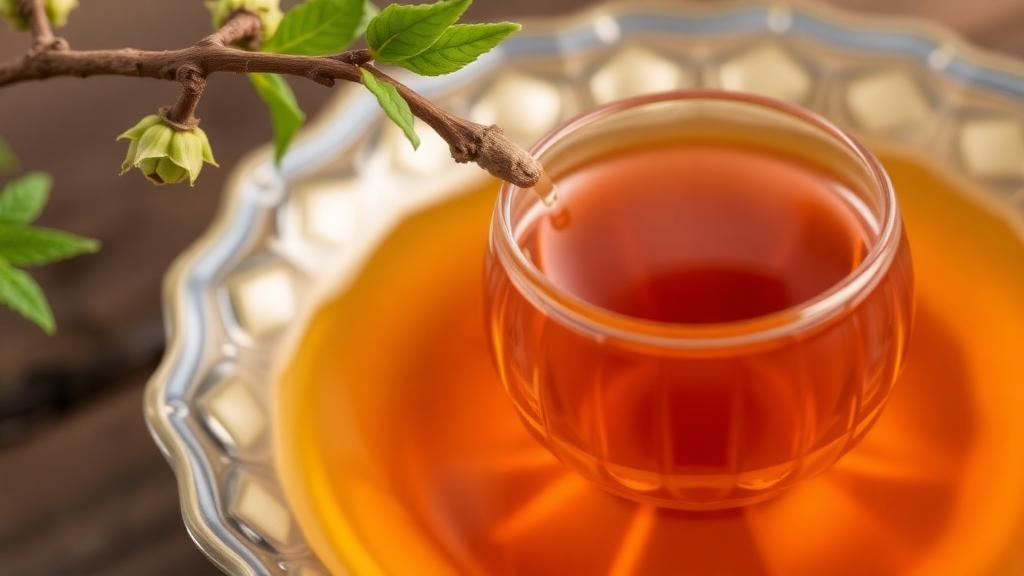
A tea made from the tender spring buds of a tree that grows almost nowhere else on Earth has finally been put under the microscope, and the results tell tea drinkers exactly how to unlock its full potential. Xanthoceras sorbifolium, known in China as Wenguanguo or the yellowhorn tree, is a woody oil species endemic to China that has long been prized for combining edible and medicinal properties. Its bud tea, considered the highest-grade product of the plant, is now emerging as a promising functional herbal tea, and a new study in Food Chemistry: X has systematically mapped how brewing temperature and time shape everything from its nutrient content to its aroma fingerprint and antioxidant power.
The research team, led by Hongli Zhu and colleagues, set out to answer a deceptively simple question: what is the best way to brew this tea? Because X. sorbifolium bud tea is still in the early stages of scientific study, little was known about how its core components behave in hot water. Earlier work had shown that the buds contain significantly higher levels of minerals, polyphenols, flavonoids and proteins than the mature leaves, and that more than 40 percent of their amino acids are essential ones with a balanced composition. Their tender texture and loose cell walls allow faster extraction of nutrients, while their lower tannin content means less bitterness and astringency than many conventional teas.
To capture the full range of real-world drinking habits, the researchers designed an unusually thorough experiment. Three grams of tea were steeped in 150 milliliters of water at five temperatures, from 50 to 90 degrees Celsius, and seven durations, from 5 minutes to a full 12 hours, producing 35 different brewing combinations. The temperature gradients were chosen to mirror everyday practice in northwest China: 90 degrees corresponds to freshly boiled water poured into a thermos, 70 to 80 degrees represents water after several hours of storage, and 50 to 60 degrees reflects tea left standing for a long time. Short steeping mimics instant drinking, medium steeping simulates a workday in a sealed thermos, and the 720-minute soak reflects the common habit of overnight brewing.
The chemical readout revealed striking patterns. Caffeine, though present at levels far below those in Camellia tea, was extracted most fully at lower temperatures over longer periods, because prolonged high heat degrades the molecule and binds it into complexes with polyphenols. Total polyphenols, the principal source of astringency and a key marker of quality, rose and then fell, peaking between 10 and 60 minutes as catechins gradually oxidized into theaflavins, thearubigins and theabrownins. Free amino acids, the main contributors to umami, were consistently higher at 70, 80 and 90 degrees, while soluble sugars climbed steadily with steeping time at every temperature. Flavonoids favored the hottest conditions, with 80 and 90 degrees yielding markedly higher levels, likely because heat disrupts cell structures and hydrolyzes flavonoid glycosides into more soluble aglycones.
Using a fuzzy-mathematics membership function that weighted all five nutritional indices together, the team identified three standout infusions: 90 degrees for 30 minutes, 90 degrees for 720 minutes, and 60 degrees for 180 minutes, which scored 0.82, 0.81 and 0.81 respectively. These three were then subjected to a battery of objective sensory technologies. An electronic tongue fitted with six chemical sensors showed that sourness and astringency in all three samples sat below the taste threshold, while umami, saltiness and richness responses were highest, driven by the abundant free amino acids. The 90-degree, 30-minute sample proved significantly sweeter and less sour than the overnight hot brew, which suffered from elevated bitterness, astringency and lingering aftertastes caused by excessive extraction.
An electronic nose with ten metal oxide sensors and gas chromatography-ion mobility spectrometry completed the picture. The GC-IMS analysis detected 75 volatile organic compounds, with aldehydes forming the largest group, arising from fatty acid decomposition and Strecker degradation of amino acids during processing. Sixteen compounds qualified as key aroma-active components, including 2-methylbutanal with its almond, cocoa and malty notes, octanal contributing waxy citrus character, and 1-octen-3-one, the single most potent odorant, delivering earthy mushroom and savory tones. The freshly brewed 90-degree sample released the most intense and layered aroma, while the overnight hot steep accumulated off-flavor aldehydes that produced dull, stewed notes.
Antioxidant testing added a compelling health dimension. All three infusions outperformed the positive control EGCG at 50 micrograms per milliliter in composite antioxidant potency, but the 90-degree, 30-minute brew was clearly superior, achieving an ABTS radical scavenging rate of 94.61 percent, a DPPH scavenging rate of 94.23 percent and an APC index of 0.98. Correlation analysis pinned this activity primarily on total polyphenols, with caffeine playing a supporting role. The authors caution, however, that these conclusions rest on in vitro chemical assays, and that cellular and in vivo studies will be needed to confirm biological efficacy.
Perhaps the most elegant part of the study is its mechanistic explanation of why timing matters so much. Two browning pathways dominate the chemistry of the cup. Mild polyphenol oxidation generates theaflavins for brisk freshness and thearubigins for bright orange color, while the Maillard reaction between reducing sugars and amino acids produces Strecker aldehydes and ketones that build nutty, fruity and mushroom aromas, alongside gentle melanoidins that lend baked sweetness. At 90 degrees for 30 minutes these reactions proceed in perfect balance: enough dissolution and mild oxidation to release flavor and antioxidants, but not enough time for the runaway oxidation and Maillard polymerization that turn the overnight brew dark, bitter and stale. At the opposite extreme, the cool 60-degree soak slows every reaction, yielding a thin taste and faint aroma despite preserving nutrients.
The practical takeaway is refreshingly simple: for the fullest flavor, nutrition and antioxidant benefit from this rare bud tea, steep it in water at about 90 degrees Celsius for roughly half an hour. Beyond guiding daily consumption, the optimized protocol offers a technical foundation for industrial production of Xanthoceras teas and ready-to-drink beverages, ensuring stable release of functional phenolics and consistent sensory quality. As interest grows in this caffeine-light, nutrient-dense alternative to conventional tea, the study demonstrates how modern instruments, from electronic tongues to ion mobility spectrometers, can replace subjective panel testing and turn the ancient art of brewing into a precise, reproducible science.
Subject of Research: Optimization of brewing conditions for Xanthoceras sorbifolium bud black tea based on nutrient, flavor and antioxidant analysis
Article Title: Exploration on appropriate brewing conditions of Xanthoceras sorbifolium bud black tea: Insight from nutrient-flavor profiles, antioxidant efficacy and GC-IMS-electronic sensing analysis
Article References: Zhu, H., Zhang, X., Yang, J., Ren, H., Zhao, H., Chen, L., Liu, Y., & Feng, X. (2026). Exploration on appropriate brewing conditions of Xanthoceras sorbifolium bud black tea: Insight from nutrient-flavor profiles, antioxidant efficacy and GC-IMS-electronic sensing analysis. Food Chemistry: X, 39, Article 104490. https://doi.org/10.1016/j.fochx.2026.104490
Image Credits: AI Generated
DOI: 10.1016/j.fochx.2026.104490
Keywords: Xanthoceras sorbifolium, herbal tea, brewing conditions, polyphenols, flavonoids, antioxidant activity, GC-IMS, electronic nose, electronic tongue, Maillard reaction, volatile organic compounds, food chemistry
Cite Scienmag News
Bethany Barker. (October 4, 2026). Scientists Find the Perfect Way to Brew a Rare Chinese Bud Tea. Scienmag. https://scienmag.com/scientists-find-the-perfect-way-to-brew-a-rare-chinese-bud-tea/
Bethany Barker. "Scientists Find the Perfect Way to Brew a Rare Chinese Bud Tea." Scienmag, 4 October 2026, https://scienmag.com/scientists-find-the-perfect-way-to-brew-a-rare-chinese-bud-tea/. Accessed 4 October 2026.
Bethany Barker. "Scientists Find the Perfect Way to Brew a Rare Chinese Bud Tea." Scienmag. October 4, 2026. https://scienmag.com/scientists-find-the-perfect-way-to-brew-a-rare-chinese-bud-tea/


