


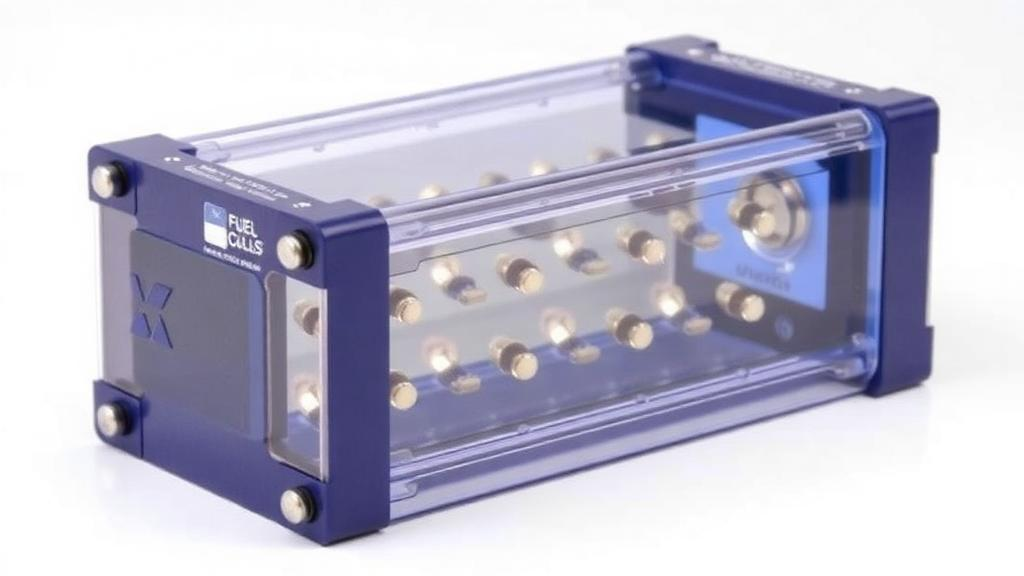
Direct alcohol fuel cells have long promised a quiet revolution in portable power: liquid fuel poured in, electricity flowing out, and nothing more exotic than water and carbon dioxide as exhaust. A comprehensive new review published in Results in Chemistry by Charles Muzenda and Rudzani Sigwadi of the University of South Africa surveys the state of this technology, and the picture that emerges is one of genuine scientific momentum colliding with stubborn commercial realities. The review, which uses the direct methanol fuel cell as its model system, maps the advances in membrane engineering, electrocatalysis and fuel cell design that are steadily dismantling the barriers that have kept these devices out of everyday products.
The appeal of alcohol fuels begins with chemistry that hydrogen cannot match in practical terms. While hydrogen packs more energy per kilogram, it must be stored under high pressure as an explosive gas, creating safety and logistics problems that have hampered large-scale fuel cell deployment. Liquid alcohols sidestep this entirely. Methanol, ethanol, ethylene glycol and glycerol can be transported and stored with minimal explosion risk, and their volumetric energy densities of roughly 4,000 to 7,000 watt-hours per litre rival those of gasoline. In a direct alcohol fuel cell, the alcohol is oxidised at the anode in the presence of water, releasing protons and electrons; the electrons travel through an external circuit to do useful work, while the protons migrate through a polymer membrane to the cathode, where they combine with oxygen to form water. The elegance of the design is that water is consumed at the anode and regenerated at the cathode, opening the door to closed, self-regulating systems.
The review distinguishes carefully between passive and active fuel cell architectures, a distinction that shapes every downstream engineering decision. Passive cells are loaded with fuel once and left to run, shedding their waste products by natural diffusion; they are compact, easily automated and well suited to phones, laptops and other portable electronics, but they suffer slow reaction kinetics, fuel crossover and chronic water management problems, with fuel efficiencies of only 10 to 30 percent. Active cells, by contrast, use pumps and blowers to maintain fuel concentration and regulate temperature, achieving efficiencies of 70 to 90 percent and far longer lifespans, at the cost of bulk, complexity and reduced portability. The trade-off mirrors the classic tension in energy technology between convenience and performance, and the review makes clear that neither architecture yet dominates.
At the heart of the performance problem lies the membrane. The industry benchmark, Nafion, conducts protons superbly, with conductivities between 80 and 130 millisiemens per centimetre, but it is expensive and notoriously leaky: between 20 and 40 percent of the methanol fuel can cross from anode to cathode within two hours, where it is oxidised wastefully without generating electricity, poisons the cathode catalyst and drags down the open circuit voltage. Crossover proceeds by two mechanisms, simple diffusion down the concentration gradient and electroosmotic drag, in which methanol hitches a ride with the water molecules that solvate the migrating protons. Crossover rates rise linearly with methanol concentration and fall with increasing current density, which suggests one operational remedy, but the deeper solution lies in membrane redesign.
The membrane engineering literature reviewed here is remarkably inventive. Researchers have doped Nafion with titanium dioxide nanoparticles, graphene oxide and sulfonated graphene oxide, each adding transport selectivity and mechanical strength; TiO2-doped membranes have delivered power densities ranging from 308 milliwatts per square centimetre up to 2.02 watts per square centimetre at elevated temperature and humidity. Cross-linked cellulose-based membranes have cut methanol permeability threefold relative to Nafion, down to 8.2 by 10 to the minus 9 square centimetres per second, and zeolite molecular sieves embedded in the polymer matrix, with pores sized between hydrated protons and methanol molecules, reduced crossover 2.5-fold by acting as physical barriers. Layer-by-layer deposition of chitosan and polyvinyl sulfuric acid on Nafion exploits electrostatic self-assembly to build a bilayer that slows methanol while improving water uptake. The recurring caveat is that every gain in selectivity tends to cost some proton conductivity, so each application demands its own optimisation.
Catalysis presents the other half of the cost-and-performance equation. Platinum is the most active catalyst for methanol oxidation, but it is precious, scarce and vulnerable to poisoning by carbon monoxide, an intermediate that binds to platinum sites far more strongly than oxygen does. The standard fix is alloying with ruthenium, which mitigates poisoning through two complementary effects: an electronic induction that alters platinum’s electron density and weakens CO adsorption, and the provision of extra active sites that activate water to oxidise the adsorbed CO away. The review also documents the mechanical dividends of alloying, since the distorted lattices of bimetallic catalysts resist tensile deformation, and the more reactive partner metal corrodes sacrificially to shield the platinum. For ethanol fuels, platinum-tin alloys show superior CO tolerance and perform well at lower voltages.
The most consequential shift, however, is the migration away from noble metals altogether. Transition metal phosphides, nickel-copper alloys, cobalt-based systems and metal-organic frameworks are emerging as credible anode catalysts, prized for low cost, high surface area and easy modification. On the cathode side, where the sluggish oxygen reduction reaction is the rate-determining step of the whole cell, iron-nitrogen-carbon catalysts have matched platinum’s onset potentials across a wide range of methanol concentrations and survived 40 hours of continuous operation while tolerating chloride, amines and other contaminants. Because the cathode reaction is slower than the anode reaction, catalyst loadings are conventionally set at roughly twice the anodic amount, typically in the range of 2 to 6 milligrams per square centimetre, though optimised nanostructured anodes have achieved 117 milliwatts per square centimetre at just 0.21 milligrams per square centimetre.
Durability is the quieter killer of commercialisation prospects. Membranes degrade mechanically by swelling in excess water or shrinking when dehydrated, and chemically through a Fenton-like mechanism in which hydrogen peroxide, formed at the cathode and as a methanol oxidation byproduct, is activated on catalyst surfaces to generate hydroxyl radicals that indiscriminately attack the polymer backbone. Radical scavengers such as dimethyl sulfoxide, mannitol and n-butanol can be pre-loaded into the cell to mop up these radicals, sacrificing themselves to spare the membrane. Nanofillers help on both fronts, retaining water, reinforcing the polymer against hydrostatic pressure and forcing methanol along tortuous diffusion paths. The review also highlights the membrane electrode assembly itself as a design frontier, with researchers pursuing miniaturised and even flexible, wearable assemblies, and noting that a passive cell’s output depends strongly on its orientation, since gravity and capillary action jointly steer the fuel.
The choice of fuel remains an unresolved compromise. Methanol offers the fastest kinetics and works at low temperatures, achieving efficiencies of 70 to 85 percent, but it is toxic, prone to crossover and produces abundant CO intermediates. Ethanol is renewable, safer and largely immune to crossover because its larger molecule cannot easily penetrate membrane pores, yet its carbon-carbon bond demands high activation energy and its oxidation stalls at acetic acid and acetaldehyde, capping efficiency at around 33 percent. Ethylene glycol and glycerol deliver higher energy densities and negligible crossover but are viscous, kinetically sluggish and demand expensive noble catalysts. No single alcohol satisfies every criterion, and the review argues that the field must ultimately match fuel to application rather than seek a universal winner.
What emerges from this synthesis is a technology that has solved many of its scientific problems piecemeal while still lacking an integrated, affordable package. Nafion remains too costly, platinum remains too scarce, and every clever workaround introduces its own trade-off between conductivity, selectivity, durability and price. Yet the trajectory is unmistakable: noble-free catalysts are closing the activity gap, hybrid membranes are slashing fuel losses, and passive designs are approaching the convenience of the lithium batteries they hope to complement, particularly in remote settings where recharging is impossible. If the remaining engineering paradoxes can be balanced, the liquid-fuelled fuel cell may finally graduate from laboratory curiosity to the power source inside the devices we carry every day.
Subject of Research: Advances in direct alcohol fuel cell membrane engineering, electrocatalysis and commercialization challenges
Article Title: Direct alcohol fuel cells: advances in membrane engineering, catalysis, and commercialization challenges
Article References: Muzenda, C., & Sigwadi, R. (2026). Direct alcohol fuel cells: advances in membrane engineering, catalysis, and commercialization challenges. Results in Chemistry, 31, Article 103856. https://doi.org/10.1016/j.rechem.2026.103856
Image Credits: AI Generated
DOI: 10.1016/j.rechem.2026.103856
Keywords: direct alcohol fuel cells, direct methanol fuel cell, methanol crossover, Nafion membranes, platinum-ruthenium catalysts, oxygen reduction reaction, proton exchange membrane, ethanol fuel cells, membrane electrode assembly, noble-free catalysts, fuel cell commercialization, renewable energy
Cite Scienmag News
Victoria Harrison. (October 4, 2026). Alcohol-Powered Fuel Cells Edge Closer to Market as Engineers Tame Leaky Membranes and Costly Catalysts. Scienmag. https://scienmag.com/alcohol-powered-fuel-cells-edge-closer-to-market-as-engineers-tame-leaky-membranes-and-costly-catalysts/
Victoria Harrison. "Alcohol-Powered Fuel Cells Edge Closer to Market as Engineers Tame Leaky Membranes and Costly Catalysts." Scienmag, 4 October 2026, https://scienmag.com/alcohol-powered-fuel-cells-edge-closer-to-market-as-engineers-tame-leaky-membranes-and-costly-catalysts/. Accessed 4 October 2026.
Victoria Harrison. "Alcohol-Powered Fuel Cells Edge Closer to Market as Engineers Tame Leaky Membranes and Costly Catalysts." Scienmag. October 4, 2026. https://scienmag.com/alcohol-powered-fuel-cells-edge-closer-to-market-as-engineers-tame-leaky-membranes-and-costly-catalysts/


