


Automotive Honda Fuel Cell Module Reaches 97 Percent Stationary Cogeneration Efficiency
Researchers demonstrated that an unmodified 78-kilowatt automotive Honda fuel cell module achieves up to 97.1 percent total efficiency in stationary ...
Researchers demonstrated that an unmodified 78-kilowatt automotive Honda fuel cell module achieves up to 97.1 percent total efficiency in stationary ...

A new review finds microbial fuel cells can treat wastewater while generating electricity, but scaling and cost barriers still block ...
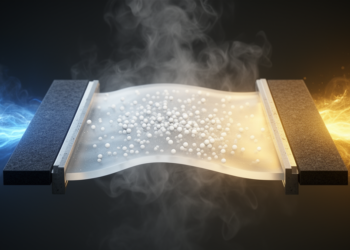
A phosphonated PVA–boric acid membrane with 15 wt% TiO2 achieved 0.030 S cm−1 proton conductivity and 0.48 W cm−2 peak ...
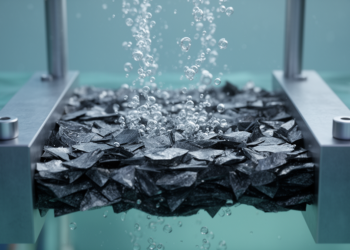
A new review in Discover Sustainability argues that bifunctional transition metal chalcogenides, abundant materials that can catalyze both halves of ...
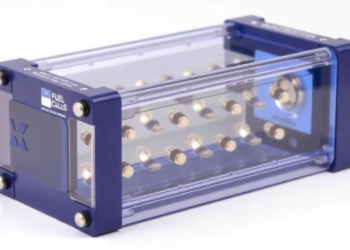
A new review maps how membrane engineering, noble-free catalysts and alternative alcohol fuels are pushing direct alcohol fuel cells toward ...
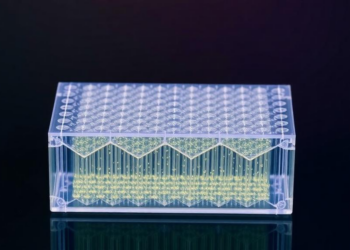
Researchers in Shanghai have created sulfonated polyimide membranes doped with phosphotungstic acid that match Nafion's proton conductivity while enduring over ...

A new review in Discover Biotechnology charts how microbial fuel cells convert organic waste, from cassava effluent to azo dyes, ...

Researchers have created a single-layer, edge-sharing 1T-RuO2 catalyst that achieves an ultralow 77 mV overpotential and over 1,100 hours of ...


Embark on a thrilling journey of discovery with Scienmag.com—your ultimate source for cutting-edge breakthroughs. Immerse yourself in a world where curiosity knows no limits and tomorrow’s possibilities become today’s reality!