


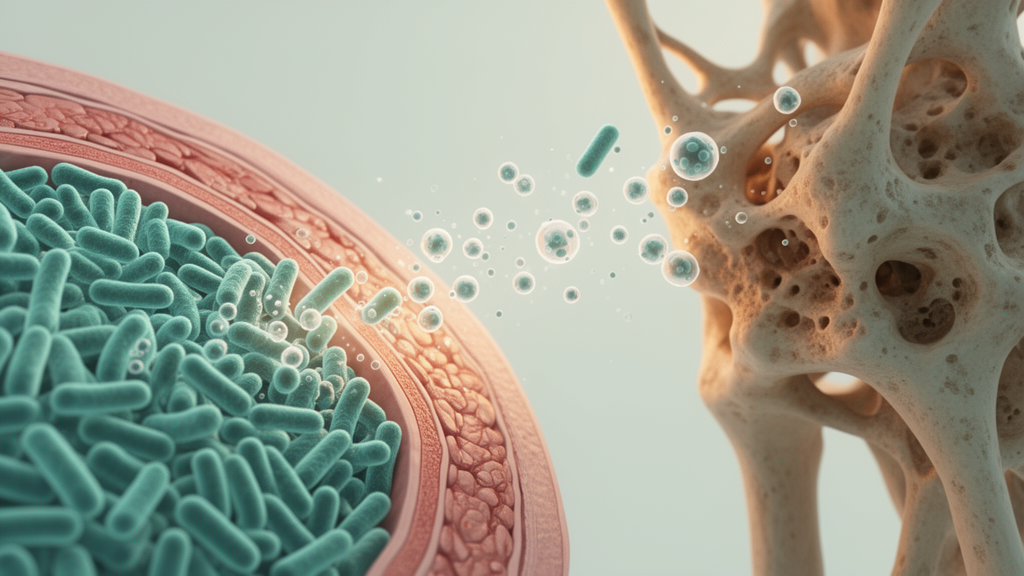
A comprehensive review published in Frontiers in Nutrition by researchers from Shenzhen University of Advanced Technology, the Chinese Academy of Sciences, and collaborating institutions synthesizes a rapidly growing body of evidence that gut bacteria, their metabolic byproducts, and even the microscopic vesicles they shed can influence bone health through what scientists call the gut-bone axis. The work arrives at a moment when conventional osteoporosis drugs, despite their proven ability to reduce fractures, are increasingly recognized as carrying limitations that make complementary prevention strategies urgently attractive. The scale of the problem is sobering.
According to figures cited in the review, as many as half of women and a quarter of men over the age of fifty in the United States will suffer a fracture attributable to osteoporosis, while researchers in China predict the national patient count will reach 212 million by 2050. National epidemiological surveys place the prevalence of the disease at 19.2 percent among Chinese adults over fifty and 32 percent among those over sixty-five. Beyond the human toll, the economic burden of fractures and long-term care weighs heavily on families and health systems, fueling the search for interventions that could extend the preventive window before fractures ever occur.
Current pharmacotherapy, the review's authors emphasize, remains the cornerstone of clinical management but is far from perfect. Antiresorptive agents such as bisphosphonates and the RANKL antibody denosumab suppress the bone-resorbing cells known as osteoclasts, cutting vertebral fracture risk by 40 to 70 percent in some trials, yet they cannot rebuild lost bone and carry risks including osteonecrosis of the jaw and atypical femoral fractures. Denosumab poses a particular problem: discontinuation can trigger rapid rebound bone loss and a three- to five-fold increase in multiple vertebral fractures.
On the anabolic side, the parathyroid hormone analog teriparatide is capped at twenty-four months of use by the FDA, while the anti-sclerostin antibody romosozumab, despite reducing new vertebral fractures by up to 73 percent in the FRAME trial, raises cardiovascular safety concerns and is generally limited to twelve months of therapy. It is against this backdrop that the gut-bone axis has captured scientific attention. Bone health depends on a delicate balance between osteoblasts, which build bone, and osteoclasts, which dismantle it, and the gut microbiota appears to influence both sides of this equation through parallel channels.
In one striking example highlighted in the review, researchers identified microbial taxa associated with postmenopausal osteoporosis and then showed that supplementing mice with the candidate strain Prevotella histicola attenuated estrogen-deficiency-induced bone loss. The mechanism was elegantly indirect: the bacterium upregulated tight junction proteins such as ZO-1 and Occludin in the intestinal lining, reducing permeability and preventing inflammatory signals from reaching the skeleton, where they would otherwise fuel osteoclast overactivity. Probiotics themselves have now been dissected into functional categories.
Lactobacillus rhamnosus GG promotes bone formation through a butyrate-dependent mechanism involving regulatory T cells and WNT10B signaling. Lactobacillus reuteri ATCC PTA 6475 inhibits roughly 70 percent of RANKL-induced osteoclast precursor differentiation in vitro and significantly reduces bone loss in ovariectomized mice. Bifidobacterium longum 35624 blocks osteoclast formation via a TLR2-dependent pathway mediated by its surface exopolysaccharide.
Soluble metabolites add another layer: short-chain fatty acids shift osteoclast precursor metabolism toward glycolysis, triggering cellular stress that halts their differentiation, while butyrate suppresses osteoclast genes such as CTSK and c-Fos and simultaneously repairs the gut barrier, creating a linked gut-repair and bone-protection effect. Perhaps the most futuristic chapter concerns extracellular vesicles, or EVs, nanoscale lipid-enclosed particles shed by bacteria that ferry proteins, nucleic acids, and lipids between cells. Vesicles from the gut microbiome have been shown to physically reach bone tissue.
Extracellular vesicles from Akkermansia muciniphila upregulate osteogenic genes including Runx2 and Alpl while suppressing osteoclastogenic genes such as Trap and Ctsk, and oral administration of these vesicles significantly increased bone mass, bone length, and bone strength in ovariectomized mice. Vesicles from the pediatric gut microbiome restored Akkermansia abundance and reversed induced bone loss, while outer membrane vesicles from Proteus mirabilis inhibited osteoclastogenesis through the miR-96-5p/ABCA1 axis, a reminder that even vesicles from pathogenic bacteria can exert context-dependent osteoprotective effects. The review's most technically ambitious section details how synthetic biology is transforming these natural particles into precision drug carriers.
Researchers engineered Escherichia coli Nissle 1917 to display the bone-homing receptor CXCR4 on vesicle surfaces, directing the particles toward SDF-1-rich bone tissue. A second-generation construct fused both BMP-2, a master regulator of osteoblast differentiation, and CXCR4 to the vesicle surface protein ClyA, producing engineered vesicles termed BEVs-BMP-2-CXCR4 that significantly ameliorated osteoporosis in ovariectomized mice by activating BMP/SMAD signaling. Alternative platforms include thiol-click conjugation of the bone-targeting peptide SDSSD onto vesicles, electroporation-based loading of sclerostin siRNA to activate Wnt/beta-catenin signaling, encapsulation of the osteoclast-inhibiting peptide FRATtide, and biomaterial-assisted delivery through hydrogels for local bone repair.
Yet the authors are notably candid about the translational gap. Human clinical evidence remains mixed and often contradictory. A landmark multicenter trial of a three-strain Lactobacillus formulation in 249 early postmenopausal women delayed lumbar spine trabecular bone loss, but a recent twelve-month trial of the identical formulation in 114 women failed to replicate the benefit and actually showed greater distal tibia bone loss in the probiotic group.
Other trials have yielded encouraging but modest signals: Lactobacillus reuteri reduced tibial bone loss by roughly half in older women with low bone density, and Limosilactobacillus fermentum CCFM1126 improved T-scores and serum calcium and vitamin D in a small three-month study. Most trials suffer from small samples, short durations, and reliance on biochemical markers rather than fracture endpoints, and the review stresses that probiotic efficacy is likely context-dependent, shaped by baseline diet, microbiome composition, and host genetics. Safety questions surrounding engineered vesicles receive particularly pointed attention.
Bacterial vesicles naturally carry pathogen-associated molecular patterns such as lipopolysaccharide and lipoteichoic acid, which can activate Toll-like receptor pathways and, under repeated systemic dosing, risk cytokine storms, endotoxemia-like reactions, and anti-EV antibody responses that accelerate vesicle clearance. The authors flag four frequently overlooked monitoring needs: dynamic post-administration cytokine profiling, anti-EV neutralizing antibody surveillance, assessment of chronic accumulation in the liver, spleen, and lungs, and evaluation of microbiota perturbation. Engineered vesicles, they argue, should not be assumed safe by default, and rigorous immunogenicity profiling, endotoxin quantification, and biodistribution tracking in aged and comorbid animal models must precede any clinical advancement.
Looking forward, the review proposes a closed-loop roadmap that links multi-omics profiling and artificial intelligence-driven prediction to personalized probiotics and engineered vesicle therapies, converging on bone-targeted delivery and long-term dynamic follow-up. The most urgent research priority, the authors contend, is identifying the specific vesicle-associated proteins that simultaneously promote bone formation and inhibit resorption, which would provide both mechanistic insight and a quality-control marker for future therapeutics. For now, the message is one of tempered optimism: nutraceutical approaches including probiotics, prebiotics, and fermented foods may extend the preventive window for at-risk populations, but they complement rather than replace established pharmacotherapy.
Subject of Research: The role of probiotics and gut microbiota-derived extracellular vesicles in preventing and treating osteoporosis via the gut-bone axis
Article Title: Advances in probiotics and gut microbiota-derived extracellular vesicles for the prevention and treatment of osteoporosis
Article References: Hu, M., Li, H., Li, Y., Cao, H., Dai, X., Tan, Y., Yu, Q., Wang, Z., Wu, X., Xu, J., & Pan, X. (2026). Advances in probiotics and gut microbiota-derived extracellular vesicles for the prevention and treatment of osteoporosis. Frontiers in Nutrition, 13, Article 1884520. https://doi.org/10.3389/fnut.2026.1884520
Image Credits: AI Generated
DOI: 10.3389/fnut.2026.1884520
Keywords: osteoporosis, gut microbiota, probiotics, extracellular vesicles, gut-bone axis, bone remodeling, osteoblasts, osteoclasts, short-chain fatty acids, synthetic biology, bone-targeted therapy, clinical trials
Cite Scienmag News
Morgan Morrow. (October 21, 2026). Research report: Advances in probiotics and gut microbiota-derived extracellular vesicles for the prevention and treatment of osteoporosis. Scienmag. https://scienmag.com/research-report-advances-in-probiotics-and-gut-microbiota-derived-extracellular-vesicles-for-the-prevention-and-treatment-of-osteoporosis/
Morgan Morrow. "Research report: Advances in probiotics and gut microbiota-derived extracellular vesicles for the prevention and treatment of osteoporosis." Scienmag, 21 October 2026, https://scienmag.com/research-report-advances-in-probiotics-and-gut-microbiota-derived-extracellular-vesicles-for-the-prevention-and-treatment-of-osteoporosis/. Accessed 21 October 2026.
Morgan Morrow. "Research report: Advances in probiotics and gut microbiota-derived extracellular vesicles for the prevention and treatment of osteoporosis." Scienmag. October 21, 2026. https://scienmag.com/research-report-advances-in-probiotics-and-gut-microbiota-derived-extracellular-vesicles-for-the-prevention-and-treatment-of-osteoporosis/


