


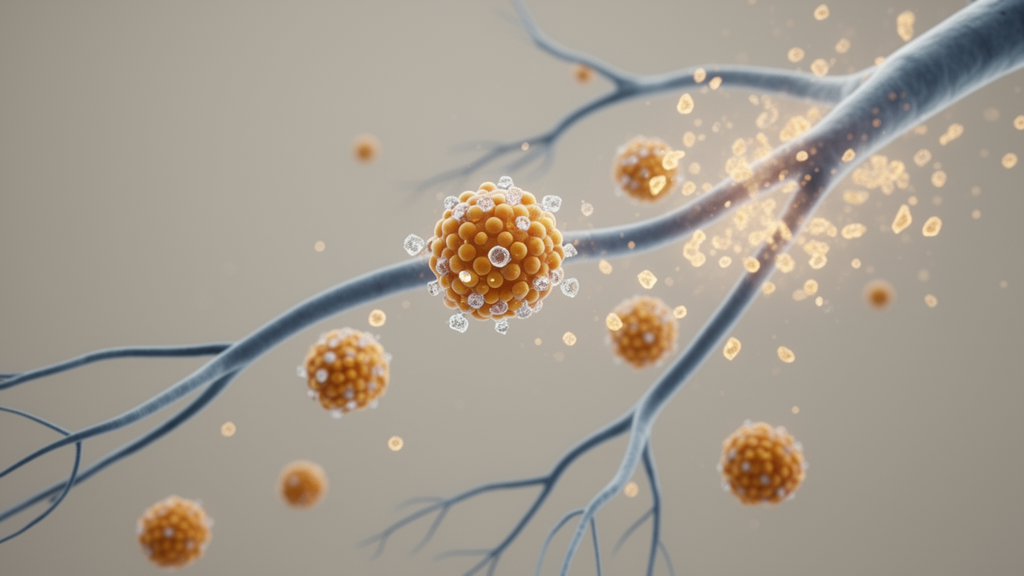
A drug that doctors have prescribed for decades to fight malaria and a serious lung infection may soon have a second life in one of medicine’s most stubborn diseases. In a study published in Materials Today Bio, researchers report that atovaquone, an approved antiparasitic small molecule, was reformulated into lactoferrin-based nanomicelles that crossed into the spinal cord of ALS model mice, where the treatment reduced complement activation, suppressed neuroinflammation and preserved neuromuscular function.
The decision to focus on complement biology rather than the motor neurons themselves reflects a significant shift in how researchers conceptualize amyotrophic lateral sclerosis. For much of the modern era, therapeutic development treated ALS as a straightforward problem of neuronal survival, screening compounds for their ability to keep motor neuron cell bodies alive in laboratory dishes. Yet post-mortem tissue analysis and longitudinal imaging studies in patients have consistently shown that synaptic connections begin to unravel long before large numbers of neurons disappear. This means the window during which intervention can meaningfully preserve function is dominated by processes at the synapse and the neuromuscular junction, structures that operate as the critical relay between the nervous system and skeletal muscle. When those relays fail, muscle fibers are denervated, atrophy follows, and the compensatory sprouting responses that initially mask weakness eventually collapse.
The complement system offers a particularly compelling mechanistic explanation for this early synaptic loss. Originally characterized as a cascade of circulating proteins that tags bacteria and damaged cells for destruction, complement has more recently been recognized as an active participant in brain circuit refinement. During normal development, astrocytes and microglia use complement signals such as C1q and C3 to identify synapses that should be pruned, sculpting neural networks into their mature configurations. In neurodegenerative disease, this developmental program appears to be inappropriately reawakened in adult tissue, with mature, functional synapses mistakenly carrying the same molecular tags intended for transient or damaged connections. Microglia, armed with complement receptors, then engulf these tagged synapses in a process that resembles immunologically sanctioned amputation of healthy circuitry.
Previous genetic and pharmacological studies in ALS models have supported this framework. Mice lacking certain complement components show delayed disease onset and extended survival in some genetic backgrounds, while elevated levels of C1q, C3 degradation products, and the anaphylatoxin C5a have been measured in spinal cord tissue from both patients and SOD1-mutant animals. The inflammatory amplification loop mediated by C5a and its receptor C5aR1 has attracted particular attention because C5a is one of the most potent chemoattractants produced during complement activation, drawing immune cells into sites of pathology and stimulating them to release cytokines and reactive oxygen species. Blocking this axis alone, however, leaves the upstream tagging machinery untouched, which may explain why single-node complement interventions have produced inconsistent results across different preclinical studies.
The dual-targeting strategy described in this study therefore carries conceptual weight beyond the specific properties of atovaquone. By simultaneously engaging C1qb, a core structural component of the C1q recognition complex that initiates classical pathway deposition, and C5aR1, the receptor that amplifies downstream inflammation, the intervention addresses both the initiation and the propagation of complement-driven injury. This is analogous to combination approaches in other therapeutic domains, where inhibiting an upstream trigger alongside a downstream amplifier produces more durable suppression of a pathological cascade than either node alone. Whether this dual engagement translates into superior outcomes over monotherapies targeting a single complement component will require careful head-to-head testing, but the pharmacological logic is sound.
The identification of atovaquone as a candidate complement modulator emerged from computational screening rather than from traditional medicinal chemistry, illustrating how virtual docking has become a productive entry point for drug repurposing. Molecular docking algorithms predict binding poses and approximate affinities between small molecules and protein structures, allowing researchers to survey thousands of approved compounds for activity against targets of interest at a fraction of the cost of experimental screening. The prediction that atovaquone binds both C5aR1 and C1qb was then substantiated with surface plasmon resonance, a biophysical technique that measures real-time binding between immobilized proteins and flowing analytes, providing kinetic parameters that docking alone cannot supply. This layered validation approach, moving from computational prediction to direct physical measurement, strengthens confidence that the observed biological effects arise from the proposed molecular interactions rather than incidental pharmacology.
Atovaquone itself has an intriguing pharmacological history relevant to neurodegenerative applications. The drug acts as a mitochondrial electron transport inhibitor in parasites, disrupting the cytochrome bc1 complex at the parasite’s cytochrome b gene product. This mitochondrial mechanism has drawn interest in unrelated contexts, because mitochondrial dysfunction is a well-documented feature of ALS, and some investigators have explored whether atovaquone’s effect on mitochondrial respiration could induce a mild protective metabolic shift in mammalian cells. The present study adds complement modulation to this repertoire, suggesting that the compound may act through several converging pathways rather than a single mechanism. Such pleiotropy can be a liability in precision pharmacology but an asset in complex multifactorial diseases like ALS, where no single lesion accounts for the full phenotype.
The delivery problem the researchers confronted is central to why many promising CNS drug candidates fail in translation. The blood-brain barrier and the blood-spinal cord barrier are specialized endothelial assemblies with tight junctions, efflux transporters, and restrictive paracellular permeability that exclude the vast majority of circulating molecules. Atovaquone is highly lipophilic and poorly water-soluble, which complicates formulation and tends to limit systemic exposure after oral administration. For an ALS therapy, delivery must additionally reach the spinal cord, where anterior horn motor neurons and their axons constitute the principal site of pathology, and the barriers guarding spinal tissue are at least as restrictive as those protecting the brain. Achieving therapeutic concentrations at these lesion sites is therefore a substantial formulation challenge, not merely a matter of increasing dose.
Lactoferrin offers a rational solution rooted in endogenous biology. This iron-binding glycoprotein, abundant in secretions and neutrophil granules, is recognized by lactoferrin receptors expressed on the endothelial cells of CNS barriers, where it participates in receptor-mediated transcytosis, the process by which cargo is ferried across the barrier cell from the blood side to the tissue side. Conjugating or incorporating lactoferrin into a nanoparticle shell effectively hitchhikes on this transport pathway. In the formulation described here, lactoferrin forms a hydrophilic exterior that stabilizes the particle in aqueous biological fluids, while atovaquone molecules aggregate in a hydrophobic core, sidestepping the solubility problem that limits conventional dosing. Nanomicelle formulations of this general type have been explored extensively in cancer and infectious disease drug delivery, and their adaptation for neurodegenerative indications represents a growing area of pharmaceutical science.
Characterization of such nanomedicines requires rigorous attention to physical parameters that determine biological behavior. Particle size influences both circulation half-life and the tendency to accumulate in particular tissues, with particles in the tens to low hundreds of nanometers generally favored for passive and receptor-mediated tissue penetration. Surface charge affects protein adsorption and immune recognition, while stability in serum determines whether the payload reaches its destination or precipitates prematurely. The authors report verification of these properties along with direct measurement of spinal-cord enrichment in vivo, an essential step because many nanocarriers that perform well in benchtop assays fail to deposit meaningful quantities of drug in central nervous tissue. Quantitative confirmation of delivery, ideally with spatial resolution showing accumulation in regions of active pathology, distinguishes credible CNS nanotherapy studies from those resting on indirect pharmacodynamic readouts alone.
The experimental design integrating human transcriptomic data, single-cell RNA sequencing, in vitro inflammatory models, and the SOD1-G93A mouse reflects the multi-scale approach now considered standard for preclinical neurodegeneration research. Single-cell analysis is particularly valuable in ALS because the disease involves a complicated choreography among neurons, astrocytes, microglia, oligodendrocytes, and infiltrating peripheral immune cells, each of which responds differently to treatment. Resolving complement gene expression at the level of individual cell populations allows the investigators to confirm that the pathological signatures they target are indeed present in the relevant cellular compartments rather than diluted into bulk tissue averages. Similarly, the use of both BV2 microglial cells and NSC34 motor neuron-like cells provides parallel perspectives on the inflammatory and neuronal sides of the disease process.
Caution remains warranted before extrapolating these findings to patients. The SOD1-G93A mouse, though historically indispensable, reproduces a rare familial form of ALS and has a mixed record predicting clinical success; therapies that extended survival in this model, including several approved drugs, showed modest or negligible benefit in human trials dominated by sporadic cases with heterogeneous underlying mechanisms. Complement activation is, however, one of the pathological features shared across multiple ALS genetic subtypes, which strengthens the argument that complement-targeted approaches may generalize beyond SOD1 mutation carriers. Independent replication in additional models, including TDP-43 and C9orf72 transgenic lines, and eventually in biomarker-rich patient cohorts, will be necessary to establish clinical relevance.
The translational advantages of repurposing an approved drug should not be underestimated. Atovaquone already possesses an established human safety profile, known pharmacokinetics, recognized drug interactions, and existing manufacturing infrastructure, all of which compress the development timeline compared with novel chemical entities. Combined with a delivery system designed specifically for spinal-cord access, the approach addresses two of the most common reasons ALS drug candidates fail: inadequate exposure at the site of disease and mechanisms that engage only one facet of a multifactorial pathology. If subsequent studies confirm that complement suppression in the spinal cord correlates with preserved neuromuscular junction integrity and slowed functional decline, this nanomedicine strategy could provide a template for repositioning other approved compounds against complement-driven neurodegeneration in ALS and related disorders.
Subject of Research: ALS nanotherapy
Article Title: A CNS-targeted atovaquone nanotherapy mitigates complement activation and neuromuscular degeneration in ALS
Article References: A CNS-targeted atovaquone nanotherapy mitigates complement activation and neuromuscular degeneration in ALS. (n.d.). https://doi.org/10.1016/j.mtbio.2026.103738
Image Credits: AI Generated
DOI: Not provided
Keywords: ALS, atovaquone, drug repurposing, complement system, lactoferrin, nanomicelles, SOD1-G93A mice, neuroinflammation, neuromuscular junction, C5aR1, C1qb, spinal cord delivery
Cite Scienmag News
Cassandra Pierce. (October 16, 2026). Repurposed antimalarial drug wrapped in lactoferrin nanoparticles calms complement attack on motor nerves in ALS mice. Scienmag. https://scienmag.com/repurposed-antimalarial-drug-wrapped-in-lactoferrin-nanoparticles-calms-complement-attack-on-motor-nerves-in-als-mice/
Cassandra Pierce. "Repurposed antimalarial drug wrapped in lactoferrin nanoparticles calms complement attack on motor nerves in ALS mice." Scienmag, 16 October 2026, https://scienmag.com/repurposed-antimalarial-drug-wrapped-in-lactoferrin-nanoparticles-calms-complement-attack-on-motor-nerves-in-als-mice/. Accessed 16 October 2026.
Cassandra Pierce. "Repurposed antimalarial drug wrapped in lactoferrin nanoparticles calms complement attack on motor nerves in ALS mice." Scienmag. October 16, 2026. https://scienmag.com/repurposed-antimalarial-drug-wrapped-in-lactoferrin-nanoparticles-calms-complement-attack-on-motor-nerves-in-als-mice/


