


…
…
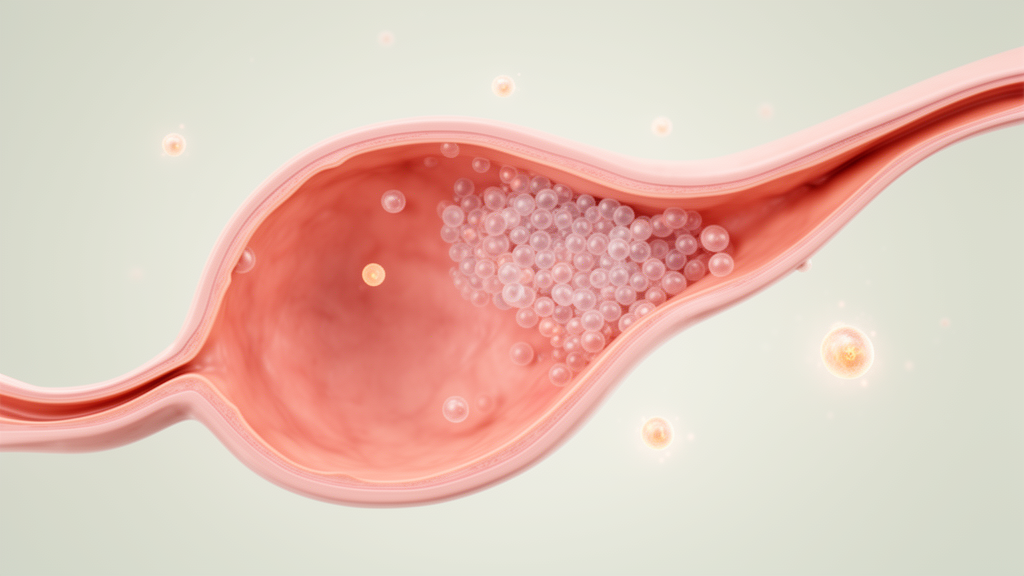
The distinction between fertility and ovarian reserve deserves careful unpacking, because the two concepts are often conflated in discussions of reproductive health in chronic illness. Ovarian reserve refers to the size and quality of the remaining pool of follicles within the ovaries, a stockpile that is established before birth and declines steadily throughout life until menopause. Fertility, by contrast, is the functional outcome of that reserve combined with many other factors, including tubal patency, uterine receptivity, ovulatory function, coital frequency, and partner factors. A woman can have a diminished reserve yet still conceive spontaneously, particularly at younger ages, while another with seemingly adequate reserve measures may struggle because of tubal disease or male factor infertility. This is why the markers used in the Indian study, anti-mullerian hormone and antral follicular count, are best understood as probabilistic indicators rather than deterministic verdicts. They estimate how much time and how many attempts a woman may realistically have before her follicular pool runs low, which is precisely the information needed when conception must be deferred during periods of disease activity or when gonadotoxic therapy is being considered.
Anti-mullerian hormone is produced by the granulosa cells of small growing follicles, and its serum level correlates with the number of follicles recruited into the growth phase at any given time. Because it remains relatively stable across the menstrual cycle, it can be measured on any day, although the study protocol here drew samples on days two through five to allow simultaneous measurement of follicle stimulating hormone and estradiol, which do fluctuate cyclically. Follicle stimulating hormone rises as the reserve declines, because the pituitary must work harder to recruit follicles when inhibin and estradiol feedback from the ovaries weakens, but by the time FSH becomes clearly elevated the reserve is often already substantially depleted, making it a relatively late and less sensitive marker. Antral follicular count, performed by transvaginal ultrasonography during the early follicular phase, counts the small follicles between roughly two and ten millimeters in diameter that are visible on both ovaries, and it generally correlates well with AMH because both reflect the same pool of growing follicles. Ovarian volume, the third ultrasonographic parameter used in a subset of patients, is a coarser measure that shrinks as the cortex is depleted of follicles, but it is less precise and more operator dependent.
The finding that nearly half of the studied cohort had AMH below one nanogram per milliliter, and that roughly two thirds fell below the tenth centile of age-matched healthy fertile women on nomogram comparison, is striking given the young mean age of twenty-seven years. Nomogram comparison is an important methodological choice here, because AMH declines with age in all women, and simply reporting mean values would obscure whether lupus patients are tracking below the curve expected for their age. By anchoring the comparison to population-specific centiles derived from healthy fertile women, the investigators could quantify how many patients were shifted toward the low end of the distribution beyond what age alone would explain. The use of Indian reference nomograms also matters, since preliminary evidence suggests that ovarian ageing may proceed somewhat faster in healthy Indian women than in populations from which many older reference ranges were derived, which would make the observed deficits even more notable if the lupus patients fell below even these local benchmarks.
The independent associations uncovered by the multivariable regression offer several threads for interpretation. The association with higher age is expected and mirrors the physiology of ovarian ageing, with each additional year carrying a modest but measurable increase in the odds of low AMH. The association with active disease is more intriguing, because it suggests that inflammatory activity itself, rather than merely the passage of time or the scars of past treatment, may be eroding the follicular pool. Several mechanisms could plausibly underlie such an effect. Systemic inflammation in lupus involves circulating cytokines such as interleukin-6 and tumor necrosis factor alpha, which can disrupt the hypothalamic-pituitary-ovarian axis and impair follicular development. Autoantibodies, immune complex deposition, and microvascular injury could compromise the blood supply to the ovary, and the ovary is notably vulnerable to ischemic damage because its follicular complement cannot regenerate. Oxidative stress generated by chronic inflammation may also accelerate apoptosis of oocytes and granulosa cells. The cross-sectional design of the study cannot distinguish whether active disease caused the low reserve or whether both reflect a shared underlying susceptibility, but the association is biologically coherent and aligns with observations in other inflammatory conditions where disease activity correlates with diminished reserve.
The link with menstrual irregularities, which more than quadrupled the odds of low AMH, is easier to interpret in one direction at least, since anovulation and oligomenorrhea frequently accompany a declining follicular pool. However, the relationship may also run partly in reverse, because lupus itself, thyroid dysfunction, hyperprolactinemia, stress, and weight changes can all disrupt cyclicity independently of reserve, meaning that menstrual irregularity is an imperfect proxy. Its strong statistical association with low AMH nonetheless suggests that clinicians seeing lupus patients with new cycle disturbances should consider ovarian reserve assessment rather than attributing the change solely to disease flares or medication effects.
The signal for anti-Ro60 positivity, which narrowly missed conventional statistical significance with a confidence interval crossing unity, is worth considering despite its borderline status. Anti-Ro antibodies are classically associated with neonatal lupus and congenital heart block, but they have also been implicated in adult autoimmune epithelial dysfunction, most notably in Sjogren syndrome and in the lymphocytic infiltration of salivary and lacrimal glands. Some investigators have proposed that similar lymphocytic infiltration of the ovary, sometimes described in the context of premature ovarian insufficiency, could be driven by the same antibody specificities, providing a plausible autoimmune route to follicular depletion that is independent of any gonadotoxic treatment. The modest effect size and borderline p value mean this finding requires confirmation in larger cohorts, but its biological plausibility and consistency with the broader concept of autoimmune premature ovarian failure make it a hypothesis worth pursuing.
Equally informative are the associations that failed to materialize. The absence of a relationship with prior cyclophosphamide exposure may seem surprising given the established gonadotoxicity of that agent, but several explanations are possible. The cumulative doses received by patients in this cohort may have been relatively low or administered with gonadoprotective measures, the most susceptible patients may have already been excluded through the low AMH screening threshold used in the parent trial, or the cross-sectional design may have selected for survivors whose reserve was already depleted regardless of treatment history. The lack of association with nephritis, anti-dsDNA, anti-Sm, and antiphospholipid antibodies suggests that organ damage patterns and specific autoantibody profiles other than anti-Ro are not the primary drivers of reserve loss, which redirects attention toward disease activity as the modifiable factor of interest.
The very low observed prevalence of premature ovarian insufficiency and early menopause, at under two percent each, coexists somewhat paradoxically with the high proportion of subnormal AMH values. This apparent tension resolves when one appreciates that premature ovarian insufficiency is a clinical diagnosis requiring amenorrhea and consistently elevated gonadotropins before the age of forty, representing the extreme tail of a distribution, whereas low AMH identifies women whose reserve is shifted downward long before they reach that threshold. Many women with low AMH will never develop premature menopause, and the interval between a low reserve measurement and actual menopause can span years to decades. The clinical implication is that low AMH in a young lupus patient should prompt counseling about reproductive timelines and consideration of fertility preservation options, but it should not be presented as a prediction of imminent sterility, which the evidence does not support and which can cause unnecessary distress.
For patients and clinicians, the practical takeaways are several. First, ovarian reserve assessment with AMH, and where available antral follicular count, is a reasonable component of comprehensive reproductive counseling for women with lupus, particularly those approaching their thirties, those with persistently active disease, and those with menstrual disturbances. Second, the finding that active disease independently predicts diminished reserve adds a reproductive dimension to the already compelling case for early and sustained disease control, since suppressing inflammation may protect not only organs but also the follicular pool. Third, the absence of an association with cyclophosphamide in this cohort should not be generalized to dismiss gonadotoxic risk, which is well established at higher cumulative doses, but it does suggest that reserve loss in lupus is not solely a treatment artifact. Fourth, women with low reserve who wish to delay childbearing should be informed about oocyte cryopreservation and other fertility preservation strategies, ideally before reserve declines further, and assisted reproductive technologies can be planned with realistic expectations when the time comes. Finally, the ethno-geographic dimension highlighted by this study underscores the need for population-specific reference ranges and for research across diverse cohorts, since findings from European and North American populations may not translate directly to South Asian patients, and the burden of lupus in India makes locally relevant evidence especially valuable for guiding care.
Subject of Research: Ovarian reserve in reproductive age Indian women with lupus
Article Title: Assessment of ovarian reserve in reproductive age Indian women with lupus and determination of correlates of diminished reserve: results from a tertiary care centre
Article References: Jain, S., Kumar, A., Verma, U. S., Gupta, S., Bharti, J., Gupta, R., Goswami, R. P., Bhadu, D., Soneja, M., Sinha, S., Kumar, U., & Wig, N. (2026). Assessment of ovarian reserve in reproductive age Indian women with lupus and determination of correlates of diminished reserve: results from a tertiary care centre. Frontiers in Lupus, 4, Article 1783078. https://doi.org/10.3389/flupu.2026.1783078
Image Credits: AI Generated
DOI: 10.3389/flupu.2026.1783078
Keywords: lupus, SLE, ovarian reserve, AMH, fertility, autoimmunity, Assessment, ovarian, reserve, reproductive, Indian, women
Cite Scienmag News
Beatrice Stafford. (October 16, 2026). Lupus May Quietly Deplete the Ovarian Reserve of Indian Women, Landmark Study Finds. Scienmag. https://scienmag.com/lupus-may-quietly-deplete-the-ovarian-reserve-of-indian-women-landmark-study-finds/
Beatrice Stafford. "Lupus May Quietly Deplete the Ovarian Reserve of Indian Women, Landmark Study Finds." Scienmag, 16 October 2026, https://scienmag.com/lupus-may-quietly-deplete-the-ovarian-reserve-of-indian-women-landmark-study-finds/. Accessed 16 October 2026.
Beatrice Stafford. "Lupus May Quietly Deplete the Ovarian Reserve of Indian Women, Landmark Study Finds." Scienmag. October 16, 2026. https://scienmag.com/lupus-may-quietly-deplete-the-ovarian-reserve-of-indian-women-landmark-study-finds/


