


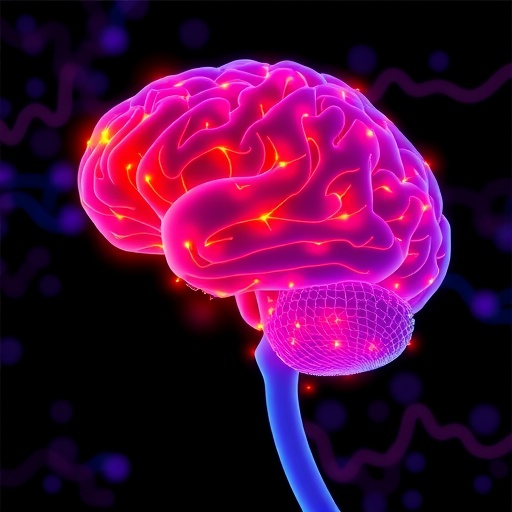
Parkinson’s disease treatment is entering an era in which the brain may no longer be viewed as a static target, but as a continuously changing system whose electrical activity, movement patterns and medication responses can be measured in real time. A new study by M.G.J. de Neeling, C.R. Oehrn, M.J. Stam and colleagues, published in npj Parkinson’s Disease, focuses on the relationship between levodopa and physiological biomarkers recorded during deep brain stimulation. The paper, titled “Levodopa-related physiomarkers during deep brain stimulation in Parkinson’s disease,” addresses one of the most important challenges in advanced therapy: understanding how medication and implanted electrical stimulation interact inside the living brain.
Levodopa remains the most effective medication for controlling many of the movement symptoms associated with Parkinson’s disease. After entering the brain, it is converted into dopamine, the chemical messenger that becomes deficient as dopamine-producing neurons degenerate. The medication can improve slowness, rigidity and, in some patients, tremor, but its effects are not always stable. As the disease progresses, the therapeutic window may narrow, meaning that the dose needed to improve movement can approach the dose that causes involuntary movements known as dyskinesias. This fluctuation makes treatment highly individual and creates a need for biological measurements that reveal how the brain responds, rather than relying only on outward symptoms.
Deep brain stimulation, or DBS, offers a unique opportunity to search for those measurements. In DBS, surgeons implant electrodes into carefully selected structures deep within the brain, most commonly the subthalamic nucleus for Parkinson’s disease. A pulse generator then delivers patterned electrical stimulation intended to normalize abnormal neural signaling. The therapy can reduce motor symptoms and lessen dependence on medication, but programming it remains a complex process. Clinicians must choose stimulation contacts, electrical amplitude, pulse width and frequency, often through repeated adjustments over weeks or months. Physiological biomarkers—measurable signals linked to brain or body function—could make this process more precise by showing when stimulation is engaging the intended circuits and how levodopa changes the same signals.
The term “physiomarker” encompasses a broad range of measurable biological features. In Parkinson’s research, these may include neural oscillations recorded from implanted electrodes, muscle activity measured with electromyography, motion captured by wearable sensors, or patterns in a patient’s walking, tremor and muscle tone. One widely studied signal is beta-band activity, a rhythm in the approximate 13-to-30-hertz range that is often associated with motor control and becomes unusually prominent in Parkinson’s disease. Dopamine replacement and DBS can both influence abnormal beta activity, although the relationship is not simple or identical in every patient. By examining levodopa-related changes during stimulation, researchers hope to identify signals that reflect therapeutic benefit, medication state or the risk of unwanted movements.
The importance of studying the two treatments together lies in their overlapping but distinct mechanisms. Levodopa changes the chemical environment of motor circuits by restoring dopamine-related signaling, while DBS changes the electrical dynamics of those circuits through externally delivered pulses. A biomarker that responds to levodopa may not respond in the same way to stimulation, and a signal that reflects improvement under medication may behave differently when DBS is active. Separating these effects could help clinicians determine whether a symptom is best addressed by adjusting a drug dose, changing stimulation settings or combining both approaches. It could also clarify why patients with apparently similar symptoms can require very different treatment strategies.
The study’s focus is particularly relevant to the development of adaptive DBS, sometimes called closed-loop stimulation. Conventional DBS delivers stimulation according to fixed settings, even though a patient’s symptoms and brain state can vary across the day with medication cycles, fatigue, stress, sleep and movement demands. Adaptive systems aim to detect a physiological signal and automatically adjust stimulation in response. For such systems to work safely, researchers must know which biomarkers are reliable, how quickly they change, and whether they represent improvement, medication fluctuations or the emergence of dyskinesia. Levodopa-related physiomarkers could become part of the biological language that future stimulators use to tailor therapy moment by moment.
The research also speaks to a broader shift in neurology: treatment is increasingly being evaluated through objective, continuously collected data. A patient’s report remains essential, but a clinic visit offers only a brief snapshot of a condition that may change substantially throughout the day. Wearable sensors and implanted recording technologies can capture movement and neural activity over longer periods, potentially revealing patterns that are invisible during a conventional examination. If a physiological signal can be consistently linked to levodopa response during DBS, it may eventually support more individualized dosing, improve the interpretation of stimulation effects and reduce the trial-and-error process that currently accompanies advanced Parkinson’s care.
However, biomarkers are not automatically ready for clinical use simply because they are measurable. A useful marker must be reproducible across patients, stable enough to guide decisions and closely connected to outcomes that matter, such as walking, hand function, speech, balance or involuntary movement. Parkinson’s disease is biologically diverse, and the same neural rhythm may carry different information in different people or brain regions. Medication timing also matters: levodopa absorption, metabolism and delayed effects can alter the signals being recorded. Stimulation itself may interfere with sensing, creating technical challenges for devices that must deliver electrical pulses while simultaneously detecting subtle neural activity. These limitations make careful validation essential before a physiomarker can control therapy automatically.
By placing levodopa-related signals at the center of DBS research, de Neeling, Oehrn, Stam and their colleagues contribute to a field seeking a more detailed map of Parkinson’s treatment response. The significance of the work lies not only in any single biomarker, but in the possibility of connecting medication, electrical stimulation and measurable physiology within one framework. Such an approach could help transform DBS from a largely manually programmed therapy into a responsive treatment that adapts to the patient’s changing state. The findings will need to be interpreted alongside larger clinical studies and long-term testing, but the direction is clear: the future of Parkinson’s care may depend on listening to the brain’s signals as carefully as clinicians observe the patient’s movements.
Cite Scienmag News
Cassandra Pierce. (August 12, 2026). Physiological markers linked to levodopa emerge during deep brain stimulation for Parkinson’s. Scienmag. https://scienmag.com/physiological-markers-linked-to-levodopa-emerge-during-deep-brain-stimulation-for-parkinsons/
Cassandra Pierce. "Physiological markers linked to levodopa emerge during deep brain stimulation for Parkinson’s." Scienmag, 12 August 2026, https://scienmag.com/physiological-markers-linked-to-levodopa-emerge-during-deep-brain-stimulation-for-parkinsons/. Accessed 4 September 2026.
Cassandra Pierce. "Physiological markers linked to levodopa emerge during deep brain stimulation for Parkinson’s." Scienmag. August 12, 2026. https://scienmag.com/physiological-markers-linked-to-levodopa-emerge-during-deep-brain-stimulation-for-parkinsons/


