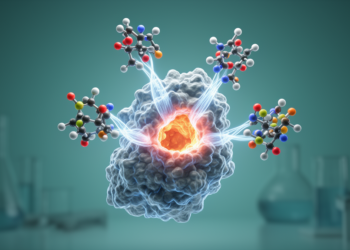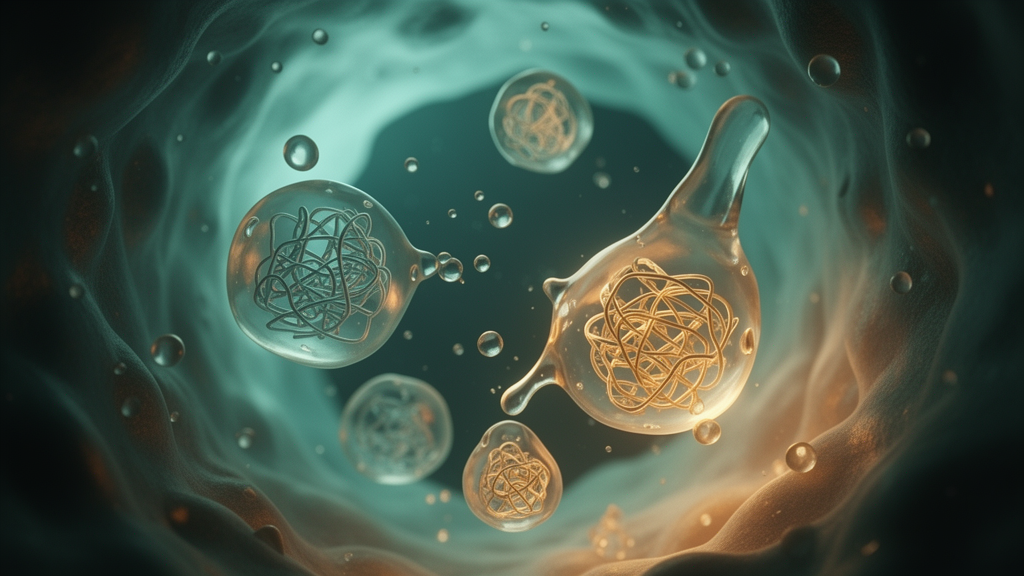
Biomolecular condensates, membrane-less compartments that form inside cells through liquid–liquid phase separation, have become one of the central organizing concepts in modern cell biology. Yet according to a new perspective article published in the journal Discover Molecules, a crucial dimension of this phenomenon has been largely overlooked: the fact that the ability of a protein to phase-separate is itself a trait that evolution can shape, tune, and sometimes discard. Pouria Dasmeh, the article’s author, argues that phase separation should be treated as an evolvable molecular phenotype, and that the tools of molecular evolution are now mature enough to dissect how natural selection acts on it.
The perspective, published on 21 June 2026, does not report new experiments. Instead, it synthesizes existing biophysical understanding of condensates with established evolutionary frameworks, proposing a research program the author calls evolutionary condensate biology. The core claim is that while the biophysical mechanisms of phase separation are increasingly well understood, far less is known about how the capacity to phase-separate is subject to mutation, selection, and genetic drift over evolutionary time.
The scale of the phenomenon makes this question hard to ignore. A substantial fraction of the human proteome, estimated at roughly 70 percent, contains long intrinsically disordered regions, and many of these regions have the capacity to drive or modulate liquid–liquid phase separation. In the author’s framing, this prevalence means phase separation should not be viewed as an exceptional or highly specialized feature of a few proteins, but as a common biophysical property that biological systems can harness, regulate, or suppress depending on context.
To make the argument concrete, the perspective draws on two well-studied examples. The first involves members of the FET family of proteins, which are well aligned across species and therefore amenable to classical sequence-based molecular evolution methods. The second involves motif-rich intrinsically disordered regions, where the relevant information is distributed across short linear motifs rather than in conserved positions that can be aligned residue by residue. Using these examples, the article illustrates how selection can act on individual residues, on the number and spacing of motifs, on domain architecture, and on emergent biophysical properties that arise from the combination of all of these features.
In Dcp2, leucine-rich motifs can serve a dual role: they can function as interaction stickers that promote multivalent assembly and thereby contribute to condensate formation, or they can act as nuclear export signals that regulate where in the cell the protein resides. This dual functionality matters because nuclear export can modulate a protein’s condensate propensity by altering its effective concentration and molecular environment, while motif density and multivalency influence reentrant phase behavior. In such behavior, high ratios of RNA to protein buffer phase separation, whereas lower RNA levels, as found in the cytosol, promote condensation.
The perspective suggests that these couplings mean evolution may fine-tune phase separation not only through changes in individual motifs but through coordinated adjustments in motif type, density, and localization signals. Different classes of short linear motifs, in other words, may not evolve independently; they can be partially coupled or repurposed over evolutionary time. This coupling could provide a mechanism for adaptive control of condensate behavior across different cellular contexts. But it may also impose constraints, because optimization for one function, such as transport, can trade off against another, such as controlled multivalency. The author is careful to note that these ideas about malleability and evolutionary trade-offs remain to be rigorously tested through future experimental and computational work.
A major theme of the article is methodological. Classical sequence-based analyses remain valuable for well-aligned proteins, but many condensate-forming proteins demand complementary approaches that operate at the level of short linear motifs, low-complexity sequence architecture, quantitative biophysical traits, or machine-learning-derived molecular phenotypes. Recent advances in artificial intelligence, the author argues, now make it possible to predict latent molecular traits directly from sequence, including disorder propensity, interaction valency, and phase-separation potential. Once these properties can be predicted from sequence alone, they can be embedded within evolutionary models, allowing researchers to ask whether particular biophysical traits show signatures of selection across species.
The perspective is also candid about its limitations. Many of the frameworks discussed, even those that move beyond sequence alignment, remain dependent on the underlying phylogenetic reconstruction. Uncertainty in tree topology, branch lengths, or species sampling can influence evolutionary inference and propagate into downstream analyses, which highlights the importance of incorporating phylogenetic uncertainty, for example through ensemble or Bayesian approaches. Distinguishing among selective regimes is another challenge: purifying, balancing, and fluctuating selection can generate similar statistical signatures, particularly for phase-separation-related traits involved in immune and stress responses.
Motif-based and trait-based frameworks carry their own caveats. Short linear motifs can be degenerate, transient, and highly context-dependent, and their identification often relies on predefined sequence patterns or thresholds, making inferred architectures sensitive to annotation choices. Furthermore, reducing complex sequence features such as amino-acid composition or phase-separation propensity to a single quantitative trait oversimplifies the relationship between genotype and phenotype. Selection acts on higher-level fitness, and molecular properties may contribute in nonlinear or threshold-like ways, where small sequence changes have little effect until a critical point is reached. Capturing these nonlinear mappings between sequence, biophysics, and fitness, the article argues, remains an important direction for future work.
Looking forward, the author identifies the ingredients that progress will require: large and carefully curated sets of orthologous proteins, robust phylogenies, accurate and scalable tools for predicting biophysical traits, and statistical models capable of detecting selection on both modular features and emergent properties. By integrating these components, the emerging field of evolutionary condensate biology could chart the evolutionary landscape of biomolecular condensates, spanning residue-level constraints, motif organization, and biophysical trait dynamics. The synthesis also opens opportunities for comparative and predictive studies of liquid–liquid phase separation across the tree of life, and, more speculatively, for the rational design of proteins capable of controlled phase separation. No datasets were generated or analysed in the study, underscoring that the article’s contribution is conceptual: a proposal for how the rapidly growing biophysics of condensates and the older, rigorous machinery of molecular evolution can be brought together to explain one of the cell’s most pervasive forms of organization.
Subject of Research: Evolutionary analysis of protein liquid–liquid phase separation, focusing on FUS-family proteins and Dcp2
Article Title: Evolutionary condensate biology and its scope in uncovering the molecular determinants of FUS and Dcp2 phase separation
Article References: Dasmeh, P. (2026). Evolutionary condensate biology and its scope in uncovering the molecular determinants of FUS and Dcp2 phase separation. Discover Molecules, 3(1), Article 17. https://doi.org/10.1007/s44345-026-00061-z
Image Credits: AI Generated
DOI: 10.1007/s44345-026-00061-z
Keywords: biomolecular condensates, liquid-liquid phase separation, molecular evolution, intrinsically disordered regions, FUS, Dcp2, short linear motifs, natural selection, phylogenetics, machine learning, protein design, Discover Molecules
Cite Scienmag News
Gavin Prescott. (October 30, 2026). Phase Separation Is an Evolvable Trait, Argues New Evolutionary Framework. Scienmag. https://scienmag.com/phase-separation-is-an-evolvable-trait-argues-new-evolutionary-framework/
Gavin Prescott. "Phase Separation Is an Evolvable Trait, Argues New Evolutionary Framework." Scienmag, 30 October 2026, https://scienmag.com/phase-separation-is-an-evolvable-trait-argues-new-evolutionary-framework/. Accessed 2 November 2026.
Gavin Prescott. "Phase Separation Is an Evolvable Trait, Argues New Evolutionary Framework." Scienmag. October 30, 2026. https://scienmag.com/phase-separation-is-an-evolvable-trait-argues-new-evolutionary-framework/