


In a groundbreaking study set to reshape our understanding of neurodegenerative disorders, researchers have embarked on a detailed exploration of isolated REM sleep behavior disorder (iRBD) patients exhibiting cerebrospinal fluid (CSF) α-synuclein negativity. This novel investigation, recently published in npj Parkinson’s Disease, challenges longstanding assumptions about the pathological underpinnings of iRBD, a prodromal condition often preceding synucleinopathies such as Parkinson’s disease and Lewy body dementia.
REM sleep behavior disorder is characterized by the loss of normal muscle atonia during rapid eye movement sleep, leading to enactment of vivid, often violent dreams. It represents a critical clinical marker for neurodegenerative diseases linked to α-synuclein protein aggregation in the central nervous system. However, the presence of α-synuclein in the cerebrospinal fluid, detectable through advanced biomarker assays, has established itself as a crucial element for confirming the neurodegenerative trajectory of these disorders. The current research breaks new ground by identifying a distinct subgroup of iRBD patients who, paradoxically, do not demonstrate this pathological hallmark in their CSF analyses.
The clinical implications of this discovery are profound. Traditionally, a positive α-synuclein biomarker in CSF has served as an early diagnostic tool predicting neurodegeneration, offering a window into disease progression before overt motor symptoms manifest. Yet, this newly characterized cohort of α-synuclein-negative individuals compels neurologists to reconsider diagnostic criteria and predictive models. It suggests that the pathological landscape of iRBD—and possibly synucleinopathies—is more heterogeneous than previously appreciated.
Delving into the molecular intricacies, the researchers utilized highly sensitive seeding aggregation assays (SAAs) and immunoassays to detect phosphorylated α-synuclein, the pathogenic form implicated in Lewy body formation. This approach allowed the team to distinguish between true α-synuclein negative status and potential assay limitations. Their findings indicate that the absence of CSF α-synuclein in certain iRBD patients is not an artifact but a genuine biological phenomenon, potentially pointing to alternative neurodegenerative pathways or protective mechanisms mitigating α-synuclein accumulation.
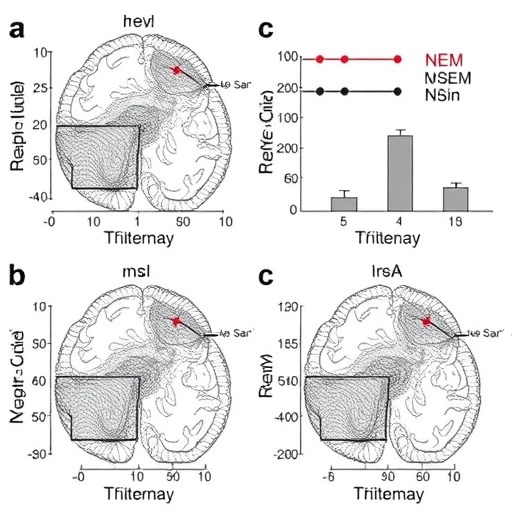
Neuroimaging data collected alongside CSF analyses further corroborated the biological divergence in this patient subgroup. Positron emission tomography (PET) and magnetic resonance imaging (MRI) revealed differential patterns of brain metabolism and structural integrity, suggesting that neurodegeneration in α-synuclein-negative iRBD might follow a distinct trajectory, potentially sparing some regions typically vulnerable in classical synucleinopathies. Such imaging insights offer tantalizing clues about the spatial and temporal dynamics of disease evolution in these patients.
From a clinical standpoint, symptoms and disease progression rates among the α-synuclein-negative iRBD group showed unexpected variance compared to their α-synuclein-positive counterparts. Cognitive assessments and motor function evaluations suggested a slower progression in some patients, raising important questions about the prognostic significance of α-synuclein negativity. This observation could inform when and how to target therapeutic interventions and streamline patient stratification for clinical trials examining neuroprotective strategies.
At the cellular level, the absence of CSF α-synuclein in these patients raises provocative hypotheses about the underlying neuropathology. It posits that other pathogenic proteins, such as tau or TDP-43, might be implicated, or that compensatory synaptic and immune responses curtail α-synuclein spread. Understanding these mechanisms is crucial for designing novel therapeutic targets beyond α-synuclein aggregation, potentially opening new avenues in treating or even preventing neurodegenerative conditions.
The study further explored potential genetic factors contributing to this phenotype. Whole-genome sequencing and targeted genetic analyses hinted at unique variants and epigenetic factors in the α-synuclein-negative group, which may modulate protein expression, aggregation propensity, or clearance mechanisms. Such genetic footprints could unlock personalized therapeutic approaches and enhance risk stratification, underscoring the importance of integrating molecular genetics with clinical neurology.
Importantly, the discovery has significant ramifications for biomarker development and clinical trial design. Current trials relying on CSF α-synuclein positivity for patient inclusion risk excluding a subset of iRBD patients who may otherwise benefit from intervention. This necessitates a reevaluation of biomarker panels to incorporate a broader spectrum of molecular indicators, ensuring inclusivity and improving trial efficacy.
Scientists also emphasize the need for longitudinal studies to elucidate the long-term outcomes of α-synuclein-negative iRBD patients. Whether these individuals eventually develop classic synucleinopathy or remain stable remains an open question critical to patient counseling and management. Continuous monitoring using multimodal biomarkers—encompassing fluid, imaging, and clinical markers—will be essential for mapping disease trajectories and refining predictive models.
The implications of this research stretch beyond Parkinson’s disease and associated disorders. They challenge the prevailing dogma in neurobiology about proteinopathy-centric paradigms and advocate a more nuanced understanding of neurodegeneration. By revealing unexpected biological diversity within clinically defined syndromes, the study promotes a precision medicine framework grounded in molecular pathology and individualized patient profiles.
Methodologically, this investigation exemplifies cutting-edge translational research, integrating biochemical, genetic, neuroimaging, and clinical data from large, multicenter cohorts. Advanced computational analytics allowed the cross-validation of findings and ensured robustness against confounding variables, setting a benchmark for future biomarker-driven neuroscience studies.
Moreover, the study has garnered significant interest due to its potential impact on public health strategies addressing neurodegenerative diseases. Early detection and intervention remain the cornerstone of managing these otherwise incurable conditions. Identifying unique subgroups like the α-synuclein-negative iRBD patients widens the scope for tailored screening programs and preventive measures, ultimately aiming to reduce disease burden at the population level.
Experts agree that translating these insights into clinical practice will require concerted efforts across disciplines, including neurology, molecular biology, genetics, and bioinformatics. Collaborative networks and data sharing will expedite validation and facilitate the development of next-generation diagnostic and therapeutic tools, harnessing the promise illuminated by this pivotal study.
In summary, the characterization of isolated REM sleep behavior disorder patients with cerebrospinal fluid α-synuclein negativity heralds a paradigm shift in the field of neurodegeneration research. It highlights the heterogeneity of prodromal synucleinopathies and uncovers novel molecular signatures that may underpin divergent disease pathways. This landmark study demands a reevaluation of current diagnostic standards, offers new therapeutic targets, and promises to refine prognostic frameworks, ultimately advancing personalized medicine for neurodegenerative disorders.
Cite Scienmag News
Diana Fleming. (June 5, 2026). Patients with Isolated REM Behavior Disorder Show α-Synuclein Negativity. Scienmag. https://scienmag.com/patients-with-isolated-rem-behavior-disorder-show-%ce%b1-synuclein-negativity/
Diana Fleming. "Patients with Isolated REM Behavior Disorder Show α-Synuclein Negativity." Scienmag, 5 June 2026, https://scienmag.com/patients-with-isolated-rem-behavior-disorder-show-%ce%b1-synuclein-negativity/. Accessed 4 September 2026.
Diana Fleming. "Patients with Isolated REM Behavior Disorder Show α-Synuclein Negativity." Scienmag. June 5, 2026. https://scienmag.com/patients-with-isolated-rem-behavior-disorder-show-%ce%b1-synuclein-negativity/


