


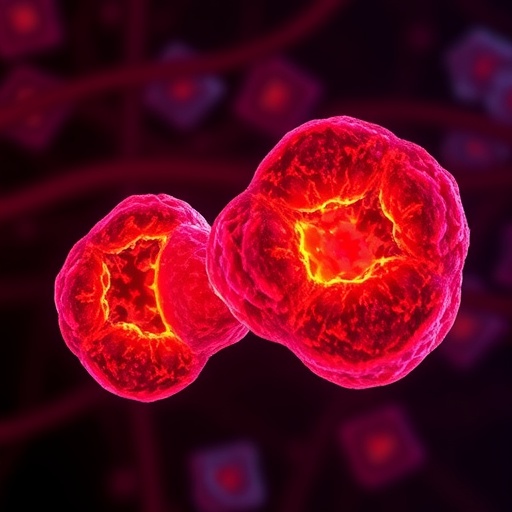
A metabolic switch that transforms pancreatic α cells into insulin-producing β-like cells could open a new path toward diabetes treatment, according to a study published in Nature Chemical Biology. Researchers led by Zhang, Lu, Xie and colleagues report that inhibiting a key gene-regulatory system called PRC2 activates β cell-associated programs in α cells. More remarkably, the team found that directly changing how these cells process nutrients can reproduce features of the conversion and promote the formation of new β cells, offering a potential strategy for restoring insulin production.
Diabetes develops when the body loses functional β cells or when those cells can no longer release enough insulin to control blood glucose. Insulin-producing β cells occupy only a small fraction of the pancreatic islet, where they coexist with several other endocrine cell types, including α cells. α cells normally produce glucagon, a hormone that raises blood glucose when it falls too low. Because α cells are abundant, closely related to β cells and located in the same tissue environment, scientists have explored whether they could be redirected to replace lost β cells.
Previous studies have identified chemical compounds capable of making α cells display selected β cell-like characteristics. However, converting a cell’s identity is more complicated than switching on a handful of genes. A successful conversion must also establish the metabolic machinery required for the new function. β cells are specialized not only to produce insulin but also to sense glucose, process nutrients and release insulin in a precisely regulated manner. The new study addresses this deeper layer of cellular identity by linking gene regulation to metabolism.
The researchers identified inhibitors of polycomb repressive complex 2, or PRC2, as strong inducers of β cell-enriched gene expression in α cells. PRC2 is an epigenetic regulatory complex: it modifies chromatin, the DNA-protein structure that determines which genes are accessible for transcription. By placing repressive chemical marks on histone proteins, PRC2 can silence groups of genes involved in cell identity and development. Blocking PRC2 appears to relax this repression, allowing α cells to activate genes more commonly associated with β cells.
The study connects this process to a molecular partnership involving the androgen receptor, known as AR, and the transcription factor ETV1. Transcription factors act as molecular switches that bind DNA and coordinate gene activity, while nuclear receptors such as AR can alter transcription in response to regulatory signals. According to the researchers, PRC2 inhibition changes the activity of the AR–ETV1 complex, helping α cells move toward a β cell-like gene-expression state. This finding suggests that cellular reprogramming is controlled by a network rather than a single master switch.
The most striking result came when the team examined metabolism. α cells exposed to AR inhibition showed reduced glycogen synthesis and increased activity in the pentose phosphate pathway, or PPP. This pathway branches from glucose metabolism and generates NADPH, a reducing molecule that helps protect cells from oxidative stress, as well as ribose-5-phosphate, a building block required for nucleotide production. By redirecting glucose-derived carbon into the PPP, cells can alter their redox balance, biosynthetic capacity and signaling environment—changes that may help support a new cellular identity.
To test whether this metabolic shift could be induced directly, the researchers used methyl esterified 6-phosphogluconate. The compound is a chemically modified form of 6-phosphogluconate, an intermediate in the pentose phosphate pathway. Methyl esterification can improve a molecule’s ability to cross cell membranes, allowing researchers to deliver the metabolite into cells more efficiently. The treatment induced β cell-like features in α cells, indicating that metabolism was not merely a passive consequence of reprogramming but could act as an active driver of the process.
The researchers further report that this metabolic intervention stimulated β cell regeneration and improved diabetes-related outcomes in experimental systems. These findings are important because they point beyond pharmacologically manipulating gene expression alone. Instead, they suggest that changing the flow of nutrients through a cell can help unlock latent developmental programs. In this model, the metabolic state of an α cell appears to influence which genes it can activate and whether it can acquire functions associated with insulin-producing β cells.
The work also highlights the challenges that remain before such an approach could be considered for human therapy. A cell that expresses some β cell markers may not yet be a fully functional β cell, and researchers must establish whether converted cells release insulin appropriately, respond safely to changing glucose levels and remain stable over time. The effects of PRC2, AR and ETV1 are likely to vary across tissues, raising questions about unwanted gene activation or side effects. Nonetheless, the study presents a compelling framework: restoring β cell mass may be possible not only by transplanting cells or forcing genetic changes, but also by rewiring the metabolic circuitry of cells already present in the pancreas. Further work will be needed to determine whether this strategy can be translated safely from experimental models into a treatment for people with diabetes.
Cite Scienmag News
Juliet Wilcox. (August 7, 2026). Metabolic Reprogramming Converts Pancreatic Alpha Cells into Insulin-Producing Beta Cells. Scienmag. https://scienmag.com/metabolic-reprogramming-converts-pancreatic-alpha-cells-into-insulin-producing-beta-cells/
Juliet Wilcox. "Metabolic Reprogramming Converts Pancreatic Alpha Cells into Insulin-Producing Beta Cells." Scienmag, 7 August 2026, https://scienmag.com/metabolic-reprogramming-converts-pancreatic-alpha-cells-into-insulin-producing-beta-cells/. Accessed 4 September 2026.
Juliet Wilcox. "Metabolic Reprogramming Converts Pancreatic Alpha Cells into Insulin-Producing Beta Cells." Scienmag. August 7, 2026. https://scienmag.com/metabolic-reprogramming-converts-pancreatic-alpha-cells-into-insulin-producing-beta-cells/


